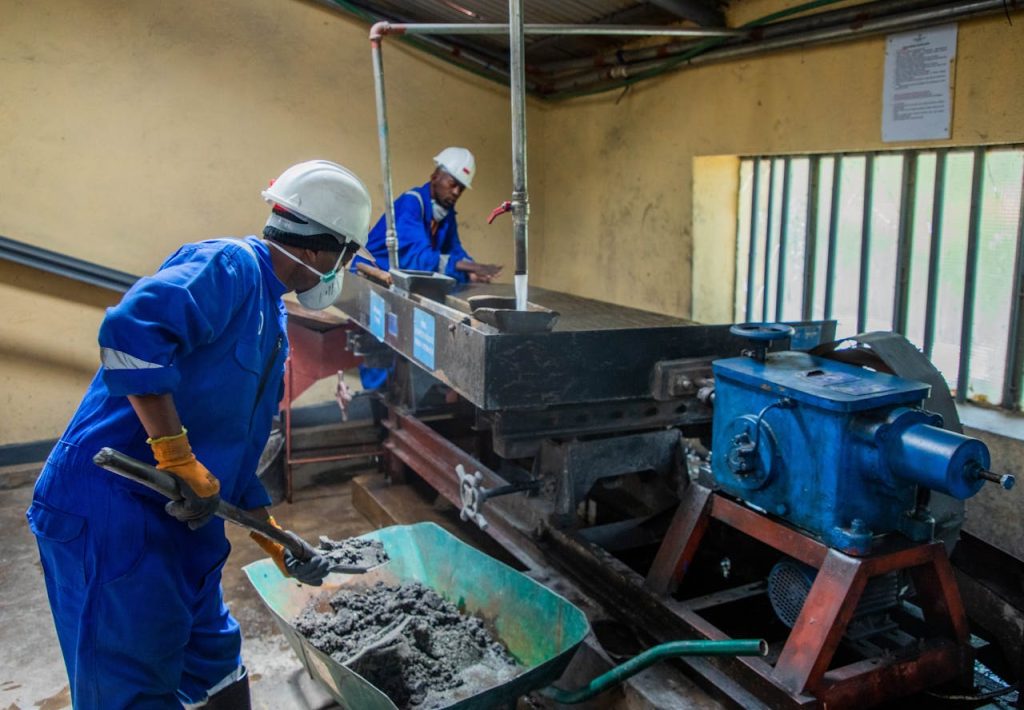
The commercial cargo that left Guinea’s coast in December 2025 marked the beginning of something that will define West African economic history for the next 30 years. The Simandou iron ore project, representing more than $20 billion in committed investment, is no longer a promise deferred. It is a functioning operation ramping toward 60 million tonnes of annual production with a workforce already exceeding 25,000, of whom 82% are Guinean. Every tonne of ore it produces requires service providers, equipment suppliers, logistics operators, engineering firms, camp managers, and professional services that are actively being procured right now.
For international investors and entrepreneurs positioned to participate, the critical prerequisite is the same across almost every opportunity: a registered Guinean company. This guide from Yes! Invest Guinea explains exactly how to set one up, and how to align it with the Simandou supply chain from day one.
The Scale of What Guinea Company Setup Is Unlocking Access To
Simandou’s Investment Footprint Is Historic
The project operates across four mining blocks, with the Winning Consortium Simandou controlling Blocks 1 and 2, and SimFer, a joint venture between Rio Tinto and Chinalco, controlling Blocks 3 and 4. The Guinean state holds a 15% free carried interest in both ventures. A 650-kilometre trans-Guinean railway and the new Morebaya deep-water port complete the infrastructure spine.
The financing stack reflects the project’s scale. UK Export Finance, Bpifrance, Africa Finance Corporation, and the African Development Bank are all involved, with commercial banks including Standard Chartered and BNP Paribas active in the debt structure. Rio Tinto alone has committed approximately $6 billion to its mine and associated infrastructure share.
Local Content Creates Mandatory Supplier Demand
Guinea’s Local Content Law (L/2022/010/CNT) is not a soft aspiration. It mandates that mining companies and their supply chains achieve 50% Guinean management staff within seven years, 85% Guinean technical staff within the same period, and comply with local procurement preferences across a defined list of goods and services. For international service companies, this creates a non-negotiable requirement: to win supply chain contracts from Simandou operators, having a registered local entity that can employ Guinean staff, hold compliance certificates, and transact in Guinea is essential.
The Legal Framework for Guinea Company Setup
OHADA: The Regional Standard That Creates Investor Confidence
Guinea is a member of OHADA, the Organisation for the Harmonisation of Business Law in Africa, which standardises commercial law across 17 member states. The framework’s Uniform Act on Commercial Companies governs company formation, shareholder rights, director obligations, and dispute resolution through the Common Court of Justice and Arbitration. For international investors, OHADA membership provides legal predictability that most African markets outside the zone cannot offer, according to OHADA’s official institutional documentation.
The SARL: Guinea’s Most Accessible Legal Vehicle for Foreign Investors
For most international investors entering Guinea, the SARL (Société à Responsabilité Limitée) is the appropriate vehicle. Key features:
- Can be formed by one or more shareholders, including a single foreign corporate entity
- Directors are not required to be Guinean residents
- Minimum share capital under the OHADA Uniform Act is 100,000 CFA francs, a nominal threshold
- Full foreign ownership permitted in most sectors under Guinea’s Investment Code
- Profit and dividend repatriation guaranteed, subject to tax compliance and documentation
The SAS (Société par Actions Simplifiée) is an alternative for larger joint ventures requiring more flexible governance architecture. Sector-specific structures apply in mining, where the state’s 15% free carried interest must be accommodated in any entity holding mining rights.
Step-by-Step Guinea Company Setup Process
Step 1: Define Business Activity and Structure
Before initiating registration, clarify whether the entity will be an operational company for service delivery, a trading vehicle, a local content holding structure for joint ventures with Guinean partners, or a combination. The sector activity determines which ministry licences are required beyond APIP registration.
Step 2: Engage Local Professional Support
OHADA-compliant articles of association, sector-specific licence knowledge, and tax registration requirements all benefit from qualified local counsel. Guinea’s legal and accounting professional community has grown substantially alongside the mining sector, and reputable advisors can significantly shorten the timeline between initial filing and full operational readiness.
Step 3: Complete APIP Registration
Guinea’s Agency for the Promotion of Private Investments serves as the one-stop shop for company formation. According to APIP’s official investor services framework, the process covers name availability check with the RCCM trade register, notarisation of articles of association, tax authority transmission for NIF registration, bank account opening letter issuance, RCCM registration and company number assignment, and CNSS social security registration for employers.
Straightforward SARL formations can be completed within 72 hours of capital deposit. More complex structures or those requiring sector-specific approvals from the Ministry of Mines, Ministry of Transport, or Ministry of Public Works typically take two to eight weeks depending on licence complexity.
Step 4: Open Corporate Bank Account
Corporate banking in Guinea requires complete KYC documentation. Entities with foreign ownership structures face additional scrutiny around ultimate beneficial owner penetration, business substance evidence, and French-language notarisation of all submitted documents. Early preparation of a comprehensive KYC package, including equity structure explanations, business plans, and properly notarised identification documentation, significantly reduces the account opening timeline.
Step 5: Plan Local Content Compliance from Day One
Local content compliance is most efficiently managed as a founding design principle rather than a retrofit obligation. Establishing payroll systems that track Guinean employee ratios, supplier procurement records that document local sourcing, and training programs that satisfy the law’s capacity-building requirements from the first hire positions a company for contract eligibility rather than regulatory risk.
Tax Framework for Guinea Companies
Guinea applies a tiered corporate income tax system. The standard rate of 25% applies to most service providers and trading companies. Mining permit holders pay 30%, while telecommunications, banking, insurance, and petroleum distribution companies pay 35%. VAT is levied at 18%, with mandatory registration above GNF 500 million in annual turnover. A 15% withholding tax applies to dividends, interest, royalties, and certain services paid to non-resident recipients.
Guinea’s Investment Code Privileged Regime provides qualifying investors with corporate income tax holidays of five to eight years, customs duty exemptions on imported equipment and machinery, and full profit repatriation guarantees. Access to these incentives requires formal Investment Code application through APIP following company registration.
Financing Your Guinea Operations
The Simandou project’s financing track record demonstrates the depth of international institutional confidence in Guinea’s economic trajectory. For smaller service providers and SMEs entering the supply chain, local banking relationships and supplier credit arrangements from established mining operators are the most practical near-term financing sources. The Central Bank of the Republic of Guinea (BCRG) regulates all banking operations and foreign exchange, and corporate accounts must be held at BCRG-authorised institutions.
How Yes! Invest Guinea Supports Company Setup
Yes! Invest Guinea provides comprehensive Guinea company setup services for international investors across all sectors. Our support includes:
- Complete SARL and SAS formation through APIP and RCCM
- OHADA-compliant articles of association drafting
- Sector-specific licence applications across mining services, trading, logistics, and construction
- Tax and CNSS registration and Investment Code Privileged Regime applications
- Bank account opening preparation including KYC package development
- Local content compliance planning from incorporation through operational launch
Frequently Asked Questions
- Why does Guinea company setup matter specifically for Simandou supply chain participation? Mining operators and their primary contractors require local registered entities for supply chain procurement, local content compliance tracking, and contract execution under Guinean law. A registered Guinean company is the essential threshold for participating in most Simandou-linked commercial opportunities.
- How long does Guinea company setup take? A straightforward SARL without sector-specific licence requirements can be registered in as little as 72 hours after capital deposit through APIP. Full registration including bank account opening typically takes two to four weeks, or longer for regulated sectors.
- What is the minimum capital required for a Guinean SARL? Under the OHADA Uniform Act, the minimum share capital is 100,000 CFA francs, a threshold so nominal that it effectively eliminates capital as a barrier to entry for international investors.
- What Investment Code incentives are available after Guinea company setup? Qualifying companies can access corporate income tax holidays of five to eight years, customs duty exemptions on imported equipment, and guaranteed profit repatriation under the Privileged Regime, applied for through APIP after formal registration.
- How can Yes! Invest Guinea help with company setup? Yes! Invest Guinea manages the full APIP and RCCM registration process, drafts OHADA-compliant corporate documents, coordinates sector licence applications, prepares KYC packages for bank account opening, and advises on Investment Code incentive access.
Set Up Your Guinea Company Now and Position for the Ramp-Up
Simandou’s production ramp from current levels toward 60 million tonnes annually over the next two to three years is generating increasing supply chain demand at every stage. The service providers, equipment companies, logistics operators, and professional firms that establish their Guinea entities now will hold the contracting track records and local content compliance history that procurement teams will require as the project scales.
Connect with Yes! Invest Guinea today to begin your Guinea company setup and position for the supply chain opportunities that Simandou’s ramp-up is generating right now.