Cassava Farming in Guinea: Agribusiness Opportunities from Farm to Processing – Cassava farming in Guinea offers an opportunity to develop a commercial agricultural business that extends beyond primary crop production. As Guinea works to strengthen food security, diversify its economy, and develop agricultural value chains, cassava can support investment across cultivation, aggregation, processing, packaging, and distribution.
Cassava is particularly relevant to commercial agriculture because it can be used for food, animal feed, flour, starch, and other industrial applications. The crop is also adaptable to a range of tropical production environments. FAO describes cassava as an important staple crop with strong adaptability and a significant role in food security across tropical regions.
For investors, the opportunity is therefore not simply to establish a cassava farm. A more integrated approach can connect commercial cassava cultivation with processing and value addition, creating several potential revenue streams within one agricultural value chain.
Why Cassava Farming Matters in Guinea
Cassava is already recognized as one of the food-security crops within Guinea’s agricultural investment landscape. Yes Invest Guinea identifies cassava production and processing alongside rice and maize as opportunities within the country’s food-security crop segment.
The broader agricultural sector also presents a significant productivity opportunity. A World Bank assessment of Guinea’s agricultural sector identified low productivity, limited adoption of improved technologies, and constraints involving inputs, markets, finance, land tenure, irrigation, and mechanization. The assessment reported cassava yields of around 5 tonnes per hectare in the context studied.
For commercial investors, these constraints can also indicate where improvements may create value.
A modern cassava project can focus on:
- Improved planting materials and agronomic practices
- Commercial farm management
- Soil and water management
- Mechanized land preparation
- Efficient harvesting and transportation
- Aggregation from surrounding farmers
- Processing and drying facilities
- Cassava flour and starch production
- Animal-feed products
- Packaging and distribution
This creates a business model that connects agricultural production with agro-processing rather than relying solely on the sale of fresh roots.
Commercial Cassava Farming Opportunities in Guinea
1. Large-Scale Cassava Cultivation
The first investment opportunity is establishing professionally managed cassava farms.
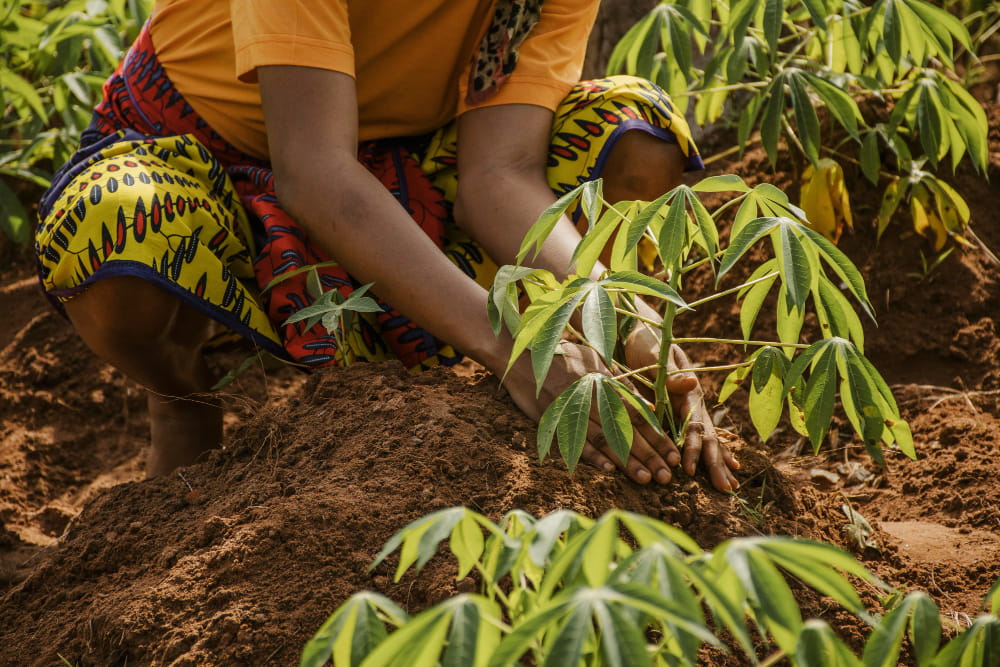
Commercial production can introduce more consistent planting schedules, field management, input application, harvesting systems, and crop monitoring. Investors can evaluate potential sites based on soil characteristics, water availability, accessibility, labor, proximity to markets, and distance from processing facilities.
However, commercial cultivation should not be based solely on available agricultural land. The location of the farm relative to processing infrastructure is particularly important because cassava roots are highly perishable after harvest.
FAO notes that cassava can deteriorate within only a few days after harvesting, which makes rapid movement from farms to processing facilities an important consideration for commercial operations.
2. Outgrower and Contract Farming Models
Investors do not necessarily need to cultivate all required cassava themselves.
A processing company can develop an outgrower network involving surrounding farmers. Under this model, the central business can provide technical assistance, quality requirements, planting materials, or market arrangements while farmers supply cassava to the processing facility.
This approach can help increase raw-material supply without requiring the company to acquire and operate an extremely large farming estate.
It can also create stronger connections between commercial processors and local agricultural communities.
3. Cassava Aggregation and Collection
Another potential business opportunity lies between farming and processing.
Cassava aggregation centers can collect roots from multiple farms and organize transportation to processing facilities. This can become particularly important when production is geographically dispersed.
An efficient collection system should consider:
- Harvest scheduling
- Collection points
- Transport capacity
- Root quality
- Processing capacity
- Distance from farms to the factory
- Delivery timing
Because cassava roots deteriorate relatively quickly, logistics should be designed around the biological characteristics of the crop rather than treated as a secondary consideration. FAO specifically emphasizes the importance of processing roots quickly after harvest.
Cassava Processing Opportunities in Guinea
The greatest potential for value addition can come from processing.
Fresh cassava has a relatively short shelf life, whereas processing can transform the crop into products that are easier to store, transport, package, and market.
FAO identifies several cassava-processing possibilities, including flour, starch, chips, meal, pellets, and other food and industrial products.
1. Cassava Flour Production
Cassava flour can serve as a food ingredient and can be incorporated into various processed food products.
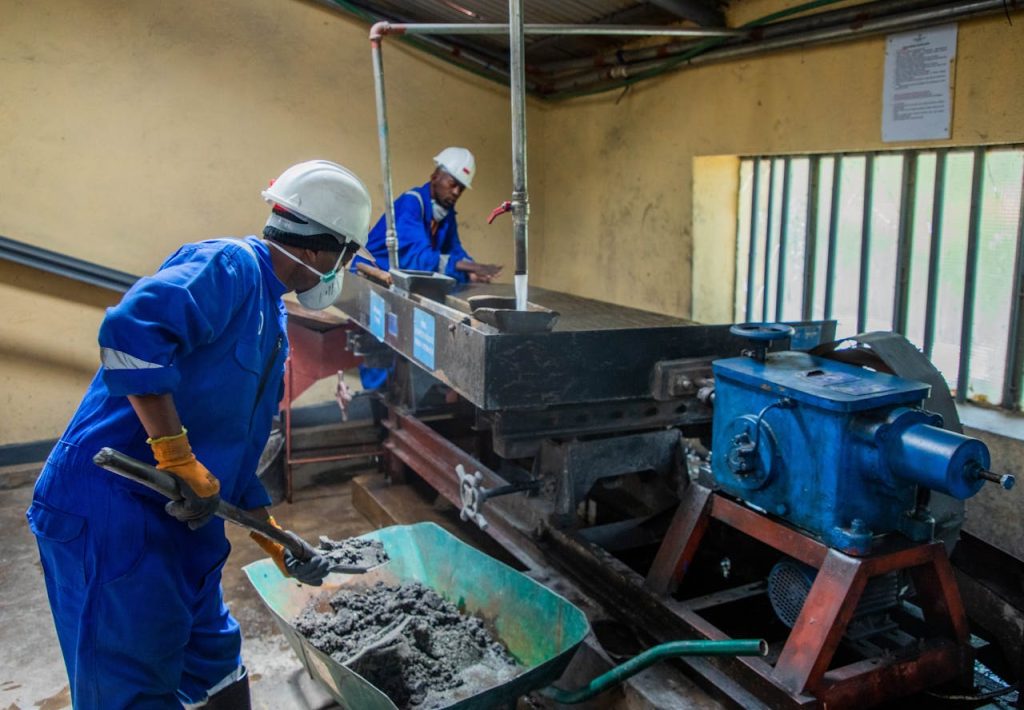
A commercial cassava flour operation may include:
- Receiving and sorting roots
- Washing
- Peeling
- Chipping or grating
- Processing and drying
- Milling
- Sieving
- Quality control
- Packaging
FAO notes that cassava flour production can be suitable for rural industries and that cassava processing can create additional demand for agricultural production.
For investors, this creates an opportunity to establish processing facilities close to cassava-producing areas while serving food manufacturers, wholesalers, retailers, and institutional buyers.
2. Cassava Starch Production
Cassava starch has applications extending beyond basic food consumption.
It can be used in food processing and various industrial applications. Producing starch requires more sophisticated processing infrastructure than basic dried cassava products, but it can also create a higher-value product category.
FAO describes cassava starch processing as involving extraction, purification, water removal, drying, and finishing.
For Guinea, investment in starch production could therefore form part of a longer-term agro-industrial strategy in which locally produced cassava becomes a raw material for downstream manufacturing.
3. Cassava Chips and Animal Feed
Cassava can also be processed into dried chips, meal, and other products used as animal-feed ingredients.
FAO notes that cassava products have established applications within animal-feed markets and that cassava starch can serve as a carbohydrate source and binder in feed formulations.
This creates potential linkages between cassava processing and Guinea’s broader livestock and poultry industries.
Instead of selling all cassava into human-food markets, an integrated processor could potentially develop multiple product lines according to quality, demand, and market conditions.
Building an Integrated Cassava Value Chain
A commercial cassava project can be structured around a complete value chain:
Input supply → Cassava cultivation → Farmer aggregation → Collection → Processing → Packaging → Distribution
This integrated approach can reduce the dependence on a single revenue point.
For example, a company could operate a commercial farm as its core supply source while also purchasing additional cassava from local farmers. The harvested roots could then be directed toward different processing lines depending on quality and market requirements.
Potential outputs could include:
- Fresh cassava
- Dried cassava chips
- Cassava flour
- Cassava starch
- Cassava meal
- Animal-feed ingredients
FAO’s technical literature confirms that cassava processing can generate multiple product categories, while processing also addresses the crop’s high perishability.
Infrastructure Requirements for a Commercial Cassava Business
Investors should evaluate infrastructure before establishing a commercial cassava operation.
Farm Infrastructure
A large-scale farm may require:
- Land development
- Farm roads
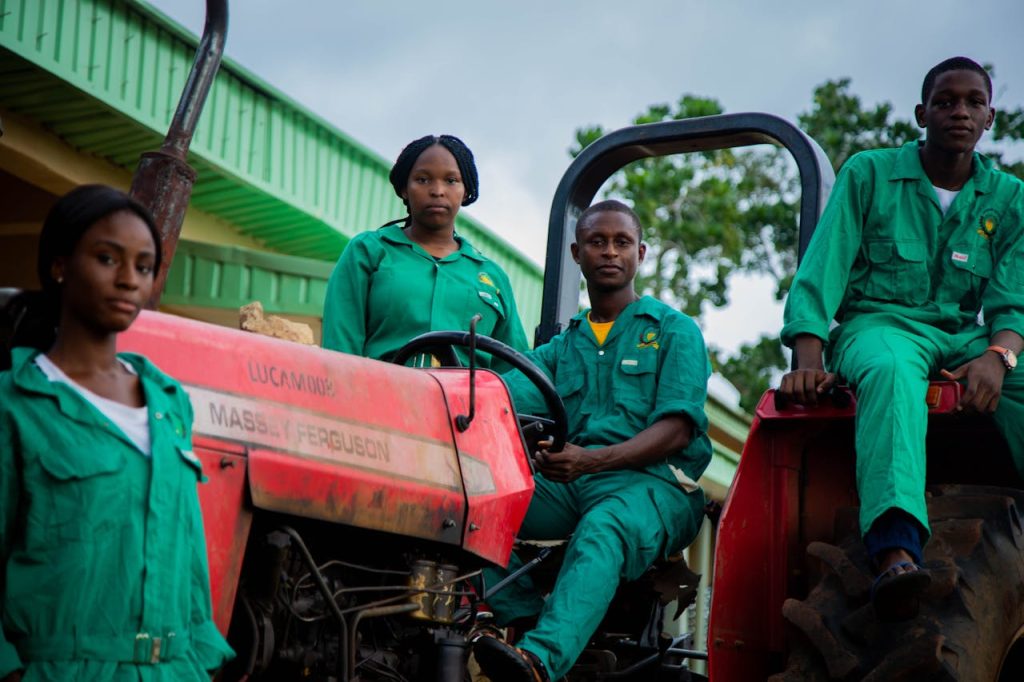
- Agricultural machinery
- Planting materials
- Storage for inputs
- Water-management systems
- Harvesting and transport equipment
Processing Infrastructure
A processing operation may require:
- Root reception areas
- Washing and peeling equipment
- Graters or chippers
- Drying systems
- Milling equipment
- Starch extraction equipment
- Packaging machinery
- Quality-control facilities
- Warehousing
The location of processing facilities is particularly important. Since cassava roots deteriorate quickly, factories should be connected to reliable raw-material supply and transportation networks.
This also creates potential links with Guinea’s wider agricultural infrastructure sector, including grain storage and other post-harvest facilities already covered by Yes Invest Guinea.
Market Opportunities for Processed Cassava
The commercial potential of cassava increases when investors consider multiple end markets.
Domestic Food Market
Processed cassava flour and other products can serve domestic consumers and food manufacturers. Longer shelf life makes processed products easier to distribute than fresh roots.
Animal Feed Industry
Dried cassava products can become ingredients for animal-feed formulations. This creates a potential connection between cassava processing and Guinea’s developing poultry and livestock industries.
Industrial Applications
Cassava starch can serve as a raw material for selected industrial applications. This creates opportunities for downstream businesses that require plant-based starch as an input.
Regional Markets
Processed cassava products can potentially be marketed beyond Guinea, depending on product specifications, logistics, applicable trade requirements, and buyer demand.
Guinea’s wider export strategy increasingly emphasizes value addition rather than simply exporting raw agricultural commodities. Yes Invest Guinea’s agricultural export coverage also highlights the importance of moving agricultural products toward international markets and value-added production.
Key Considerations Before Investing in Cassava Farming in Guinea
Cassava has strong agricultural potential, but a commercial project still requires detailed feasibility work.
Land and Site Due Diligence
Investors should verify land availability, tenure arrangements, soil suitability, accessibility, and proximity to infrastructure before committing capital.
Raw Material Supply
A processing factory requires consistent cassava volumes. Investors should determine whether their own farm can supply sufficient roots or whether an outgrower network will be required.
Processing Economics
Processing equipment, energy, water, transportation, labor, maintenance, packaging, and quality control should be included in the financial model.
Market Validation
Investors should identify potential buyers before building processing capacity. Product specifications should be based on actual market requirements rather than assumptions about demand.
Environmental and Community Management
Large agricultural and processing projects should evaluate water use, waste management, land impacts, local employment, and community relationships as part of responsible project development.
Frequently Asked Questions About Cassava Farming in Guinea
1. Is cassava farming a good agribusiness opportunity in Guinea?
Cassava is recognized as a food-security crop in Guinea and offers opportunities across cultivation and processing. Commercial viability depends on location, production costs, yields, processing efficiency, infrastructure, and market access.
2. What can cassava be processed into?
Cassava can be processed into flour, starch, dried chips, meal, pellets, and other food and industrial products. FAO documents a wide range of cassava-processing applications.
3. Why is cassava processing important for investors?
Processing can extend the usable life of cassava and create value-added products that are easier to store, transport, package, and sell than fresh roots. FAO notes that fresh cassava is highly perishable and generally needs to be processed quickly after harvest.
4. Can cassava farming be combined with a processing facility?
Yes. An integrated model can combine commercial cultivation with farmer aggregation and a central processing facility. This can help create a more consistent raw-material supply while capturing value at multiple stages of the chain.
5. How can investors explore cassava opportunities in Guinea?
Investors should begin with a feasibility assessment covering land, agronomy, raw-material supply, processing technology, infrastructure, market demand, regulatory requirements, and financial projections. Local investment-support partners can also help identify suitable opportunities and navigate market-entry requirements.
Invest in Cassava Farming and Processing in Guinea
Cassava farming in Guinea represents more than an opportunity to grow a staple crop. It can form the foundation of an integrated agribusiness covering commercial cultivation, farmer aggregation, processing, packaging, animal feed, and industrial starch applications.
The opportunity is particularly relevant as Guinea continues to develop agricultural value chains and strengthen food security. The country’s AgriConnect Compact, launched by the Government of Guinea and the World Bank in 2026, aims to transform agrifood systems, strengthen food and nutrition security, create jobs, and position agriculture as a driver of economic diversification.
For investors, the key is to approach cassava as a complete value chain rather than an isolated farming activity.
Ready to explore cassava farming or cassava processing opportunities in Guinea?
Contact Yes Invest Guinea to discuss your agricultural investment project, evaluate potential opportunities, and explore the next steps for establishing a commercial agribusiness in Guinea.
Trusted External Sources
- FAO – Cassava and Food Security
- FAO – Cassava Processing
- FAO – Cassava Flour and Starch
- World Bank – Guinea Integrated Agricultural Development Project
- World Bank – Guinea AgriConnect Compact
Primary Keyword: Cassava Farming in Guinea
Additional Keywords: Cassava Farming Investment in Guinea, Commercial Cassava Farming in Guinea, Cassava Production in Guinea, Cassava Processing in Guinea, Cassava Agribusiness in Guinea, Cassava Flour Production, Cassava Starch Production, Cassava Investment Opportunities in Guinea, Commercial Agriculture in Guinea
Alt Text: Cassava farming and processing opportunities | Yes Invest Guinea
Meta Description: Cassava Farming in Guinea – Explore commercial cultivation, processing, cassava flour, starch, animal feed, and agribusiness investment opportunities.
Post Title: Cassava Farming in Guinea: Investment & Processing