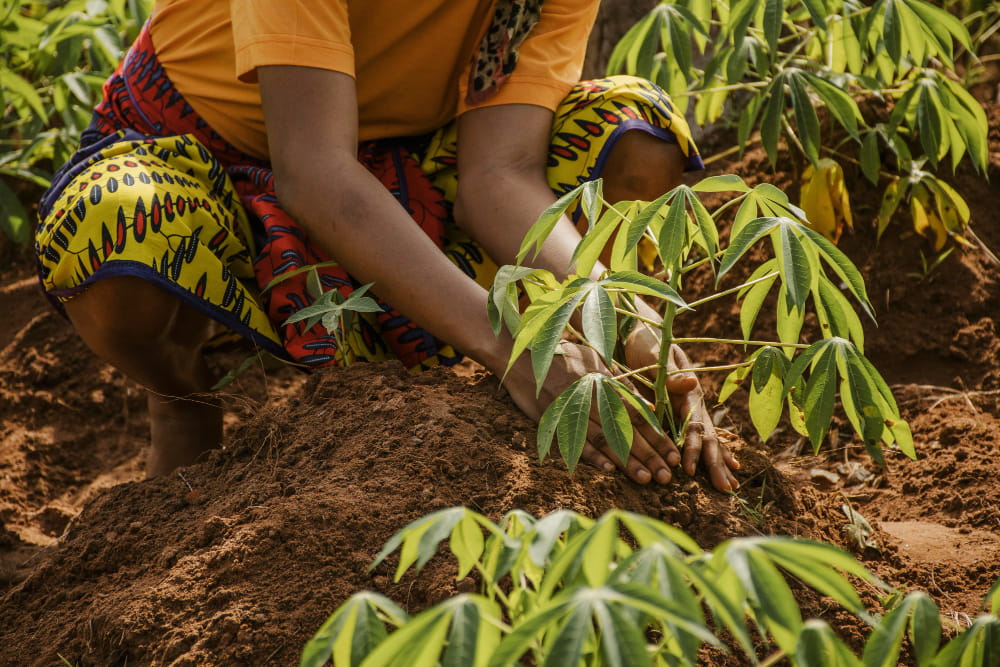
Cassava Processing in Guinea: Turning a Staple Crop into a Profitable Agribusiness – Cassava is more than a staple crop in Guinea. With the right processing infrastructure, it can become the foundation of a value-added agribusiness serving food manufacturers, retailers, animal-feed producers, and regional markets.
Cassava processing in Guinea offers investors an opportunity to move beyond the sale of fresh roots and develop products with longer shelf lives, broader market applications, and greater commercial value. These can include cassava flour, starch, dried chips, animal-feed ingredients, and other processed products.
The opportunity is particularly relevant as Guinea seeks to strengthen agricultural value chains and increase domestic processing. In 2026, the Government of Guinea and the World Bank launched the Guinea AgriConnect Compact, which aims to accelerate agrifood transformation, strengthen food security, create jobs, and support industrialization. The World Bank has also highlighted cassava processing among investment projects progressing toward investment readiness in Guinea.
For investors, the key question is not simply whether Guinea can produce cassava, but how cassava can be efficiently collected, processed, packaged, and sold into profitable markets.
Why Cassava Processing Matters in Guinea
Fresh cassava has an important limitation: it is highly perishable.
According to the Food and Agriculture Organization (FAO), cassava roots can deteriorate within only a few days after harvesting. This makes rapid handling and processing particularly important for businesses operating at commercial scale.
Processing changes this equation.
Instead of transporting large quantities of fresh roots over long distances, processors can transform cassava into products that are easier to store, transport, package, and market.
FAO identifies cassava as a raw material for a wide range of processed products, including flour and starch. Processing can therefore create additional demand for cassava while providing opportunities for agricultural value addition.
For Guinea, this creates a potential connection between farmers and industrial buyers:
Cassava farmers → Collection centers → Processing facility → Finished products → Domestic or regional markets
A well-organized value chain can also create additional activities in transportation, packaging, equipment maintenance, quality control, warehousing, and distribution.
Guinea’s Agricultural Base Supports Cassava Processing
Guinea has a substantial agricultural resource base that can support food-processing investment.
According to the Agency for the Promotion of Private Investments (APIP), Guinea has approximately 13.7 million hectares of identified arable land, of which around 38% is currently exploited. APIP also identifies cassava among the crops suited to Guinea’s Upper Guinea region.
The country’s water resources and agricultural diversity provide opportunities for different types of crop production and processing.
However, a cassava processing facility should not be developed based solely on the availability of agricultural land.
The most important factor for a processor is a reliable supply of suitable cassava roots.
A processing project therefore needs to consider:
- Availability of cassava-producing farmers
- Seasonal production patterns
- Distance between farms and the processing plant
- Road accessibility
- Expected root volumes
- Root quality
- Processing capacity
- Storage requirements
- Access to electricity and water
- Target product markets
The processing facility should be located close enough to production areas to minimize delays between harvesting and processing.
Cassava Processing Products for Investors
One of the strongest characteristics of cassava is its versatility.
A single processing operation can potentially serve several markets depending on equipment, investment scale, product specifications, and customer demand.
Cassava Flour
Cassava flour can be used in food applications and as an ingredient in composite flour products.
FAO describes cassava as an important source of calories across tropical regions and identifies flour as one of the processed products that can increase the commercial value of cassava.
For an investor, cassava flour can be attractive because processing converts a highly perishable root into a dry product with significantly easier storage and transportation requirements.
Potential customers can include food processors, bakeries, wholesalers, retailers, and institutional buyers, depending on product specifications.
Cassava Starch
Cassava starch has applications in food and industrial markets.
FAO’s technical guidance describes cassava starch processing as involving preparation and extraction, purification, water removal, drying, and finishing.
Producing starch at commercial scale requires more sophisticated infrastructure than basic cassava drying or flour production. However, it can provide access to industrial customers that require consistent technical specifications.
Dried Cassava Chips
Dried chips provide another processing route.
Drying reduces moisture and makes cassava easier to store and transport. Depending on specifications, dried cassava products can be used in animal-feed applications and other markets.
FAO identifies cassava chips, pellets, meal, and other cassava products as potential feed ingredients.
This creates an opportunity for processors to target the livestock and feed industries rather than relying exclusively on human-food markets.
Cassava-Based Animal Feed
Cassava contains significant amounts of starch and can serve as a carbohydrate ingredient in animal-feed formulations.
FAO notes that cassava products have applications in the animal-feed industry and can compete with other carbohydrate sources such as maize and sorghum based on price, quality, availability, and nutritional characteristics.
A Guinea-based processor could therefore evaluate opportunities to supply feed manufacturers or develop its own feed-related products, subject to technical, safety, and regulatory requirements.
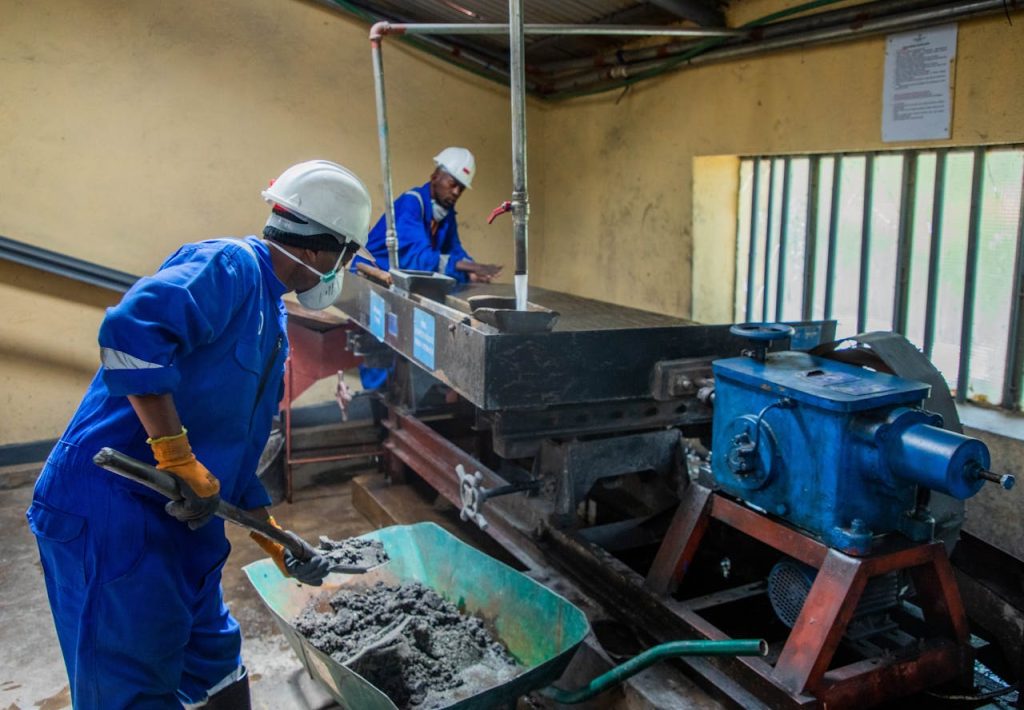
How a Commercial Cassava Processing Facility Works
A commercial processing business needs a reliable process from raw-material collection to finished-product distribution.
Step 1: Cassava Collection
Fresh roots are collected from farms and transported to collection points or directly to the processing facility.
Because cassava deteriorates quickly after harvesting, logistics need to be coordinated with harvesting schedules.
Step 2: Cleaning and Preparation
Roots are cleaned and prepared for processing.
Depending on the product, operations can include washing, peeling, trimming, and size reduction.
Step 3: Processing
The processing method depends on the final product.
Flour production may involve grating, pressing, drying, milling, and sieving. Starch production requires additional separation and purification stages.
Step 4: Drying and Quality Control
Moisture management is critical for products intended for longer storage.
Processors should establish quality-control procedures covering raw materials, processing conditions, moisture levels, contamination risks, packaging, and finished-product specifications.
Step 5: Packaging and Storage
Finished products should be packed according to their intended market.
Proper packaging protects products from moisture, contamination, physical damage, and deterioration during transportation.
Step 6: Distribution or Export
The final product can be sold through domestic wholesalers, food manufacturers, feed producers, retailers, or regional buyers.
Export-oriented processors will also need to address destination-market requirements, documentation, quality standards, and logistics.
Building a Reliable Cassava Supply Chain
A processing factory is only as strong as its raw-material supply.
Investors should therefore consider developing structured relationships with cassava farmers rather than relying entirely on spot-market purchases.
Possible models include:
Contract Farming
A processor can work with farmers under arrangements covering expected production volumes, quality requirements, delivery schedules, or purchasing conditions.
Farmer Cooperatives
Working with organized producer groups can make aggregation easier and improve communication between farmers and processors.
Collection Centers
Collection centers can consolidate cassava from surrounding farms before transportation to the main processing facility.
Integrated Farming and Processing
Larger investors can combine their own cassava production with purchases from independent farmers.
This can provide a more diversified supply base and help reduce dependence on one production source.
Location Matters for Cassava Processing in Guinea
Choosing a processing location requires more than finding inexpensive industrial land.
The facility should be strategically positioned between raw-material production and target markets.
Important considerations include:
- Proximity to cassava-producing communities
- Road quality
- Transportation costs
- Electricity availability
- Water supply
- Warehouse space
- Labor availability
- Packaging suppliers
- Access to major domestic markets
- Export logistics
The World Bank has identified rural infrastructure, market connectivity, and value-chain development as important areas for improving Guinea’s agricultural sector.
For cassava processors, better connectivity can reduce the time and cost required to move roots and finished products.
Domestic Markets vs. Export Markets
Investors do not necessarily need to start with international exports.
A domestic-market strategy can provide an initial customer base for cassava flour, chips, starch, or feed ingredients.
Once production, quality control, packaging, and supply consistency are established, the company can explore regional or international markets.
Export development requires additional preparation.
Potential buyers may require:
- Consistent product specifications
- Food-safety documentation
- Traceability
- Appropriate packaging
- Laboratory testing
- Phytosanitary documentation where applicable
- Reliable shipment volumes
- Consistent delivery schedules
FAO’s guidance on cassava trade emphasizes the importance of maintaining quality standards and ensuring sufficient quantities for regular shipments when targeting international markets.
Therefore, export should be treated as a supply-chain strategy rather than simply a sales destination.
Investment Opportunities Along the Cassava Value Chain
Cassava processing does not have to mean building one large factory.
Investors can enter different parts of the value chain depending on capital and expertise.
Small and Medium Processing Units
These can focus on products such as flour, dried chips, or other locally demanded processed cassava products.
Industrial Flour Production
Larger facilities can supply food manufacturers and institutional customers requiring standardized cassava flour.
Starch Production
Industrial starch production can target food and non-food applications where technical specifications and consistent quality are important.
Feed Ingredient Processing
Processors can develop dried cassava products for animal-feed markets.
Collection and Logistics
Investment opportunities can also exist in aggregation centers, transportation, warehousing, and other infrastructure supporting cassava processors.
APIP identifies the creation and development of agricultural hubs, processing units, and infrastructure for equipment and conservation among Guinea’s agricultural investment opportunities.
Challenges Investors Should Consider
Cassava processing has potential, but it is not automatically profitable.
The economics depend on raw-material prices, processing efficiency, equipment utilization, labor, energy, transportation, product yields, market prices, and the ability to sell finished products consistently.
Raw Material Supply
A factory with insufficient cassava volumes cannot operate efficiently.
Post-Harvest Deterioration
Delays between harvesting and processing can reduce raw-material quality.
Energy and Water
Processing facilities require reliable utilities, particularly for cleaning, processing, drying, and other operations.
Quality Control
Different buyers can require different specifications. A processor must be able to produce consistently.
Market Volatility
Prices for agricultural commodities and processed products can change, so investors should conduct market research before selecting production capacity.
A detailed feasibility study should therefore be completed before purchasing major processing equipment or developing a large facility.
How Yes Invest Guinea Can Support a Cassava Processing Project
Foreign investors entering Guinea’s agro-processing sector need to coordinate several areas at once, including business registration, investment procedures, local partnerships, site selection, regulatory compliance, and market entry.
Yes Invest Guinea provides support for investors exploring business opportunities in Guinea, including market-entry assistance, company establishment, administrative coordination, local networking, and investment-related guidance.
For investors developing a cassava project, the process can begin by defining the desired product, production capacity, raw-material requirements, target customers, location, investment budget, and distribution strategy.
You can also read our guide on How to Start a Business in Guinea for an overview of the business-registration process.
For broader agricultural opportunities, explore Agriculture and Agribusiness in Guinea.
Frequently Asked Questions
1. Is cassava processing a good business opportunity in Guinea?
Cassava processing can create value by transforming perishable roots into products with longer storage and wider commercial applications. The viability of an individual project depends on raw-material supply, processing costs, product demand, infrastructure, and market access.
2. What cassava products can be produced in Guinea?
Potential products include cassava flour, starch, dried chips, pellets, meal, and other processed food or feed ingredients. The appropriate product depends on available technology and target-market requirements.
3. Why is processing important for cassava?
Fresh cassava deteriorates rapidly after harvesting. Processing can extend usability, facilitate transportation and storage, and create products that can reach different domestic and regional markets.
4. Where should a cassava processing factory be located?
The ideal location should provide access to cassava-producing areas while maintaining efficient connections to major markets. Investors should evaluate road access, electricity, water, labor, warehousing, and transportation costs before selecting a site.
5. Can cassava products from Guinea be exported?
Cassava products can potentially be developed for regional and international markets, provided the products meet applicable buyer, food-safety, quality, documentation, and import requirements. Export feasibility should be assessed for each specific product and destination.
Turn Cassava Production into a Value-Added Business
Cassava processing in Guinea presents an opportunity to connect agricultural production with manufacturing, food supply, animal feed, logistics, and regional trade.
The strongest business model will depend on the investor’s target market and available resources. A processor may begin with flour or dried products and later expand into starch, feed ingredients, or other value-added products as supply and market relationships develop.
The essential starting point is a detailed feasibility assessment covering cassava supply, location, processing technology, production capacity, operating costs, product demand, quality requirements, and distribution.
Are you planning a cassava processing project in Guinea? Contact Yes Invest Guinea to explore the market, structure your investment, and identify the right entry strategy for your agribusiness.
Primary Keyword: Cassava Processing in Guinea
Additional Keywords: Cassava Processing Investment in Guinea; Cassava Processing Business in Guinea; Cassava Flour Production in Guinea; Cassava Starch Production in Guinea; Cassava Value Chain in Guinea; Cassava Agribusiness in Guinea; Cassava Products in Guinea; Agro-Processing in Guinea; Cassava Flour and Starch
Article Title: Cassava Processing in Guinea: Turning a Staple Crop into a Profitable Agribusiness
Alt Text: Cassava processing and agribusiness investment in Guinea | Yes Invest Guinea
Meta Description: Cassava Processing in Guinea – Explore cassava flour, starch, feed products, value addition, and agribusiness opportunities for investors.
Post Title: Cassava Processing in Guinea: Agribusiness Opportunities