China’s presence in Guinea is no longer an emerging trend. It is the dominant commercial force shaping the country’s mining, processing, and infrastructure landscape. Baowu Resources increased its controlling stake in the Winning Consortium Simandou to 51% in early 2026. Chalco announced a $1 billion investment to build Guinea’s first offshore alumina refinery with a target capacity of 1.2 million tonnes per year. SPIC launched construction of a second major alumina refinery in Boké in March 2025. The scale of Chinese industrial capital flowing into Guinea is historic.
But the opportunity for Chinese investors is not limited to the state-owned enterprise tier. The concentration of major Chinese-backed projects in Guinea has created a vast ecosystem of commercial demand for equipment, logistics, construction, services, training, trade, and professional support that Chinese SMEs, entrepreneurs, and private capital can supply directly, provided they take the essential first step: registering a Guinean company.
In this guide, Yes! Invest Guinea outlines the core business categories where Chinese investors can build profitable, legally compliant operations in Guinea after establishing a local company.
Why a Registered Guinean Company Is the Essential First Step for Chinese Investors
Guinea’s Local Content Law (L/2022/010/CNT) requires mining companies and their supply chains to progressively localise their workforce and procurement. Enterprises without a registered local entity cannot accumulate the compliance track record needed to win supply chain contracts from Simandou operators. More broadly, direct contract execution, bank account holding, local licence applications, and employment of Guinean staff under compliant contracts all require a registered Guinean legal entity.
For Chinese investors specifically, there is an additional dimension. Banking due diligence for Chinese-owned entities in Guinea is thorough, with local banks conducting detailed ultimate beneficial owner reviews, requiring French-language notarised documentation, and scrutinising business substance evidence for entities that cannot demonstrate existing operations. Setting up the company correctly from the start, with properly prepared documentation, significantly reduces the KYC friction that many Chinese investors have found extends the account opening process well beyond initial expectations.
The Six Core Business Categories for Chinese Investors in Guinea
1. Mining Services and Equipment Supply
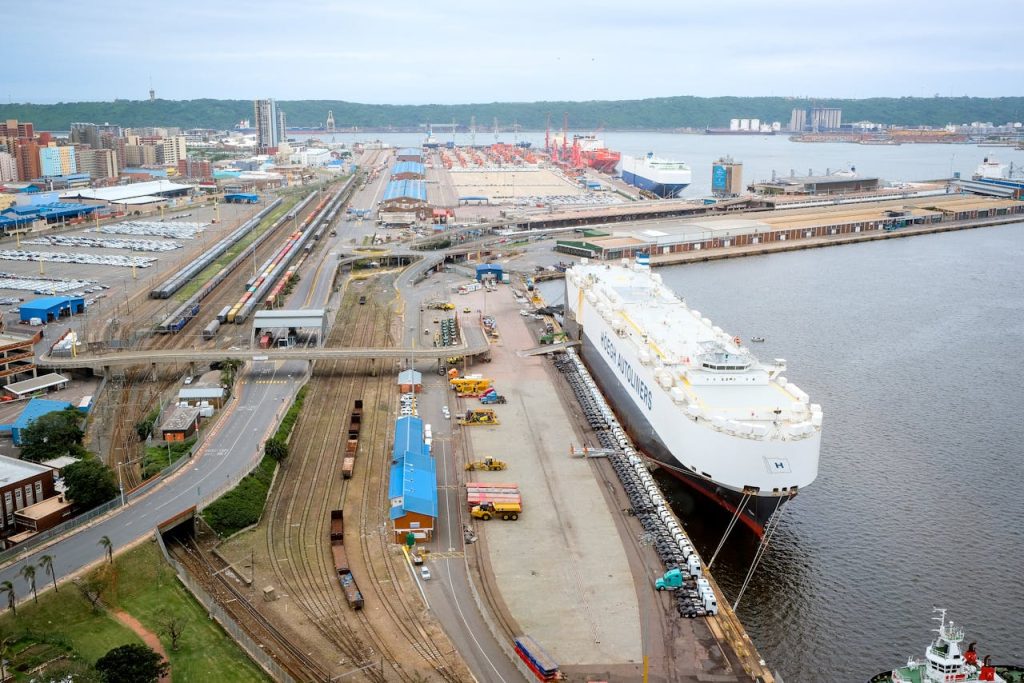
The Simandou project, with mine development, a 650-kilometre trans-Guinean railway, and a deep-water port at Morebaya, represents one of the largest ongoing construction and operational contracts in Africa. Total investment across all components exceeds $20 billion. Chinese investors who register Guinean companies can pursue:
- Equipment supply and leasing for mining, heavy haulage, and railway maintenance
- Repair and maintenance services for mine sites and railway operations
- Personnel and materials transport logistics between mine sites and the port
- Camp management services including catering, accommodation, and cleaning for project workers
Baowu Resources has publicly committed to advancing local content compliance and meeting internationally recognised ESG standards across its supply chain. Chinese SMEs that register locally and hold verifiable compliance credentials are the preferred suppliers for exactly this kind of commitment.
2. Bauxite Processing and Alumina Production Support
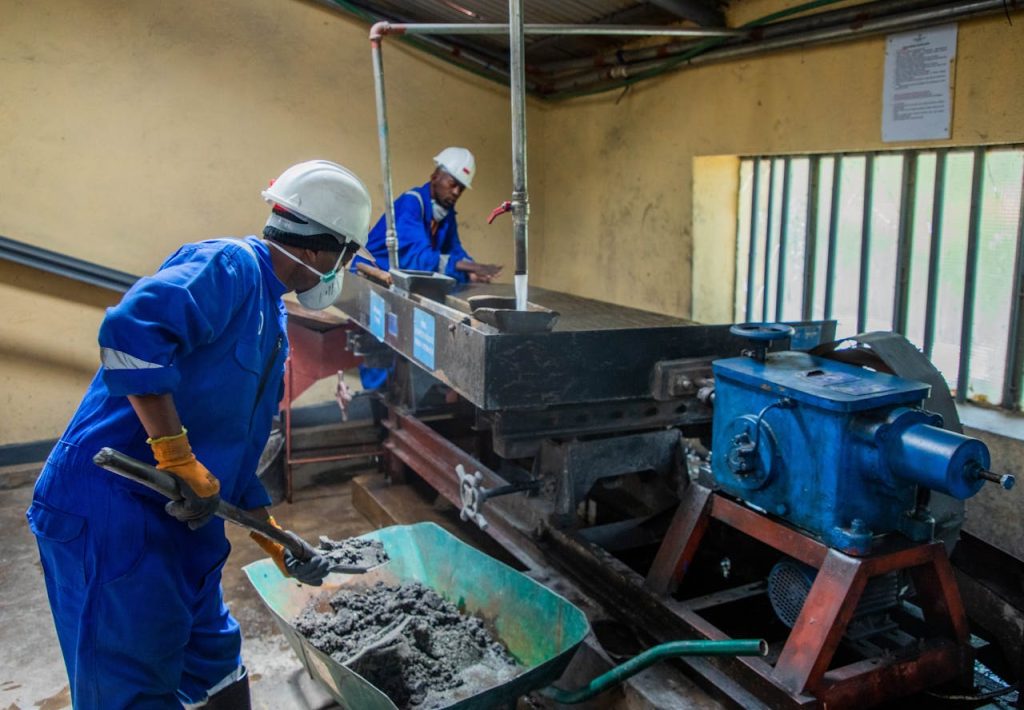
Guinea plans to have five to six operational alumina refineries running by 2030, with Chinese capital leading the buildout. The WCAG refinery in Boké, backed by the Winning Consortium and representing a $1.2 billion investment, began construction in December 2025. SPIC’s refinery in the same region launched in March 2025 with a dedicated 250 MW power plant. Chalco’s GAC joint venture is adding another 1.2 million tonnes of planned annual capacity.
These projects require construction support, equipment installation and commissioning, plant operations and maintenance services, and energy infrastructure supply across a multi-year buildout that will define Guinea’s industrial landscape through the early 2030s. Chinese investors who register Guinean companies and hold the relevant technical credentials are positioned to supply services to facilities where the primary operators are already Chinese-managed and Chinese-funded.
3. Import-Export Trade and Distribution
China has granted Guinea zero-tariff treatment on 98% of taxable products exported to China, according to trade policy documentation from China’s Ministry of Commerce. For registered Guinean trading companies, this creates a direct commercial advantage in structuring export flows of bauxite, alumina, gold, and agricultural commodities toward Chinese buyers.
In the import direction, Chinese consumer goods, hardware, building materials, textiles, generators, and small agricultural machinery already flow into Guinea through informal trading networks. More than 50 Chinese-run retail operations currently trade in Guinea. A registered Guinean company elevates this activity from informal retail into formal procurement contracts with mining companies, construction firms, and institutional buyers, unlocking order volumes that informal operators cannot access.
4. Construction and Infrastructure Services
Though Simandou’s primary civil works are in an advanced stage, port commissioning, supporting facility construction, accommodation development for Simandou-linked workforce expansion in secondary cities, and maintenance contracts for completed railway and port infrastructure continue to generate commercial opportunities. Beyond Simandou, Guinea’s broader infrastructure program, referenced in the country’s Simandou 2040 national strategy, identifies 122 strategic projects requiring construction and engineering services over the next decade.
Chinese construction and engineering firms that establish registered Guinean entities can compete for civil engineering subcontracts, specialist installation services, and facility maintenance contracts at a scale that foreign firms without local registration cannot access through direct bidding.
5. Technical Training and Skills Transfer Services
Guinea’s Local Content Law requires mining sector companies to achieve 50% Guinean management staff and 85% Guinean technical staff within seven years. This creates mandatory, sustained demand for vocational training, safety certification, technical skills programs, and management development training that Chinese-operated training centres and educational institutions are well positioned to supply.
Chalco’s joint venture agreement includes explicit plans to establish an engineering school in Guinea with capacity for 100 students per specialty per year. This institutional commitment from a major Chinese operator signals a broader demand for structured Chinese-delivered technical education that private Chinese training centre investors can supply independently.
6. Professional Services for Chinese-Owned Guinea Enterprises
The concentration of Chinese enterprises in Guinea has created demand for Chinese-language professional services that local providers and non-Chinese international firms cannot easily supply. Chinese investors who register Guinean companies in professional services can address:
- Legal and compliance consulting under the OHADA framework, delivered in Chinese for Chinese clients
- Accounting and financial reporting compliant with both SYSCOHADA and Chinese parent company requirements
- Tax planning leveraging Guinea’s Investment Code incentives, including Privileged Regime applications
- Bank account opening and KYC coaching specifically tailored for Chinese-owned entity structures
The Registration Process for Chinese Investors
Guinea’s company formation is managed through APIP, the Agency for the Promotion of Private Investments, which operates as a one-stop shop for most sectors. Mining investments are processed through the CPDM. For Chinese investors, the practical requirements include:
- Shareholder and director identification (passport copies)
- OHADA-compliant articles of association, notarised and translated into French
- Proof of registered business address in Guinea
- Bank capital deposit certificate where applicable
A properly documented SARL can be registered within two to four weeks. The principal friction point for Chinese-owned entities is bank account opening, where KYC reviews are thorough and incomplete documentation extends timelines significantly. Professional pre-application preparation, including French-language notarised document packages and clear beneficial ownership disclosure, is the most effective mitigation.
Tax Framework for Chinese Investors in Guinea
Guinea applies a standard corporate income tax rate of 25% for most commercial and service companies, 30% for mining permit holders, and 35% for banks, telecoms, insurance, and petroleum distributors. VAT is 18%. Withholding tax on dividends, interest, and royalties paid to non-residents is 15%.
There is currently no bilateral tax treaty between China and Guinea. Chinese investors who structure through a French intermediate holding entity may access the France-Guinea treaty, which reduces withholding on royalties to 10% for qualifying flows. According to UNCTAD’s Investment Laws Navigator for Guinea, Guinea’s Investment Code Privileged Regime provides qualifying investors with corporate income tax holidays of five to eight years and customs duty exemptions on imported equipment, accessible through APIP after company registration.
How Yes! Invest Guinea Supports Chinese Investors
Yes! Invest Guinea provides full-service company registration and business setup support for Chinese investors entering Guinea’s market. Our services include:
- SARL formation through APIP and RCCM with OHADA-compliant documentation
- Sector licence applications across mining services, trading, construction, and logistics
- Tax and CNSS registration and Investment Code Privileged Regime applications
- Bank account opening preparation including KYC package development for Chinese-owned structures
- Local content compliance planning from registration through operational ramp-up
- Introduction to supply chain procurement contacts across Simandou, WCAG, SPIC, and Chalco operations
Frequently Asked Questions
- Can Chinese investors own 100% of a Guinean company? Yes. Guinea’s Investment Code permits full foreign ownership in most sectors. Exceptions include media (40% foreign cap), private security (nationals only), and the mining sector where the state holds a 15% free carried interest in all entities holding mining rights.
- Is there a tax treaty between China and Guinea? No bilateral tax treaty is currently in force between China and Guinea. Chinese investors who structure through a French intermediate holding company may access the France-Guinea treaty, which provides reduced withholding rates on qualifying flows.
- Why is bank account opening difficult for Chinese-owned Guinea companies? Guinean banks apply detailed KYC reviews for Chinese-owned entities, requiring ultimate beneficial owner penetration, French-language notarised documentation, and business substance evidence. Pre-application preparation of a comprehensive KYC package significantly improves success rates.
- What local content compliance obligations apply to Chinese investors in Guinea? Guinea’s Local Content Law requires 50% Guinean management staff and 85% Guinean technical staff within seven years, mandatory local procurement priorities, and annual local content compliance certificate renewal. These obligations apply to enterprises operating in the mining sector and its supply chain.
- How can Yes! Invest Guinea help Chinese investors register and operate in Guinea? Yes! Invest Guinea manages APIP registration, OHADA document drafting, sector licence applications, KYC bank account preparation, local content compliance planning, and supply chain introductions to major Chinese-backed Guinea operators.
Register Your Guinean Company and Enter the Market That Chinese Capital Is Building
Guinea’s mining transformation is being led by Chinese capital, and the supply chain that transformation requires is being actively built. Chinese SMEs and service providers who register locally, meet local content requirements, and position themselves as compliant suppliers to the major operators have a natural language, cultural, and commercial advantage over any competing supplier base. The market is being built right now. The companies that register first will capture the best positions.
Connect with Yes! Invest Guinea today to register your Guinean company and begin accessing the supply chain opportunities that Simandou, Chalco, SPIC, and WCAG are generating across Guinea’s fastest-growing economic zones.