Simandou business opportunities in Guinea are generating hundreds of millions of dollars in contracts right now and the companies capturing them are not all large multinationals. They are logistics operators, equipment suppliers, training providers, facility managers, and professional services firms that registered a Guinean company early and positioned themselves inside the Simandou value chain before the bulk of procurement spending began to flow.
SimFer alone spent USD 210.5 million with Guinean suppliers in 2026. The project has mobilized close to 60,000 workers at peak construction. Iron ore shipments reached 2.2 million tonnes in the first half of 2026, and full capacity of 60 million dry tonnes annually is targeted for the second half of 2028. Simandou is no longer a future story. It is a present commercial reality, and the companies positioned inside its supply chain now will hold the strongest competitive positions as production scales.
The gateway to this market is a registered Guinean company. Guinea’s Local Content Law mandates that foreign operators subcontract at least 40 percent of service volume to locally registered companies, with unskilled labor positions reserved entirely for Guinean nationals. Without a registered legal entity in Guinea, you cannot access this mandated local spending. With one, you can.
Understanding Simandou’s Scale: Why This Is Different From Other Mining Projects
A Project That Reshaped Guinea’s Economy Before First Ore
The Simandou project spans four mining blocks across southeast Guinea, connected to the Atlantic coast by a 650-kilometer Trans-Guinean Railway and a deep-water port at Morebaya. The project is structured across two operating consortia:
- Winning Consortium Simandou (WCS): Operating Blocks 1 and 2, with Baowu Resources acquiring a controlling 51% stake in early 2026
- SimFer: Operating Blocks 3 and 4, with Rio Tinto holding 53% and a Chinalco-led Chinese consortium holding the balance
The Guinean State holds a 15 percent free-carried interest in both mining ventures. At full production, Simandou will supply approximately 60 million tonnes of high-grade iron ore annually, making Guinea one of the world’s top iron ore exporters and adding an estimated 26 percent to Guinea’s GDP by 2030, according to the International Monetary Fund’s Guinea country assessment.
What Full Production Means for Business Investors
The mine-to-port supply chain creates sustained, recurring procurement demand that does not peak and decline like a construction project. Every tonne of iron ore that leaves Morebaya port requires fuel, maintenance, logistics coordination, catering, security support, environmental monitoring, and technical services. At 60 million tonnes annually, these are not episodic needs. They are contractual, predictable, and growing.
Seven Business Categories Where Registered Guinea Companies Can Access Simandou Contracts
1. Logistics and Transport Services
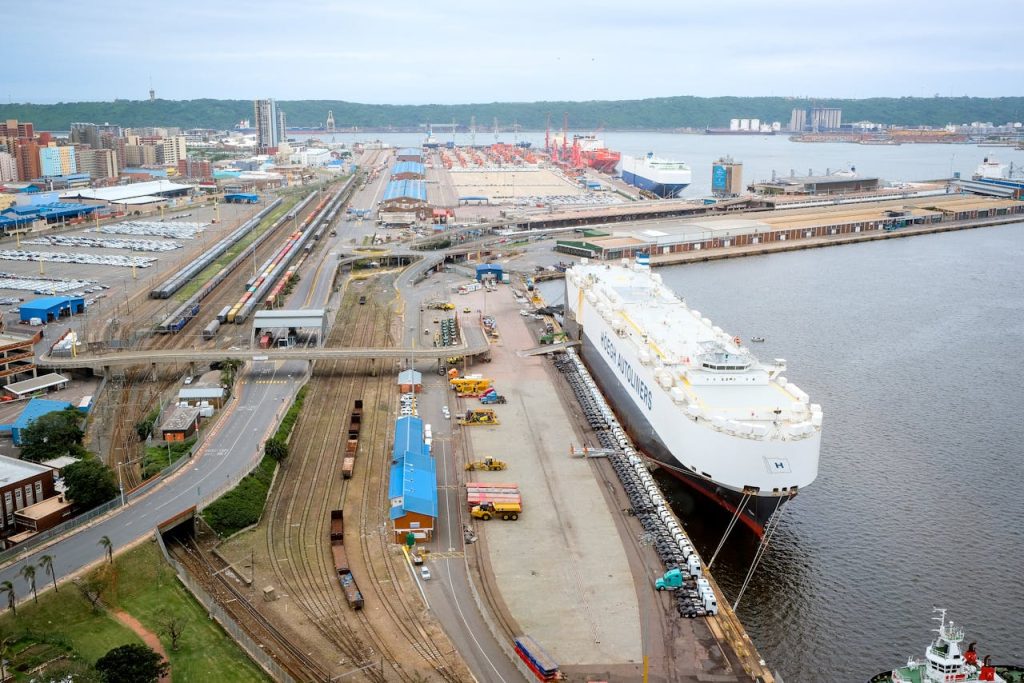
The Simandou corridor generates logistics demand at every stage: moving equipment and supplies from Conakry port to mine sites across 650 kilometers of railway and road, transporting personnel between operational bases, and coordinating last-mile freight within the mining and port zones. Mining operators consistently prefer contracting logistics services to locally registered companies over managing these functions directly.
Specific logistics business models that fit Simandou demand:
- Last-mile transport: Moving equipment, materials, and personnel between mine sites, railway terminals, and the port
- Warehousing and storage: Temporary and permanent storage along the Trans-Guinean corridor
- Freight forwarding: Managing import documentation and customs clearance for equipment flows
- Vehicle maintenance and repair: Servicing the large fleets of heavy trucks, rail equipment, and support vehicles that Simandou operations require daily
2. Equipment Supply, Leasing, and Maintenance
Mining and railway infrastructure require continuous equipment and specialist maintenance that Simandou operators increasingly prefer to source locally rather than manage through international procurement chains. A 2026 market analysis identified recurring demand for crushing and processing equipment, heavy-haul rail system components, port handling equipment, power generation systems, and specialized construction machinery.
For investors with equipment industry backgrounds, establishing a Guinean registered company that leases specialized machinery, distributes OEM spare parts, and provides scheduled maintenance services creates recurring B2B revenue from the highest-spending corporate clients in Guinea’s economy. Investment Code registration additionally qualifies qualifying equipment imports for customs duty exemptions, meaningfully improving operational economics.
3. Construction and Engineering Services
While Simandou’s main construction phase is advanced mine construction approximately 74-77 percent complete as of mid-2026 significant construction work remains: port commissioning scheduled for Q1 2027, permanent mine processing facilities still being completed, permanent accommodation and office infrastructure, and ongoing railway and port maintenance. Beyond the core project, the communities and service towns growing around the mining corridor generate construction demand for housing, schools, health facilities, and commercial buildings.
French companies including Eiffage and Bouygues Bâtiment International have already positioned themselves for Simandou-related construction contracts. Smaller specialized firms can enter as subcontractors for civil works, MEP installation, and infrastructure maintenance under Guinea’s mandatory local subcontracting requirements.
4. Training and Capacity Building Services
Guinea’s Local Content Law creates the most commercially reliable demand category for knowledge-based businesses entering the Simandou ecosystem. The law mandates that mining operators achieve 50 percent Guinean management staff and 85 percent Guinean technical staff within seven years of establishment, alongside mandatory training investment and skills transfer programs. SimFer has already committed to training programs including sending Guinean seafarer trainees to China for port operations education.
Training businesses that position themselves as certified providers of mining, logistics, safety, and industrial skills training for Guinean workers fill a compliance gap that every operator in the Simandou value chain must address. First-mover training companies that establish recognized certification programs and operational track records with major operators create a durable competitive position that new entrants cannot quickly replicate.
5. Catering, Facilities, and Camp Support Services
With 60,000 workers mobilized at peak construction and sustained operational workforce in the thousands through production, Simandou’s camps, mine facilities, and port operations require comprehensive support services. Catering, facility management, cleaning, laundry, and housekeeping services are all contracted to third-party providers rather than managed internally by mining operators.
These services typically carry lower barriers to entry than technical mining services, allowing smaller investors to establish operational Guinean companies and grow service capacity incrementally as contracts scale. The caveat is that private security is reserved exclusively for Guinean nationals under Guinea’s regulatory framework — any security component of a facility management offering must be structured accordingly.
6. Environmental, Social, and Monitoring Services
Mining operations face increasing scrutiny on environmental and social performance from international lenders, equity investors, and regulatory authorities. SimFer has implemented road safety campaigns across eight prefectures and community engagement forums serving affected communities. These are not voluntary initiatives they are requirements attached to the project’s financing conditions and operating licenses.
Environmental monitoring, water quality assessment, biodiversity baseline studies, social impact measurement, community liaison management, and mine site rehabilitation planning are all specialized services that international operators consistently prefer to source from independent third parties with recognized methodologies and international credibility. Knowledge-based businesses with environmental or social expertise that establish Guinean registered companies can access these contracts while maintaining the arms-length independence that operators’ financing requirements demand.
7. Professional and Financial Services
The concentration of operating companies, contractors, and service providers around Simandou creates sustained demand for professional services: OHADA-compliant legal advice, SYSCOHADA accounting and audit, tax planning around Guinea’s investment code incentive framework, trade finance for equipment imports, and working capital facilities for suppliers managing payment cycles between contract commencement and invoice settlement.
According to the World Bank’s private sector development assessment for Guinea, strengthening the professional services ecosystem around Guinea’s extractive sector is a priority for sustainable economic diversification. Professional service firms that establish Guinean legal entities and build local teams with OHADA and mining sector expertise serve a captive client base that grows with every new operator, contractor, and supplier entering the Simandou orbit.
How to Register a Company in Guinea to Access Simandou Contracts
The Legal Vehicle: SARL for Most Investors
The SARL (Société à Responsabilité Limitée) is the appropriate corporate structure for most investors seeking to participate in Simandou’s supply chain. It accommodates single or multiple shareholders, allows 100 percent foreign ownership in non-restricted sectors, does not require Guinean resident directors, and can be registered through APIP’s one-stop shop in as little as 72 hours for complete, properly prepared applications.
Meeting Local Content Requirements From Day One
Simandou operators require their suppliers to hold Local Content Compliance Certificates, valid for one year and renewable, confirming compliance with Guinea’s 2022 Local Content Law. Building local hiring plans, training programs, and Guinean procurement strategies into your business model before registration, rather than after contract award, ensures your company qualifies for the local content certification that procurement gatekeepers require.
Investment Code Incentives for Qualifying Operations
Companies registered in Guinea and approved under the Investment Code agrément process qualify for corporate income tax holidays of up to 8 years and customs duty exemptions on imported equipment and machinery. For logistics, maintenance, and construction businesses deploying significant equipment capital, these exemptions meaningfully improve project economics and competitive positioning against offshore alternatives.
For investors assessing the full registration process, local content compliance framework, and Investment Code incentive applications for Simandou-related businesses, YES! Invest in Guinea’s Company Registration service provides specialist facilitation from feasibility through to operational certification.
FAQ: Simandou Business Opportunities and Guinea Company Registration
- Do I need a registered Guinean company to access Simandou contracts? Yes. Guinea’s Local Content Law requires Simandou operators to subcontract at least 40 percent of service volume to locally registered companies. Unskilled labor positions must be filled entirely by Guinean nationals. Without a registered legal entity in Guinea, you cannot access this mandated spending category. With a registered company and a valid Local Content Compliance Certificate, you qualify for procurement processes that offshore companies are excluded from.
- What is the realistic value of contracts available to local companies around Simandou? SimFer alone spent USD 210.5 million with Guinean suppliers in 2026. At full production of 60 million tonnes annually, the operational spending across logistics, maintenance, catering, training, environmental monitoring, and professional services represents a sustained and growing procurement market significantly larger than the construction-phase figures. Local content requirements progressively increase this mandated local spending as operations scale.
- Which Simandou business category has the lowest barriers to entry? Catering, facilities management, and camp support services generally have the lowest initial capital requirements and most accessible skills requirements for new market entrants. Training and professional services also have low asset-intensity for investors with relevant expertise. Equipment leasing and logistics require higher initial capital but generate stronger recurring revenue once operational contracts are established.
- How does Guinea’s Local Content Law affect foreign-owned companies seeking Simandou contracts? Foreign-owned companies can be fully foreign-owned (100 percent is permitted in most sectors) and still qualify for local content contracting, provided the company is formally registered in Guinea, holds a valid Local Content Compliance Certificate, meets the progressive Guinean employment targets (30 percent Guinean management staff at inception, increasing to 50 percent within 7 years), and demonstrates active local procurement and training investment.
- How does YES! Invest in Guinea support investors seeking to access Simandou business opportunities? YES! Invest in Guinea provides complete facilitation for investors targeting Simandou-related business opportunities: OHADA-compliant SARL registration through APIP, Local Content Law compliance framework design, Local Content Compliance Certificate application support, Investment Code agrément applications for tax and customs incentive qualification, sector license applications with relevant ministries, Simandou operator and contractor introductions for supplier registration, and ongoing government liaison throughout the company’s operational lifecycle.
The Procurement Window Is Open — Your Guinean Company Is the Entry Ticket
Simandou is producing. The railway is commissioned. The port is processing ore. SimFer is spending USD 210 million annually with Guinean suppliers and that figure will grow as production scales toward 60 million tonnes. The companies that will capture the largest share of the next five years of Simandou supply chain spending are those that register their Guinea entities now, build their local content compliance foundations before contract pursuit begins, and develop relationships with operator procurement teams before the formal tender processes that will define the project’s full production phase.
YES! Invest in Guinea is your specialist gateway to Guinea’s Simandou business ecosystem. From SARL registration and local content compliance to operator introductions and Investment Code incentives, our team provides the regulatory expertise and commercial connections that turn Simandou’s procurement scale into your company’s most strategic revenue source.