Asia’s most sophisticated institutional investors have been watching Guinea for years. What has changed in 2026 is that watching has turned into doing. Singapore is already inside Guinea’s most consequential infrastructure project. Japan’s trading houses have a documented history in Guinea’s alumina sector. India’s aluminum industry faces a structural supply crisis that Guinea is positioned to solve. Korea’s steel mills need high-grade iron ore that Simandou delivers at scale. Each of these four nations has a distinct entry logic and a different window of opportunity. Understanding who is best positioned, and why, is the starting point for any Asian investor evaluating Guinea seriously.
In this guide, Yes! Invest Guinea maps each country’s current position in Guinea’s investment landscape, assesses the strength of each entry strategy, and identifies where the clearest opportunities remain open for Asian capital.
Singapore: Already Inside the Room
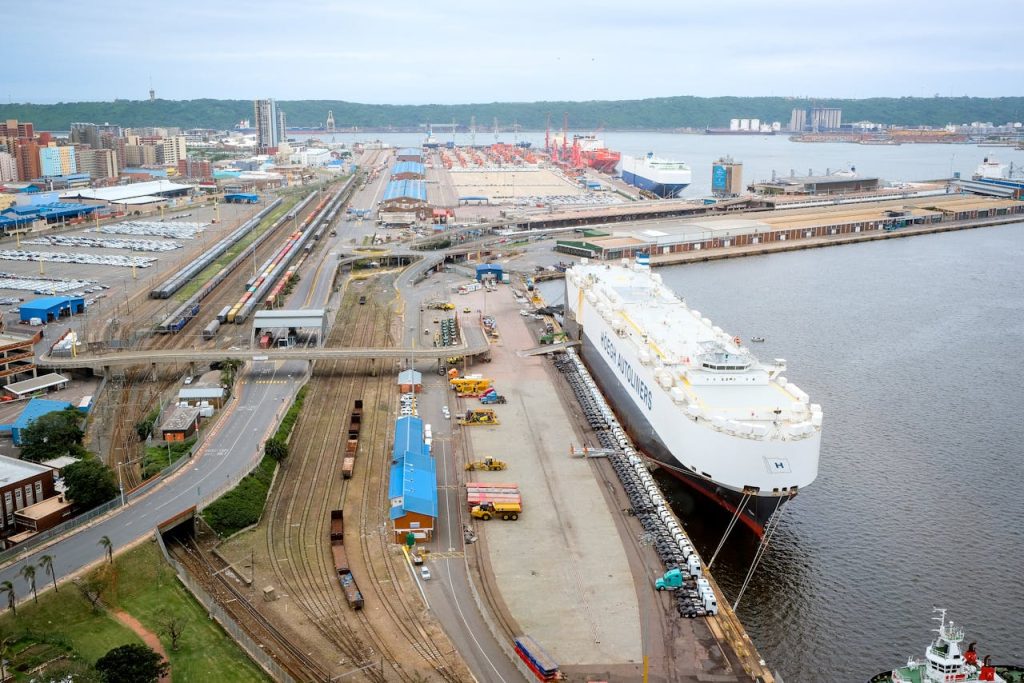
Singapore’s investment position in Guinea is not aspirational. It is operational. Winning International Group, registered in Singapore, sits at the center of the SMB-Winning Consortium, which is among Guinea’s largest bauxite exporters and is now building one of the country’s three major alumina refineries under construction in 2026. The consortium’s $3 billion investment plan includes a 135-kilometer railway connecting Santou’s mines to the Port of Dapilon, a dedicated refinery, and expanded mining licenses a vertically integrated industrial footprint that extends from extraction to export infrastructure.
Singapore’s entry model in Guinea is instructive for other Asian investors because it demonstrates the structure Guinea’s government rewards: committed, vertically integrated investment that includes domestic processing, not just mining access. Winning International’s refinery-first positioning, alongside its bauxite production operations, is precisely the model that resulted in EGA’s concession revocation when the UAE company failed to meet equivalent obligations.
The opportunity for additional Singapore-based capital is in the service and logistics layer above and around Winning’s operations: supply chain management, commodity trading intermediation, and structured financing for Guinea-originating bauxite and alumina flows entering Asian markets. Singapore’s position as Asia’s premier commodity trading hub gives it natural infrastructure for these roles that few other Asian cities can replicate.
Japan: Trading House Expertise With Unfinished Business in Guinea
Japan’s history in Guinea’s alumina sector predates most other Asian investors. The Global Alumina Production Corporation, backed by Japan’s Marubeni and Mitsubishi industrial conglomerates, signed a definitive agreement with Guinea’s government to build a $2 billion alumina refinery at Sangaredi one of the largest foreign investment commitments in West Africa at the time. That project, for a range of financing and political reasons, did not progress to completion. But the due diligence, institutional relationships, and technical knowledge that Marubeni and Mitsubishi built through that process remain relevant.
Japan’s trading houses, known as sogo shosha, operate through precisely the kind of long-duration, relationship-intensive investment model that Guinea’s current regulatory environment favors. They are patient capital with global commodity offtake networks, technical project development capabilities, and experience structuring complex multilateral financing packages. The $2 billion Sangaredi refinery failure was not a failure of strategy. It was a failure of political timing that has since resolved.
In 2026, Japan’s most obvious Guinea re-entry point is alumina refinery equity participation. The government’s five-to-six-refinery target is not fully subscribed even with three projects under construction. A Marubeni- or Mitsubishi-backed refinery consortium, structured with compliant processing commitments from day one and leveraging Japan Bank for International Cooperation financing alongside private capital, is a proposal Guinea’s government would receive with genuine interest. Japan’s ESG credentials and international financial institution relationships also align well with the governance standards Guinea has been signaling it wants from long-term investors.
India: The Import Dependency That Guinea Solves
India’s aluminum industry faces a structural supply problem that Guinea is uniquely positioned to resolve. India is the world’s second-largest aluminum producer but is heavily dependent on imported bauxite to feed refining capacity that has outgrown domestic ore supply. According to analysis from Guinea Mining Insights’ 2026 investment guide, Guinea’s bauxite sector is attracting interest from major international companies across multiple nationalities as the country’s strategic importance to global aluminum supply chains grows.
Indian aluminum producers including Vedanta, Hindalco, and NALCO all have both the strategic motivation and the balance sheet capacity to establish long-term bauxite offtake arrangements or equity positions in Guinea’s mining sector. For Indian investors, Guinea’s gibbsite-dominant bauxite which requires lower refining temperatures than competing deposits also offers a processing efficiency advantage that directly improves the economics of any Indian refinery running on Guinean ore.
India’s entry strategy in Guinea is most naturally structured as a supply security play: long-term offtake agreements with existing operators including the newly formed Nimba Mining, which is actively seeking international buyers committed to minimum annual volumes, combined with equity participation in refinery development that gives Indian producers upstream integration in their most critical raw material.
Nimba Mining’s current commercial strategy, as reported by Ecofin Agency, involves monthly tenders for international trading companies alongside a search for a strategic partner willing to commit to minimum annual purchase volumes. An Indian industrial group or state-owned enterprise that steps in as Nimba’s anchor offtake partner establishes both supply security and a preferred relationship with Guinea’s national mining company simultaneously.
Korea: Steel Mills, Simandou Iron Ore, and the Infrastructure Investment Angle
Korea’s entry logic in Guinea is built on Simandou rather than bauxite. Korea’s major integrated steel producers, including POSCO, have a documented interest in securing high-grade iron ore supply outside their current dependence on Australian and Brazilian sources. Simandou’s 65.8% average iron content, with low impurity levels, represents exactly the premium-grade feedstock that Korean steel producers running advanced steelmaking processes seek for quality consistency and carbon reduction.
The current Simandou ownership structure, with SimFer (Rio Tinto and Chinalco) and the Winning Consortium Simandou (Baowu Steel and Winning International), does not include Korean equity at the mine level. But Korean capital can access Simandou’s iron ore economics through structured offtake agreements with either consortium, and Korean construction, engineering, and infrastructure companies have relevant experience in large-scale mine and railway project execution that Guinea’s broader Simandou 2040 program of 122 strategic projects is actively seeking.
Korea’s infrastructure investment angle is particularly interesting given the scale of Guinea’s broader development program, estimated at $200 billion according to recent reporting on Guinea’s Simandou 2040 strategy. Korean engineering, procurement, and construction firms have strong track records across African infrastructure markets, and Guinea’s pipeline is large enough to absorb multiple large contractor relationships simultaneously.
Who Has the Best Entry Strategy?
Ranked by current execution momentum and strategic fit:
Singapore has the strongest entry strategy because it is already executing. Winning International’s integrated position across bauxite export, refinery construction, and rail infrastructure is the model other Asian investors should study, not just admire.
India has the clearest near-term opening because Nimba Mining is actively seeking an anchor offtake partner right now. An Indian industrial group that moves quickly can establish a preferred supplier relationship with Guinea’s national mining company before competing bidders position themselves.
Japan has the strongest historical credibility and the most appropriate investment culture for Guinea’s current regulatory environment, but faces a re-entry challenge that requires rebuilding institutional relationships after the GAPCO refinery’s non-completion. The opportunity is real and the model is right. The execution requires deliberate engagement rather than passive positioning.
Korea has the most clearly defined strategic interest in Simandou but has been slowest to translate that interest into concrete Guinea engagement. The infrastructure investment angle, via EPC and engineering roles in the Simandou 2040 program, is an accessible entry point that does not require a mining concession and aligns with Korea’s existing African construction track record.
How Yes! Invest Guinea Supports Asian Investors
Yes! Invest Guinea connects Japanese, Korean, Singaporean, and Indian investors with structured Guinea opportunities across the mining, refinery, logistics, and infrastructure value chain. Our support includes:
- Facilitating introductions to Nimba Mining for anchor offtake and strategic partnership discussions
- Connecting Japanese trading houses with alumina refinery equity and project finance opportunities
- Identifying Simandou 2040 program infrastructure contracts relevant to Korean EPC and engineering firms
- Structuring Singapore-based commodity trading and supply chain management arrangements for Guinean bauxite and alumina flows
- Coordinating with the Ministry of Mines, APIP, and the Simandou 2040 program office for all four national investor groups
Frequently Asked Questions
- Which Asian country is most invested in Guinea right now? Singapore, through Winning International Group’s role in the SMB-Winning Consortium, has the deepest current operational footprint in Guinea’s bauxite and alumina sectors, with a $3 billion vertically integrated investment plan that includes a refinery, railway, and expanded mining licenses.
- What is the most urgent Guinea opportunity for Indian investors? Nimba Mining, Guinea’s state-owned bauxite producer targeting 10 million tonnes of production in 2026 and 12 million tonnes from 2027, is actively seeking a strategic partner committed to minimum annual offtake volumes — an opening that directly addresses India’s structural aluminum industry import dependency.
- Why are Japan’s trading houses well suited to Guinea’s current investment environment? Japan’s sogo shosha operate through long-duration, relationship-intensive investment with global commodity offtake networks and multilateral financing capabilities, aligning precisely with the patient, committed capital model that Guinea’s regulatory environment now rewards.
- How can Korean steel mills access Simandou’s premium iron ore? Structured offtake agreements with SimFer or the Winning Consortium Simandou provide Korean steel producers with access to Simandou’s 65.8% average grade iron ore without requiring equity participation at the mine level.
- How can Yes! Invest Guinea help Asian investors enter the market? Yes! Invest Guinea provides introductions to Nimba Mining, alumina refinery partners, infrastructure contract opportunities, and direct coordination with the Ministry of Mines, APIP, and Simandou 2040 program office for Japanese, Korean, Singaporean, and Indian investors.
Asia’s Window in Guinea Is Open — and Competitive
The Asian investors with the sharpest entry strategies are already moving in Guinea. Singapore is building. India has a live tender opening in front of it. Japan has the institutional credibility to re-enter at scale. Korea has a clearly mapped infrastructure opportunity. The question is not whether Guinea is a credible Asian investment destination. It is which investors move decisively enough to capture the best positions before they are taken.
Connect with Yes! Invest Guinea today to build an entry strategy for Japan, Korea, Singapore, or India that is matched to the specific opportunity your capital is best positioned to capture.