European capital has a longer, deeper, and more institutionally embedded relationship with Guinea than almost any other investment community outside China. The European Union is Guinea’s most important trading partner, accounting for approximately 28% of the country’s imports, representing EUR 1.6 billion, with machinery, electrical equipment, vehicles, and processed food supplied mainly from the Netherlands, Belgium, Germany, and France, according to the European External Action Service’s Guinea economic and trade relations overview. Guinea exports bauxite, gold, and diamonds to the EU worth approximately EUR 571 million annually, making the bilateral trade relationship substantial and long-established.
What has changed in 2026 is the depth of institutional support now being directed from European capitals toward private sector investment in Guinea. The EU has allocated EUR 362 million in grant funding to Guinea for the period 2021 to 2027, according to the European Commission’s official Guinea partnership page, with Team Europe in Guinea comprising the EU, the European Investment Bank, Belgium, France, Germany, Italy, and Spain, focused on green and blue economy, stability, and governance. For European private investors, this institutional presence is not just background context. It is a co-financing and de-risking ecosystem that can be actively leveraged.
The Team Europe Infrastructure That European Investors Can Plug Into
The European Investment Bank’s Active Guinea Mandate
The EIB has a documented history of financing Guinea infrastructure, including a EUR 12 million loan for Conakry Harbour development under the Cotonou Agreement framework. Its current mandate under the Global Gateway strategy expands this role significantly. EIB Global, the bank’s development finance arm, is focused specifically on mobilizing private investment alongside public capital in Sub-Saharan African markets including Guinea, with critical sectors spanning green energy, digital infrastructure, health, and sustainable economic growth.
The EIB’s April 2026 partnership with the WTO Secretariat specifically targets the mobilization of capital and improved investment regulation in Sub-Saharan African partner countries. For European private investors entering Guinea across sectors from agriculture to renewable energy to manufacturing, EIB co-financing or guarantee instruments can reduce the effective cost of capital and political risk exposure simultaneously.
The Global Gateway Strategy: Europe’s Infrastructure Investment Rival to China
The EU’s Global Gateway strategy, explicitly framed as a sustainable infrastructure alternative to China’s Belt and Road Initiative, has mobilized nearly EUR 120 billion across more than 80 programmes for Africa since 2021, including Guinea, according to data from the 2025 Africa-Europe Business Forum. The EU remains Africa’s largest trade partner and top investor, accounting for 33% of African goods traded and EUR 239 billion invested in Africa in 2023.
For Guinea specifically, the Global Gateway strategy channels Team Europe resources into agriculture value chains, private sector development, vocational training, green economy initiatives, and governance support. Private European investors who structure projects in these priority sectors are aligning with a EUR 362 million institutional grant envelope that can provide technical assistance, partial financing, and de-risking instruments that reduce effective investment risk below what other foreign investor nationalities can access.
The Samoa Agreement: Guinea’s Legal Trade Framework With Europe
Guinea’s trade relationship with the European Union is now governed by the Samoa Agreement, signed in November 2023 with the Organisation of African, Caribbean and Pacific States (OACPS), replacing the previous Cotonou Agreement. This legal framework provides the basis for the EU-Guinea Economic Partnership Agreement, which gives qualifying Guinean goods preferential access to EU markets.
For European investors structuring manufacturing, agricultural processing, or value-added production in Guinea, the Economic Partnership Agreement framework is a significant advantage. Goods processed in Guinea under the right qualifying conditions can enter EU markets with preferential treatment that investors from China, Singapore, or the United States cannot access through the same channel. This structural trade preference is exclusive to investors who produce within the OACPS framework, and it strengthens the commercial case for value-added investment in Guinea across agriculture, fisheries processing, and light manufacturing.
Where European Technical Expertise Creates Competitive Advantage
Mining Environmental Compliance and ESG Standards
Guinea’s government has been explicit about wanting mining and industrial investments that meet international environmental and social governance standards. The World Bank, IFC, and bilateral European development finance institutions including DEG (Germany), Proparco (France), and BIO (Belgium) all apply rigorous environmental, social, and governance standards as conditions of co-financing. European mining services, environmental compliance, and technical consulting firms who already operate to these standards as a matter of course have a significant competitive advantage over non-European competitors who must adapt to these requirements from a lower baseline.
VINCI Energies, the French engineering group awarded Guinea’s EUR 192 million energy grid expansion contract in April 2026, including a 50 MW solar farm and 350 kilometers of new 225 kV transmission lines, demonstrates exactly this dynamic. European engineering groups with established African track records, ESG-compliant project delivery, and the ability to work alongside European development finance co-financiers are winning large Guinea infrastructure contracts that less credentialed competitors cannot match.
Agricultural Value Chain Development
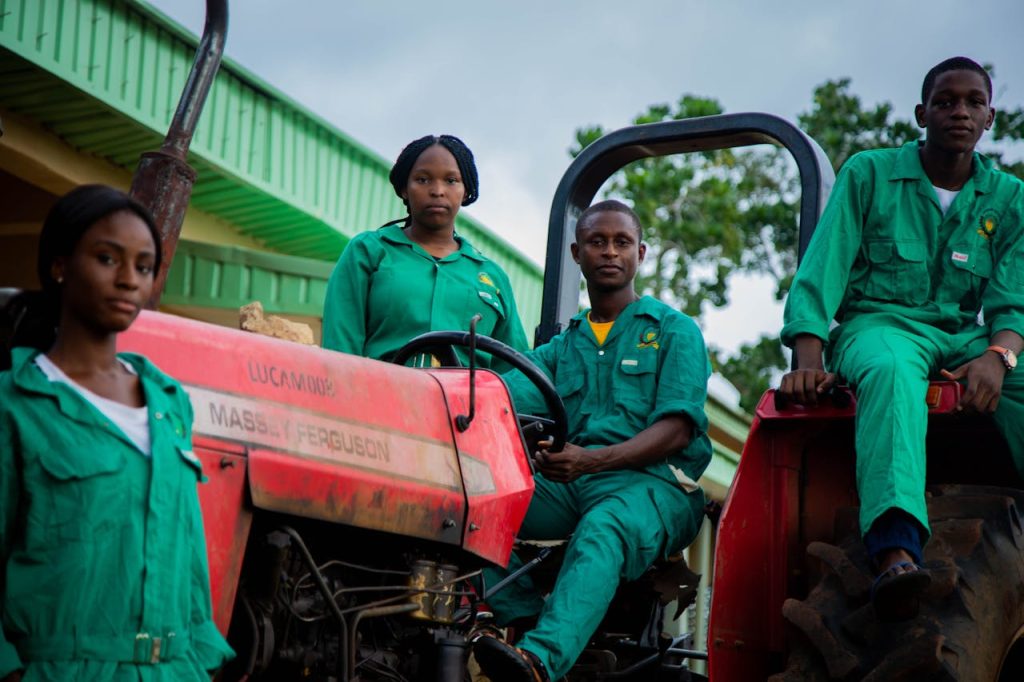
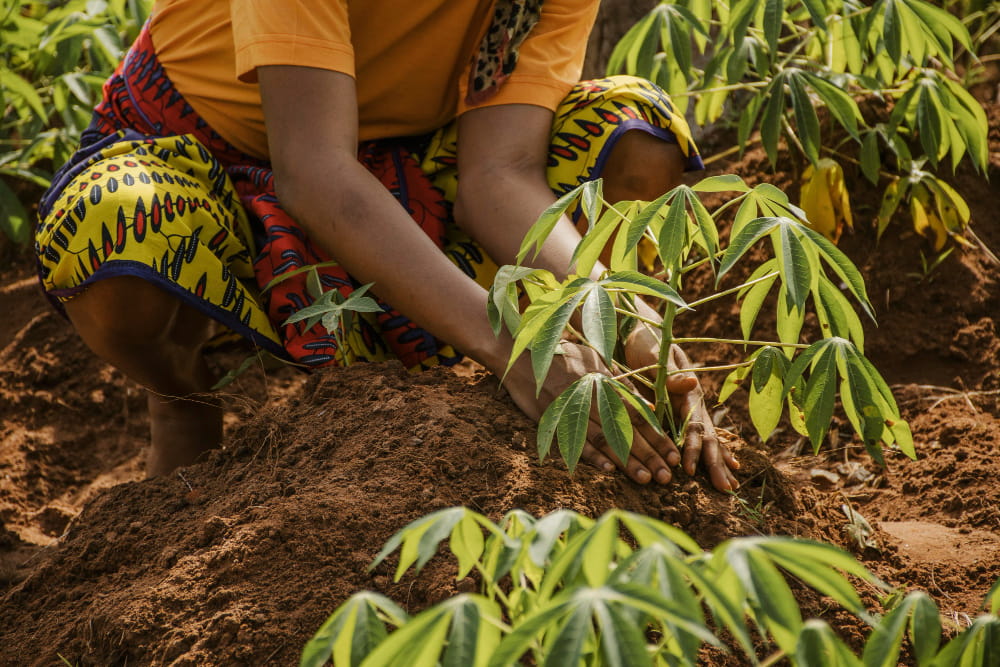
The EU’s Guinea program specifically targets agriculture value chains as a priority investment category, with the EU contributing to pineapple cultivation revival, economic empowerment of women in agribusiness, and vocational training in agriculture-related skills. European agribusiness investors who enter Guinea’s cashew, cocoa, coffee, or pineapple value chains can align their projects with the EU’s existing grant-funded technical assistance programs, accessing local market intelligence, community engagement frameworks, and regulatory guidance that would otherwise need to be developed from scratch at private expense.
The EU’s EUR 362 million grant envelope is not exclusively a public sector tool. Private sector development is explicitly listed as a program priority, with the EU’s stated objective of facilitating private sector investment that creates jobs and boosts economic resilience.
Renewable Energy and Green Economy Investment
Team Europe’s focus on Guinea’s green and blue economy creates a specific opening for European renewable energy developers, hydropower specialists, and clean technology firms. Guinea’s hydropower potential is among the largest in West Africa, and the energy sector is receiving direct attention from European bilateral development banks. A European renewable energy developer entering Guinea with a credible project can access EIB financing, bilateral DFI co-investment from Proparco, DEG, or BIO, and technical grant support from the EU’s Team Europe envelope simultaneously, creating a financing stack that makes commercially marginal projects viable and dramatically reduces the equity capital required from the private investor.
The EUDR Advantage for European Agricultural Investors
The EU Deforestation Regulation imposes traceability and deforestation-free requirements on a range of commodities including cocoa, coffee, palm oil, and wood products entering the EU market. For producers in established growing regions, this regulation represents a compliance burden. For European investors establishing new, properly certified agricultural operations in Guinea, EUDR compliance from inception is a competitive differentiation that opens European premium markets with less friction than competitors face.
A European investor building a EUDR-compliant cocoa or coffee operation in Guinea’s Forest Region does not compete against non-compliant existing supply. It supplies a European market segment that has legally mandated demand for exactly the kind of traceable, deforestation-free production that a properly structured new plantation delivers.
Key Bilateral European Investor Profiles
France: Strategic Historical Relationship and Francophone Expertise
France’s historical relationship with Guinea provides French investors with linguistic, legal, and cultural proximity that reduces the effective transaction cost of operating in the country. Proparco, France’s development finance institution for private sector investment in Africa, is active across West Africa and aligned with exactly the investment categories Guinea is prioritizing in 2026.
Germany: Engineering and Environmental Compliance Excellence
German engineering, environmental technology, and renewable energy firms have proven track records across West African infrastructure markets. DEG, Germany’s development finance institution, co-finances private sector projects in Guinea across manufacturing, energy, and agriculture. German firms competing for technical service contracts in Guinea’s mining, energy, and infrastructure sectors bring engineering credibility that differentiates them from less experienced competitors.
Italy and Spain: Agribusiness and Construction Expertise
Italian agribusiness companies and Spanish construction and engineering groups have the Mediterranean-Africa track records that translate to West Africa project delivery. Both countries are members of Team Europe in Guinea, giving their private investors access to the full Team Europe de-risking and co-financing toolkit.
How Yes! Invest Guinea Supports European Investors
Yes! Invest Guinea connects European investors with Guinea opportunities across energy, agriculture, mining services, manufacturing, and infrastructure, and facilitates access to the EU’s Team Europe co-financing frameworks. Our support includes:
- Identifying projects in Guinea that qualify for EIB, Proparco, DEG, and BIO co-financing
- Structuring agricultural investments that align with EU program priorities and qualify for EUDR-compliant premium market access
- Connecting European engineering and construction firms with Guinea infrastructure contract opportunities
- Facilitating coordination with the EU Delegation in Conakry and Guinea’s Ministry of Economy and Finance for program alignment
- Advising on EPA trade framework structures that maximize EU market access for Guinea-produced goods
Frequently Asked Questions
- What is the EU’s current financial commitment to Guinea? The EU has allocated EUR 362 million in grant funding for Guinea’s development priorities over 2021 to 2027, delivered through Team Europe, which includes the European Investment Bank and bilateral development agencies from Belgium, France, Germany, Italy, and Spain.
- How does the EU-Guinea Economic Partnership Agreement benefit European investors? The EPA provides qualifying Guinean goods with preferential access to European markets, creating a structural trade advantage for European investors producing or processing goods in Guinea that cannot be replicated by investors from other nationalities without equivalent trade agreements.
- How does the EU Deforestation Regulation create opportunity rather than risk for new European agricultural investors in Guinea? A newly established EUDR-compliant operation in Guinea, certified deforestation-free from inception, supplies a mandated premium European market segment that older, non-compliant producers in established growing regions are struggling to access.
- Which European development finance institutions are active in Guinea? Proparco (France), DEG (Germany), BIO (Belgium), and the European Investment Bank are all active development finance institutions with Guinea mandates that can co-finance qualifying private sector investments.
- How can Yes! Invest Guinea help European investors access co-financing and program alignment? Yes! Invest Guinea provides EIB and bilateral DFI co-financing identification, EPA trade structure advice, EU delegation coordination, agricultural program alignment, and introductions to Guinea’s key government counterparts for European investor mandates.
Europe’s Development Finance Edge in Guinea Is Ready to Be Leveraged
European investors in Guinea operate with a co-financing, trade framework, and technical credibility advantage that no other investor nationality can fully replicate. The EUR 362 million Team Europe envelope, the EPA trade preferences, and the accumulated presence of European development finance institutions in Conakry create an institutional ecosystem that dramatically reduces effective investment risk for private capital willing to align with it.
Connect with Yes! Invest Guinea today to explore how European development finance frameworks, trade preferences, and technical expertise can structure your Guinea investment for maximum advantage.