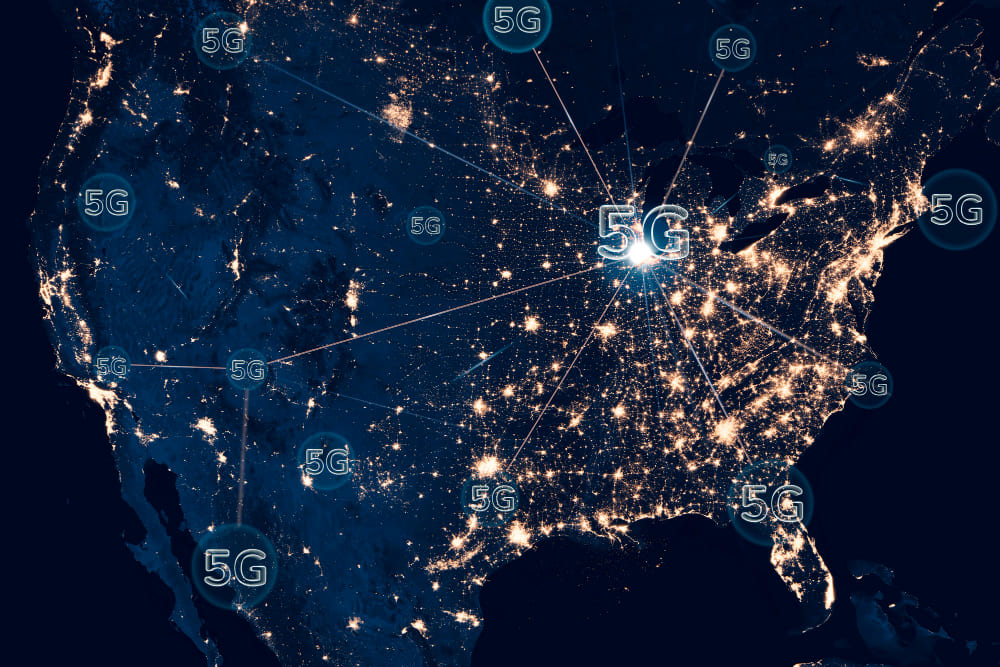
Guinea is young, rapidly urbanizing, and increasingly mobile-first. With a median population age of just 18.3 years and a mobile subscriber base projected to grow from 14.5 million in 2025 to nearly 18 million by 2030, the country’s mobile communications sector is sitting at one of the most compelling inflection points in West African digital history. For investors in telecommunications and the digital economy, Guinea’s mobile market is not a future story. It is unfolding right now.
Mobile communications services in Guinea are the infrastructure layer that every other sector of the economy depends on: mining companies need connectivity for IoT and ERP systems, government agencies need it for digital public services, entrepreneurs need it for mobile commerce, and 15 million citizens need it to access financial services, education, and information. This convergence of industrial, institutional, and consumer demand is what makes Guinea’s mobile communications sector one of the most strategically positioned investment opportunities in the region.
The Current Market: Size, Players, and Growth Trajectory
A $791 Million Market on the Move
Guinea’s mobile network operator (MNO) market is estimated at USD 791.9 million in 2025 and is projected to reach USD 941.7 million by 2030, growing at a compound annual growth rate (CAGR) of 3.53 percent over the five-year period. Subscriber volume is growing at a faster pace, with the market expanding from 14.5 million connections in 2025 to a projected 17.9 million by 2030, reflecting a CAGR of 4.22 percent.
The most dynamic segment within this market is mobile data. Data and internet services already lead with 42.53 percent of total MNO revenue, driven by the migration of users toward bandwidth-intensive applications across social media, streaming, and digital services. Mobile data service revenue is forecast to grow at a five-year CAGR of 12 percent, making it the primary engine of Guinea’s telecoms sector expansion through 2030.
The Competitive Landscape After MTN’s Exit
Guinea’s mobile market has recently undergone a significant structural shift. In December 2024, MTN Group divested its local subsidiary to the State of Guinea, which rebranded the operator as Telecel Guinea. This transition has reshaped the competitive landscape, with three primary players now defining the market:
- Orange Guinea: The market leader, leveraging brand equity, 4G spectrum depth, and the Orange Money platform to capture premium subscribers and enterprise accounts. Orange is also deepening its digital financial services reach through partnerships with Ecobank for mobile wallet interoperability.
- Telecel Guinea (ex-MTN): Navigating post-acquisition integration while evaluating capital expenditure commitments in a complex forex environment. Telecel is exploring edge-cloud collaborations with mining majors, positioning itself as the enterprise connectivity partner for Guinea’s industrial sector.
- Africell: Focusing on value pricing and youth-oriented campaigns, banking on marketing agility rather than scale economies to compete with the larger operators.
Additionally, Starlink’s anticipated entry into Guinea’s market introduces satellite-based connectivity as a disruptive alternative for remote and rural prefectures, reshaping service benchmarks in areas where terrestrial networks remain constrained by geography and energy access.
Why Guinea’s Mobile Sector Demand Is Structurally Different
The Industrial Connectivity Demand from Mining
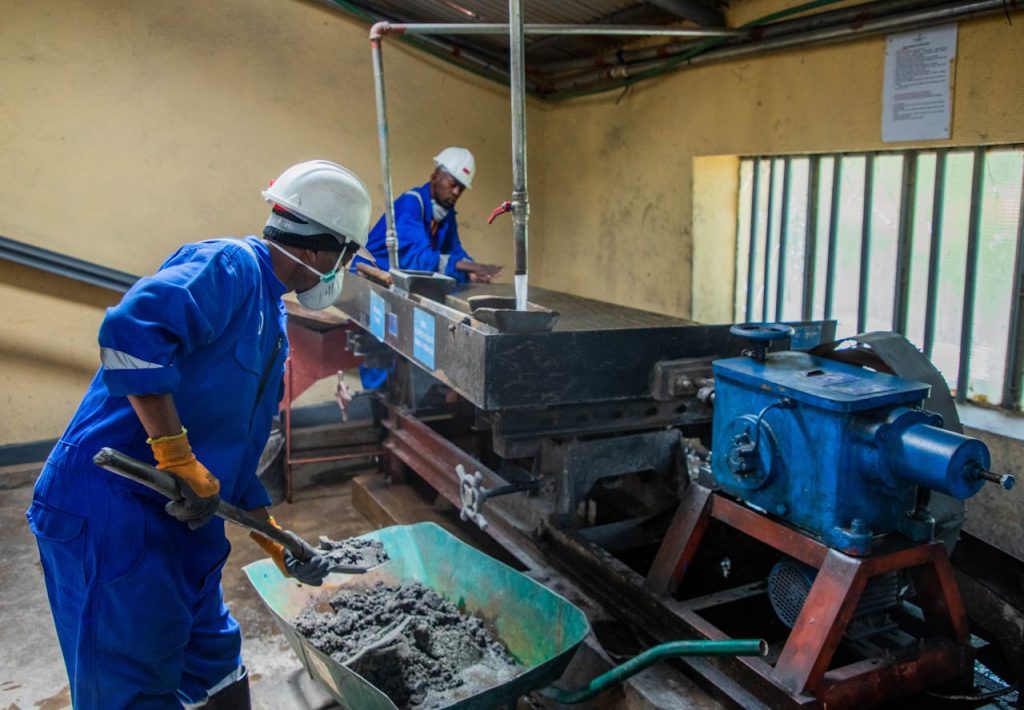
What separates Guinea’s mobile communications market from comparable frontier markets is the presence of a world-scale industrial sector that requires enterprise-grade connectivity as an operational necessity. Guinea’s bauxite mining operations, its iron ore projects at Simandou, and its growing alumina refining pipeline all depend on mobile and broadband connectivity for a range of critical functions: real-time equipment monitoring via IoT sensors, ERP systems connecting mine sites to headquarters, supply chain coordination, workforce communications, and regulatory compliance reporting.
Enterprise demand for mobile connectivity is growing at a 5.10 percent CAGR in Guinea, compared to the overall market average, driven by cloud adoption in bauxite mining and government digitization programs. This industrial demand provides a high-ARPU enterprise customer base that stabilizes operator revenue in ways that consumer-only markets cannot.
Government Digitization as a Demand Driver
Guinea’s government is actively pursuing digital public service delivery, with e-tax platforms, health information systems, and biometric ID databases all requiring resilient IP connectivity across the country. Public sector digitization amplifies demand for reliable mobile infrastructure and creates a government procurement market for connectivity services that is growing independently of consumer adoption trends.
Corridor investment along the Conakry-Kindia-Mamou-Kankan axis is pushing fiber deeper into the country, supported by highway and rail upgrades that serve the mining belt. Interior prefectures such as Labé and N’Zérékoré are exhibiting double-digit data traffic growth off small bases, catalyzed by education portals and diaspora video calls, signaling that demand expansion beyond Conakry is already underway.
Mobile Money: The Digital Financial Services Opportunity
An Underbanked Population Meeting a Mobile-First Economy
Guinea’s mobile money ecosystem is one of the sector’s most significant investment opportunities. With the majority of Guinea’s population unbanked or underbanked, mobile financial services represent the primary pathway to financial inclusion for millions of Guineans. Mobile money platforms operated by Orange Money and others already process substantial transaction volumes, with mobile money subscriptions and revenue growing consistently year on year.
According to the GSMA’s Mobile Economy Africa 2025 report, mobile technologies and services contributed USD 240 billion to Africa’s economy in 2025, equivalent to 7.8 percent of GDP, with mobile money playing a central role in enabling economic activity for populations excluded from formal financial systems. Sub-Saharan Africa’s mobile money market added approximately USD 190 billion to GDP in 2023 alone, demonstrating the economic multiplier effect that mobile financial services generate across the continent.
For investors, Guinea’s mobile money opportunity spans payment infrastructure, agent network development, digital lending, insurance, and merchant payment solutions, all built on the mobile connectivity layer that the country’s MNO market provides.
The Internet Penetration Gap as an Investment Signal
Only 26.5 percent of Guinea’s population was using the internet at the end of 2025, representing 4.02 million users in a country of 15.2 million people, according to DataReportal’s Digital 2026 Guinea. This means that 73.5 percent of the population remains offline, a figure that, viewed correctly, is not a risk indicator. It is a market opportunity of enormous scale.
Smartphone subscriptions in Guinea are projected to grow at an 11.7 percent CAGR through 2028, driven by increasing adoption of 3G and 4G services and the growing availability of low-cost smartphones under USD 50. As smartphone penetration rises and affordable data plans expand, each new internet user in Guinea represents a new customer for mobile data services, digital applications, mobile commerce, and financial services.
Investment Models in Guinea’s Mobile Communications Sector
Tower Infrastructure and Passive Sharing
Mobile tower infrastructure is the foundational layer of network expansion in Guinea. Tower companies (towercos) operating build-to-suit models are signing deals with operators, subsidized by energy-as-a-service contracts that address Guinea’s chronic power deficit. Investing in independent tower infrastructure provides lease revenue from multiple operator tenants while contributing directly to network coverage expansion across underserved prefectures.
Mobile Virtual Network Operators (MVNOs)
Guinea’s regulatory environment supports the development of mobile virtual network operators that lease capacity from physical network operators to serve niche customer segments. MVNO models targeting specific communities including mining sector workers, diaspora remittance corridors, or agricultural value chains offer lower capital entry points than full network buildout while capturing targeted revenue streams in high-growth segments.
Digital Services and Applications
With a youth-dominated population and rising smartphone penetration, Guinea is an emerging market for mobile-native digital services including local language content platforms, e-commerce applications, agricultural market information services, and health and education apps. These services ride on the mobile connectivity infrastructure and represent scalable, asset-light business models that can achieve regional reach through cross-border connectivity corridors linking Guinea to Mali, Côte d’Ivoire, Sierra Leone, and Liberia.
Enterprise Connectivity Solutions
The enterprise connectivity market, serving mining companies, financial institutions, government agencies, and international organizations operating in Guinea, represents the highest-ARPU segment of the mobile communications market. Investors offering managed connectivity solutions including dedicated internet access, private LTE networks for mine sites, SD-WAN solutions, and cybersecurity services for enterprise clients can access this high-value market through direct sales and operator partnership models.
Regulatory Environment and Market Access
Guinea’s telecommunications sector is regulated by the Autorité de Régulation des Postes et Télécommunications (ARPT), which oversees spectrum licensing, tariff regulation, and operator compliance. The regulatory environment is evolving to accommodate new entrants, satellite services, and the expanding digital services ecosystem.
According to the International Telecommunication Union (ITU), Guinea has made meaningful progress in building its national ICT regulatory framework, with ongoing development of spectrum management, digital signatures, and cybersecurity legislation that creates a more predictable environment for telecommunications investment.
Foreign investors may establish telecommunications businesses in Guinea, with the exception of broadcasting, where foreign ownership is capped. Spectrum licenses and operating permits are issued by ARPT following application procedures that benefit significantly from experienced local facilitation and established regulatory relationships.
YES! Invest in Guinea provides investors entering Guinea’s telecommunications and digital economy sector with regulatory navigation support, ARPT engagement facilitation, and connections with local partners and existing operators essential for efficient market entry.
FAQ: Mobile Communications Investment in Guinea
- What is the total size of Guinea’s mobile communications market in 2025? Guinea’s mobile network operator market is estimated at USD 791.9 million in 2025, with 14.5 million mobile subscribers. The market is projected to reach USD 941.7 million and 17.9 million subscribers by 2030. Mobile data is the fastest-growing segment, with a projected CAGR of 12 percent through 2029.
- Who are the main mobile operators in Guinea and what is their market positioning? The three main operators are Orange Guinea (market leader, strongest 4G coverage and Orange Money platform), Telecel Guinea (formerly MTN Guinea, now state-owned after MTN’s December 2024 divestment), and Africell (focused on value pricing and youth segments). Satellite services from providers such as Starlink are also entering the market, adding a fourth competitive dynamic particularly relevant for rural and remote areas.
- What is the mobile money opportunity in Guinea? Guinea’s predominantly unbanked population creates strong demand for mobile financial services. Orange Money is the leading mobile money platform, and the growing ecosystem of mobile payments, digital lending, and merchant services represents a substantial adjacent opportunity to core voice and data services. Mobile money in sub-Saharan Africa added approximately USD 190 billion to GDP in 2023, with Guinea positioned to capture a growing share of this regional opportunity.
- Can foreign investors hold full ownership of telecommunications companies in Guinea? Foreign investors can hold majority or full ownership in most telecommunications and digital services businesses in Guinea under the current FDI framework. The primary restriction is on broadcasting (television and radio distribution), where foreign ownership is capped at 40 percent. Mobile services, internet services, and digital platforms are open to full foreign ownership.
- How does YES! Invest in Guinea support telecom and digital economy investors? YES! Invest in Guinea provides end-to-end facilitation for telecommunications and digital economy investors, covering ARPT regulatory navigation and spectrum license applications, Ministry of Digital Economy engagement, local partnership identification with existing operators and infrastructure providers, company registration and compliance advisory, and connections with enterprise customers in Guinea’s mining, financial, and government sectors.
Connect Your Investment to Guinea’s Digital Future
Guinea’s mobile communications market is at the beginning of its data economy transition. The subscriber base is growing, the industrial demand is real, the fintech opportunity is vast, and the internet penetration gap represents one of the largest addressable markets in West Africa. Investors who enter now, before coverage saturation, before ARPU compression, and before the digital services ecosystem reaches maturity, will define this market for the next decade.
YES! Invest in Guinea is your specialist gateway to Guinea’s telecommunications and digital economy sector. From regulatory licensing to operator partnerships, from enterprise connectivity sales to mobile money facilitation, our team provides the local knowledge and institutional access your investment needs to succeed.
Explore telecommunications and digital economy investment opportunities in Guinea →
Interested in understanding the specific regulatory pathway for your investment? Contact our team today for a confidential consultation and let us map your market entry strategy together.