The conversation about Guinea in institutional investment circles has shifted fundamentally. It used to be about potential. Now it is about timing. Simandou is producing. Alumina refineries are breaking ground. A sovereign wealth fund is being structured. The governance baseline has improved materially after December 2025’s elections. For hedge funds and other institutional investors that have been watching Guinea from a distance, the question is no longer whether the opportunity is real. It is whether they are already late.
In this guide, Yes! Invest Guinea examines why hedge funds are increasingly evaluating Guinea, where the institutional entry points sit across the mineral and broader economic value chain, and what specific vehicles and structures give sophisticated institutional capital the most appropriate exposure to a market of this profile.
What Has Shifted in Guinea’s Institutional Investment Story
Guinea has long been acknowledged as geologically exceptional. What has changed is the combination of factors that make it institutionally investable.
The Simandou iron ore project, long described as the world’s largest undeveloped high-grade deposit, shipped its first commercial cargo in December 2025. The IMF projects that Simandou at full production capacity could increase Guinea’s GDP by more than 25% by 2030 a macro impact of a scale that directly affects sovereign credit risk, currency stability, and the investability of every sector adjacent to mining. Hedge funds that model commodity supply chains and emerging market macro exposure cannot afford to treat this as a local story.
Guinea’s government has simultaneously moved to launch a sovereign wealth fund leveraging revenues from the Simandou project, with a target capitalization of $1 billion, according to Ecofin Agency’s reporting on Guinea’s sovereign wealth fund plans. The fund is being structured with governance advice from Saudi Arabia and Singapore, signaling a deliberate effort to build institutional credibility rather than simply accumulate a windfall account. For institutional investors assessing Guinea’s long-term sovereign risk profile, the creation of a properly governed wealth fund is a meaningful positive signal.
The political risk baseline has also improved. December 2025 elections provided President Doumbouya’s government with democratic legitimacy, reopening IFC and multilateral financing channels that had been constrained since the 2021 military transition. According to Freshfields’ H1 2026 Africa investment themes review, Guinea is among the notable African markets where major integrated mining infrastructure projects are advancing projects that require and attract the same institutional capital pools that hedge funds navigate.
Where Hedge Fund Capital Fits in Guinea’s Investment Landscape
Hedge funds approach frontier and emerging markets through a range of structures, and Guinea’s investment landscape offers multiple entry points suited to different mandates and risk tolerances.
Equity in Listed Mining Companies With Guinea Exposure
The most liquid and immediately accessible route for hedge funds into Guinea’s mineral wealth is through publicly listed companies with active Guinean operations. Multiple listed entities have significant Guinea exposure across bauxite, iron ore, and gold.
Rio Tinto, as a 45% stake holder in SimFer, is the most prominent listed vehicle with direct Guinea iron ore exposure. Institutional investors including Scotia Global Asset Management, US Global Investors, Lowell Resources Funds Management, and Palos Management are already collectively positioned across listed guinea-exposed mining companies, according to Streetwise Reports’ January 2026 Guinea mining investor analysis. For hedge funds running liquid books, listed equity in Rio Tinto, Fortuna Mining, and junior gold explorers with Guinean concessions provides mark-to-market exposure to Guinea’s resource development without the illiquidity of direct investment.
Private Credit and Project Finance
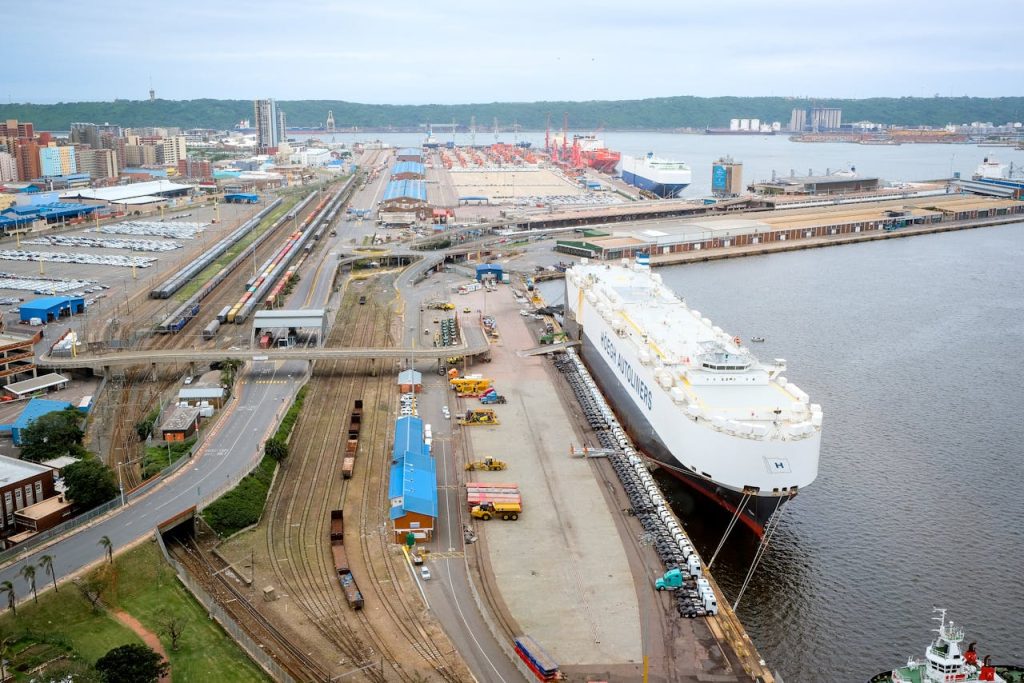
Guinea’s infrastructure pipeline $23 billion in Simandou rail and port development, $1.2 billion alumina refineries, €192 million in energy grid expansion generates substantial demand for private credit alongside equity. Hedge funds running credit strategies, including distressed, special situations, and direct lending mandates, can access this demand through co-investment alongside development finance institutions like the IFC, African Development Bank, and the Emerging Africa Infrastructure Fund.
Brookings Institution’s 2026 analysis of Africa’s critical minerals investment notes that infrastructure projects tied to mineral corridors are among the most attractive private sector investment opportunities on the continent, with rail and port financing needs for the Simandou corridor alone estimated at $6 billion. Private credit funds that can provide bridge financing, mezzanine capital, or long-duration loans alongside multilateral senior debt sit in a particularly strong structural position in Guinea’s current project finance environment.
Gold as a Hedge Within the Guinea Story
Guinea’s gold sector is undergoing its own institutional recognition moment. According to Investing News Network’s February 2026 analysis of Guinea’s gold exploration surge, Guinea sits within the Birimian greenstone belt — one of West Africa’s most prolific gold-bearing geological formations. While bauxite and iron ore dominate the current narrative, large parts of Guinea’s Birimian terrain have seen limited modern exploration, and junior explorers are now moving in systematically to assess potential that has been largely overlooked.
Bank of America’s head of metals research forecast an average gold price of $4,538 per ounce in 2026, with the potential to approach $5,000 — driven by tightening supply, rising production costs, and strong investment demand. South Africa’s Public Investment Corporation, which manages approximately $150 billion in assets, has identified West Africa’s gold sector including Guinea specifically as a priority emerging opportunity, noting that low-cost deposits in Guinea offer the long-duration investment potential it prefers over shorter-life projects, according to Pensions and Investments’ reporting on PIC’s Africa gold strategy.
For hedge funds running commodity and precious metals strategies, Guinea’s gold exploration story provides optionality on a rising gold price alongside the more widely covered bauxite and iron ore macro narrative.
Critical Minerals Funds Targeting Guinea Directly
A newer category of institutional vehicle is specifically designed for African critical minerals exposure. CHB Investment Holding’s Critical Minerals Fund, for example, targets African entities at advanced exploration or approaching production in copper, cobalt, lithium, gold, and manganese — with Guinea-eligible concessions among the qualifying assets, according to The Critical Minerals Fund’s investment framework. These dedicated vehicles offer hedge fund allocators a manager-intermediated route into Guinea without requiring proprietary due diligence capacity on the ground.
Risk Considerations for Institutional Investors
Guinea’s institutional investment case is compelling, but it carries the risk profile of a frontier market in active transition. Political risk, while materially improved, requires ongoing monitoring. Currency risk, given Guinea’s limited foreign exchange reserves, requires hard currency structuring at the contract level. Regulatory risk in the mining sector is real: concessions have been cancelled and conventions renegotiated.
The institutional investors generating the strongest risk-adjusted outcomes in Guinea are those who combine long-horizon capital deployment with rigorous due diligence, political risk insurance through instruments like MIGA’s guarantee program, and on-the-ground operational partners who understand Guinea’s institutional landscape from inside it.
How Yes! Invest Guinea Supports Institutional and Hedge Fund Investors
Yes! Invest Guinea connects institutional investors with structured, compliant, and commercially viable Guinea exposure. Our support includes:
- Identifying listed and unlisted equity opportunities across Guinea’s bauxite, iron ore, gold, and alumina sectors
- Facilitating introductions to project finance structures alongside IFC, AfDB, and development finance institution co-investors
- Providing due diligence support and on-the-ground market intelligence for institutional mandate assessment
- Connecting fund managers with MIGA and other political risk insurance providers
- Advising on Investment Code structures that optimize the tax and customs framework for institutional capital deployment
Frequently Asked Questions
- Are hedge funds currently investing in Guinea? Yes. Institutional investors including Scotia Global Asset Management, US Global Investors, Lowell Resources Funds Management, and Palos Management are already positioned in listed companies with significant Guinea exposure, and private capital is active in project finance alongside IFC and AfDB.
- What is the most liquid way for a hedge fund to gain Guinea exposure? Listed equity in companies with active Guinean operations, including Rio Tinto (SimFer), Fortuna Mining, and junior gold explorers with Guinean concessions, provides mark-to-market exposure without the illiquidity of direct investment.
- What role does Guinea’s sovereign wealth fund play in the institutional investment story? The planned $1 billion sovereign wealth fund, structured with governance advice from Saudi Arabia and Singapore and backed by Simandou revenues, signals institutional credibility building that directly improves Guinea’s sovereign risk profile for international investors.
- Why is Guinea’s gold sector becoming relevant for commodity-focused hedge funds? Guinea’s Birimian greenstone belt contains low-cost, long-life gold deposits that remain underexplored. With gold prices forecast to average $4,538 per ounce in 2026, West Africa’s gold sector, including Guinea, is being identified by major institutional managers as a priority emerging opportunity.
- How can Yes! Invest Guinea help institutional investors and hedge funds access Guinea? Yes! Invest Guinea provides due diligence support, listed and unlisted equity identification, project finance introduction, political risk insurance guidance, and Investment Code advisory for institutional mandates targeting Guinea’s mineral and broader economic sectors.
Position Your Fund in Guinea Before the Window Narrows
Guinea’s shift from potential to production is creating a genuine institutional investment window. Hedge funds that identify the right entry points now, across listed equity, private credit, and critical minerals vehicles, are positioning ahead of the broader institutional discovery of a market that is no longer speculative.
Connect with Yes! Invest Guinea today to explore how your fund can access Guinea’s mineral, infrastructure, and emerging sector opportunities with the right structure, partners, and risk framework.