American investors in Guinea are entering one of the most strategically important and commercially underserved markets in the world. The United States is in a race it cannot afford to lose. With China controlling the processing of over 90 percent of the world’s rare earth minerals and exercising growing influence over critical mineral supply chains across Africa, American businesses and investors face a stark strategic reality: the countries that hold the raw materials of the 21st-century economy are the countries that matter most. Guinea holds 25 percent of the world’s bauxite reserves, the world’s largest undeveloped iron ore deposit, significant gold reserves, and some of the highest hydropower potential in West Africa.
For American investors in Guinea, this is not just a commercial opportunity. It is a strategic positioning decision. The companies and investors who establish a meaningful presence in Guinea now are building the supply chain relationships, local market positions, and government partnerships that will define American competitiveness in critical minerals, energy, and West African trade for the decade ahead.
The Strategic Case: Guinea and American Supply Chain Security
Aluminum Is a National Security Issue, and Guinea Is the Source
The United States included aluminum on its 2023 critical materials list, recognizing that secure, diversified access to bauxite and alumina is a national security imperative. American industry is heavily import-dependent for raw bauxite, sourcing primarily from Jamaica, Brazil, and Guinea. As the Brookings Institution’s analysis of US-Africa critical mineral opportunities notes, Africa is uniquely positioned to be a strong partner for the United States in supply chain realignment, and Guinea’s bauxite reserves represent one of the most strategically important mineral assets on the continent.
The geopolitical dimension is real and accelerating. China has enacted export controls on processed rare earth minerals, and US-China trade tensions have reached 145 percent tariff levels that have fundamentally reshaped how American businesses must think about supply chain geography. For American investors who understand that the next generation of critical mineral supply chains cannot run through China, Guinea is one of the most logical and commercially sound alternative positions available.
American Companies Are Already Operating in Guinea
American businesses are not strangers to Guinea. Fluor Corporation, one of the largest engineering and construction firms in the United States, led infrastructure preparation for the Compagnie des Bauxites de Guinée (CBG) expansion project, one of Guinea’s largest bauxite development programs. High Power Exploration (HPX), through its subsidiary the Société des Mines de Fer de Guinée (SMFG), has been conducting preparatory work on the Mount Nimba iron ore project in Guinea’s Forest Region. The U.S. Embassy in Conakry specifically notes that the Guinean government and American companies have conducted several large business deals in the energy, mining, and IT sectors, confirming that the commercial channel between the United States and Guinea is open, active, and producing results.
According to the U.S. Embassy in Guinea’s business guidance, both countries are working together to strengthen bilateral trade and investment ties, focusing on sectors of mutual interest that promise mutual benefits and contribute to Guinea’s journey toward sustainable economic growth. The U.S. Embassy operates an active commercial section supporting American businesses entering the Guinean market, including connections to the U.S. Foreign Commercial Service’s resources and the Country Commercial Guide.
The Commercial Case: What American Investors in Guinea Are Targeting
Mining Services, Engineering, and Technology
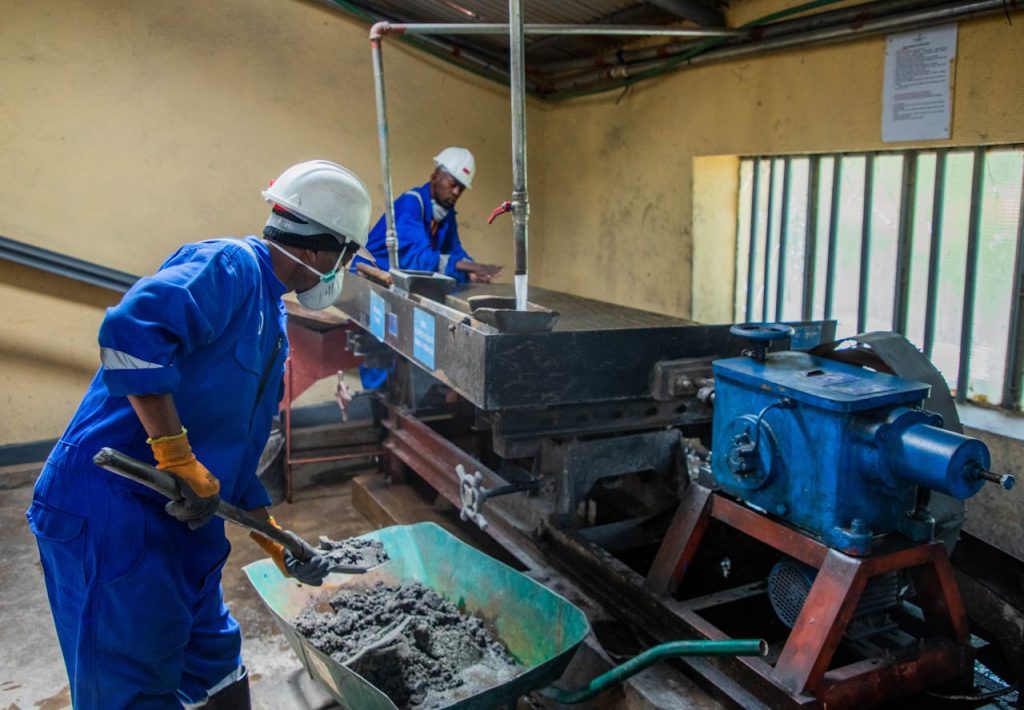
Guinea’s mining boom is generating demand for the kind of sophisticated engineering, construction, project management, and technology services that American companies have demonstrated world-class capability in delivering. The Simandou iron ore project, the five alumina refineries under development in the Boké and Boffa regions, and the ongoing expansion of Guinea’s bauxite cluster all represent large-scale projects with sustained procurement needs for:
- Engineering and project management: Large infrastructure and industrial projects require the type of EPCM (engineering, procurement, construction, and management) expertise that American firms like Fluor, Bechtel, and similar companies provide.
- Environmental and social impact advisory: Guinea’s regulatory environment increasingly requires environmental impact assessments, community engagement programs, and sustainability reporting aligned to international standards. American environmental consulting firms have a strong competitive position in this space.
- Mining technology and equipment: Autonomous mining systems, mineral processing technology, and mine safety equipment from American manufacturers have strong demand from international mining operators working in Guinea.
- Information technology and cybersecurity: Mining companies, financial institutions, and government agencies in Guinea require enterprise IT systems, cybersecurity infrastructure, and digital management platforms that American technology companies are uniquely positioned to supply.
Energy and Infrastructure Investment
Guinea has some of the highest hydropower potential in West Africa, with an estimated 6,000 megawatts of developable capacity against a current installed base far below that figure. The country’s energy deficit is one of the most significant operational constraints for businesses operating in Guinea, and investors who develop reliable power generation capacity create both commercial returns and strategic infrastructure that supports every other sector of the economy.
The U.S. Trade Representative’s office has reauthorized the African Growth and Opportunity Act (AGOA) through December 2026, and U.S. goods exports to sub-Saharan Africa reached USD 22.8 billion in 2025, a 22 percent increase from the prior year. Guinea’s energy and infrastructure sector is precisely the type of investment environment that AGOA-aligned American businesses are positioned to serve, and the Development Finance Corporation (DFC) has demonstrated through projects like the Lobito Corridor in southern Africa that American development finance can anchor strategic infrastructure investments in frontier markets.
Agriculture and Food Systems
The United States has a well-established track record of supporting agricultural development in Guinea through programs including USAID and the Peace Corps, which operates throughout the country in secondary education, agro-forestry, and public health. American processed food brands are well-respected in Guinea and preferred over Asian imports as higher quality and safer, according to the U.S. Department of Commerce’s Guinea Agriculture Sector guide. This brand reputation is a commercial asset for American food and beverage companies evaluating market entry.
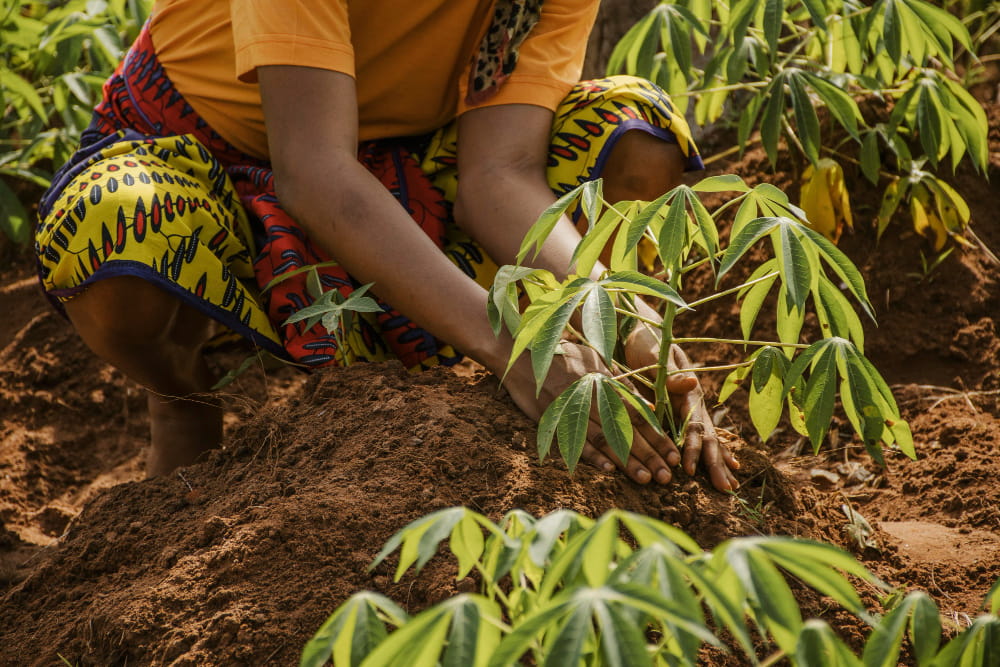
American agribusiness investors can enter Guinea’s food systems through poultry production technology, seed supply, precision agriculture inputs, food processing equipment, and cold chain logistics, all areas where American businesses have competitive advantages and where Guinea has declared national investment priorities under its 2026 poultry strategy and the IFAD-World Bank AgriConnect Guinea Pact.
Digital Economy and Financial Services
Guinea’s mobile economy is growing rapidly, with over 14.5 million mobile subscribers and a mobile data sector growing at 12 percent annually. American fintech, digital payments, and enterprise software companies are well-positioned to enter Guinea’s digital economy as the sector formalizes and demand for enterprise-grade digital solutions grows alongside the mining, retail, and services sectors.
The U.S. Chamber of Commerce’s U.S.-Africa Business Center has identified digital innovation as one of the priority areas for American business engagement across West Africa. At the 2025 West Africa AmCham Business Summit, the U.S. Chamber confirmed that U.S. businesses are not only ready but strategically positioned to deepen trade and investment with Africa, with Guinea specifically included in the AmCham West Africa network.
The Regulatory and Legal Framework for American Investors
FCPA Compliance in Guinea
American businesses investing in Guinea operate under the Foreign Corrupt Practices Act (FCPA), which prohibits offering anything of value to foreign government officials to obtain or retain business. Guinea’s own anti-corruption framework includes the 2017 Anti-Corruption Law and the Court to Repress Economic and Financial Crimes (CRIEF), established in 2021. American investors who structure their Guinea operations with robust FCPA compliance programs are aligned with Guinea’s own stated governance direction and are protected from the types of corrupt-practices risk that can trap companies in legal jeopardy.
Trade Framework and Investment Protections
Although Guinea does not have a bilateral investment treaty (BIT) with the United States, ECOWAS and the United States signed a Trade and Investment Framework Agreement (TIFA) in May 2014, creating a Council on Trade and Investment responsible for identifying and removing trade impediments between the US and ECOWAS countries, of which Guinea is a member. Guinea’s Investment Code provides non-discrimination protections, guarantees against nationalization without compensation, and access to international arbitration through ICSID for investor-state disputes.
Guinea also maintains membership in MIGA, the World Bank’s political risk insurance arm, which issued a record USD 9.5 billion in guarantees in fiscal 2025. American investors can access MIGA coverage for Guinea investments, providing protection against expropriation, currency transfer restrictions, and political violence that significantly reduces the risk profile of commercial deployments in the country.
For American investors navigating Guinea’s institutional framework, regulatory requirements, and government relationships, YES! Invest in Guinea provides specialist facilitation covering all aspects of market entry, from company registration and Investment Code applications to ministry introductions and ongoing compliance management.
FAQ: American Investors and Guinea
- Why is Guinea strategically important for American businesses beyond commercial returns? Guinea holds 25 percent of the world’s bauxite reserves, the primary source of aluminum, which the United States designated as a critical material in 2023. As US-China trade tensions intensify and American supply chains seek diversification away from Chinese-controlled mineral processing, Guinea’s position as the world’s leading bauxite producer makes it a strategic priority for American businesses focused on supply chain security in critical materials, aerospace, defense, and clean energy manufacturing.
- Are there American companies already operating successfully in Guinea? Yes. Fluor Corporation led infrastructure preparation for the CBG bauxite expansion project, one of Guinea’s largest mining developments. High Power Exploration (HPX) has been advancing the Mount Nimba iron ore project through its Guinean subsidiary. The U.S. Embassy in Conakry confirms that American companies have conducted several large deals in Guinea’s energy, mining, and IT sectors, reflecting an active and productive commercial relationship between US businesses and the Guinean market.
- Does the FCPA create additional risk for American companies investing in Guinea? The FCPA requires American companies to maintain robust anti-corruption compliance programs regardless of where they operate. Guinea’s own anti-corruption institutions, including the CRIEF court, are aligned with a similar direction. American companies that invest in strong compliance infrastructure from the outset, and work with experienced local partners who understand both FCPA requirements and Guinean business practice, successfully manage this risk while competing effectively in the market.
- What US government support is available for American businesses entering Guinea? The U.S. Embassy in Conakry operates a commercial section that provides market intelligence, business matchmaking, and regulatory guidance for American companies. The U.S. Trade Representative’s AGOA framework provides duty-free access to the US market for Guinea-origin products, and the US International Development Finance Corporation (DFC) provides financing instruments for American businesses investing in markets like Guinea. USAID’s West Africa Trade and Investment Hub also provides facilitation support for American businesses building trade and investment partnerships in the region.
- How does YES! Invest in Guinea support American investors entering the Guinean market? YES! Invest in Guinea provides end-to-end market entry facilitation for American investors, covering company registration and Investment Code applications, ministry introductions and government liaison across all relevant sectors, FCPA-compliant business partner identification, regulatory compliance advisory, site identification for industrial and commercial investments, and ongoing government relations management. Our team bridges the gap between American business standards and Guinea’s operating environment, making market entry efficient, compliant, and commercially sound.
American Investors in Guinea: The Time to Establish Your Position Is Now
China has been investing in Guinea’s mineral sector for years. Chinese capital built Guinea’s major hydroelectric dams, dominates bauxite production through the SMB-Winning consortium, and is financing multiple alumina refineries. The window for American investors to establish a meaningful, early-mover position in Guinea is narrowing with each year that passes.
Guinea’s government maintains a deliberately diversified economic partnership strategy and has specifically sought American business engagement across energy, technology, and infrastructure sectors. Guinea is relatively pro-West, its new constitution is in place, and the country’s most transformative industrial projects are ramping up right now. The commercial logic is clear, the strategic imperative is real, and the facilitation infrastructure is in place to make American investment in Guinea work.
YES! Invest in Guinea is your specialist gateway to Guinea’s investment landscape. From critical minerals and energy to commercial real estate and digital economy, our team provides the local expertise, government relationships, and institutional access that American investors need to enter Guinea with confidence and build lasting commercial success.
Explore Guinea investment opportunities for American investors →
Ready to assess your specific Guinea opportunity? Contact our team today for a confidential consultation and let us design your Guinea market entry strategy together.