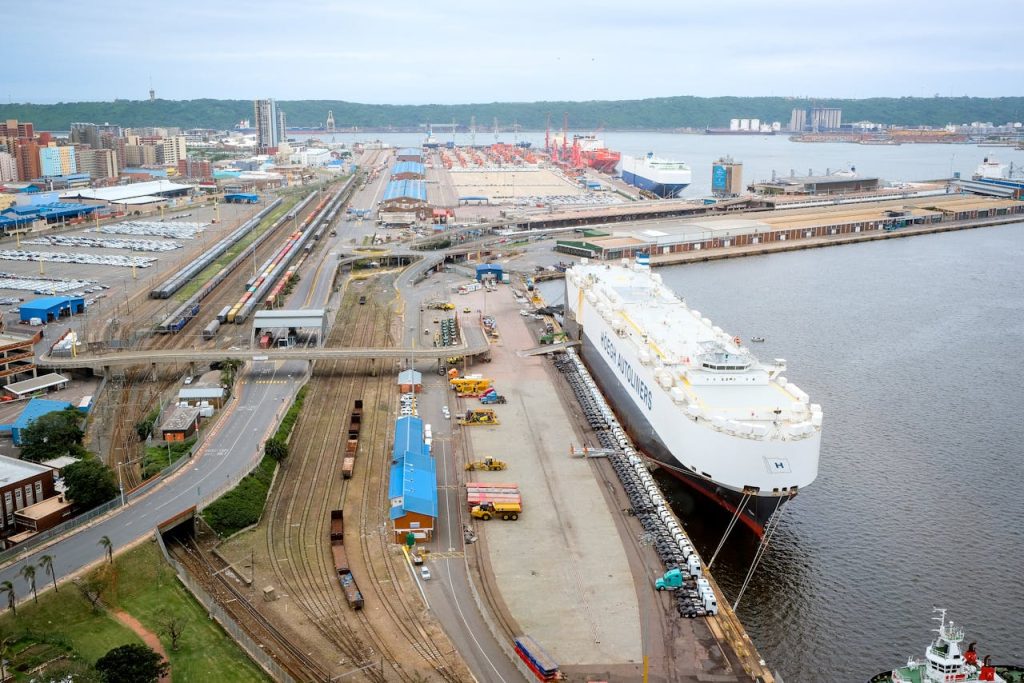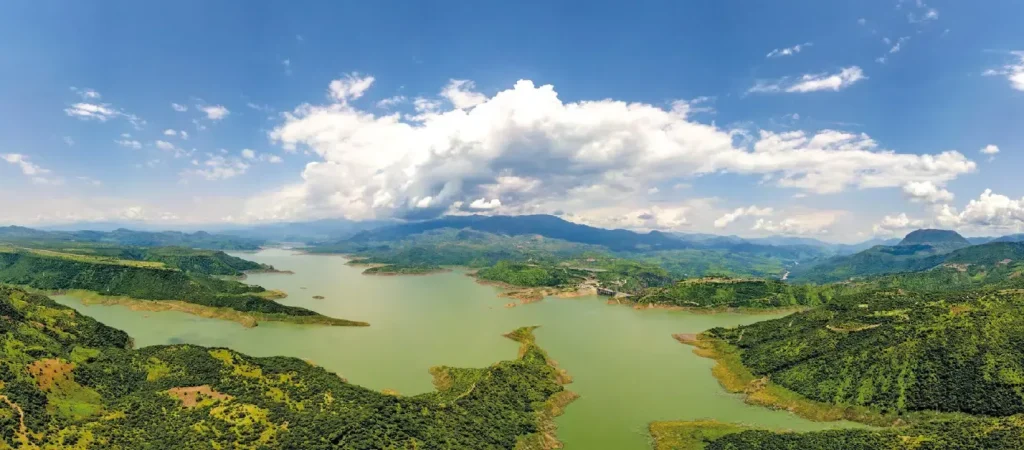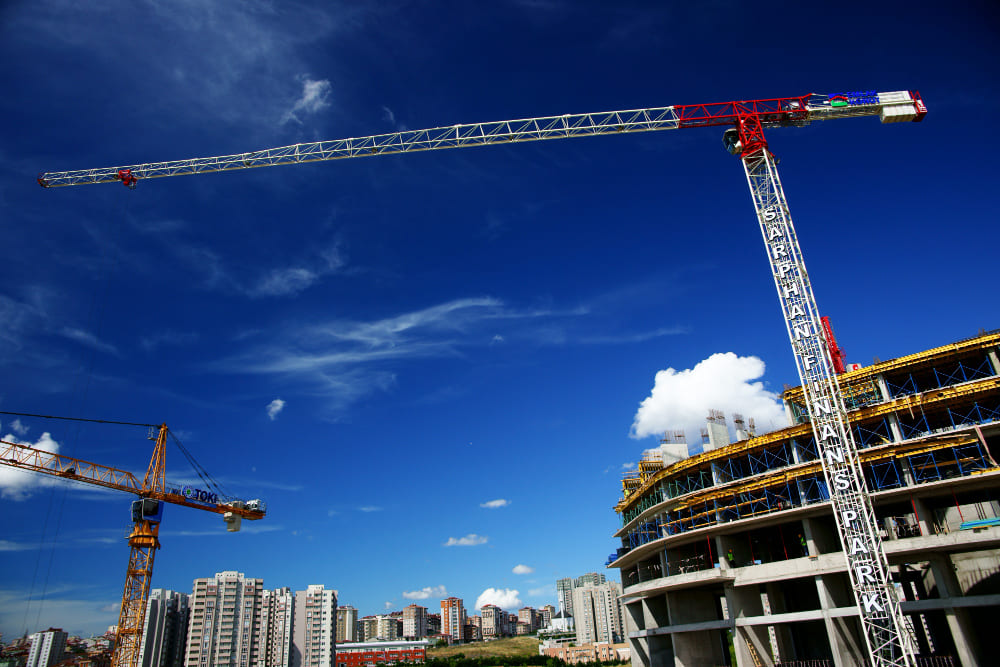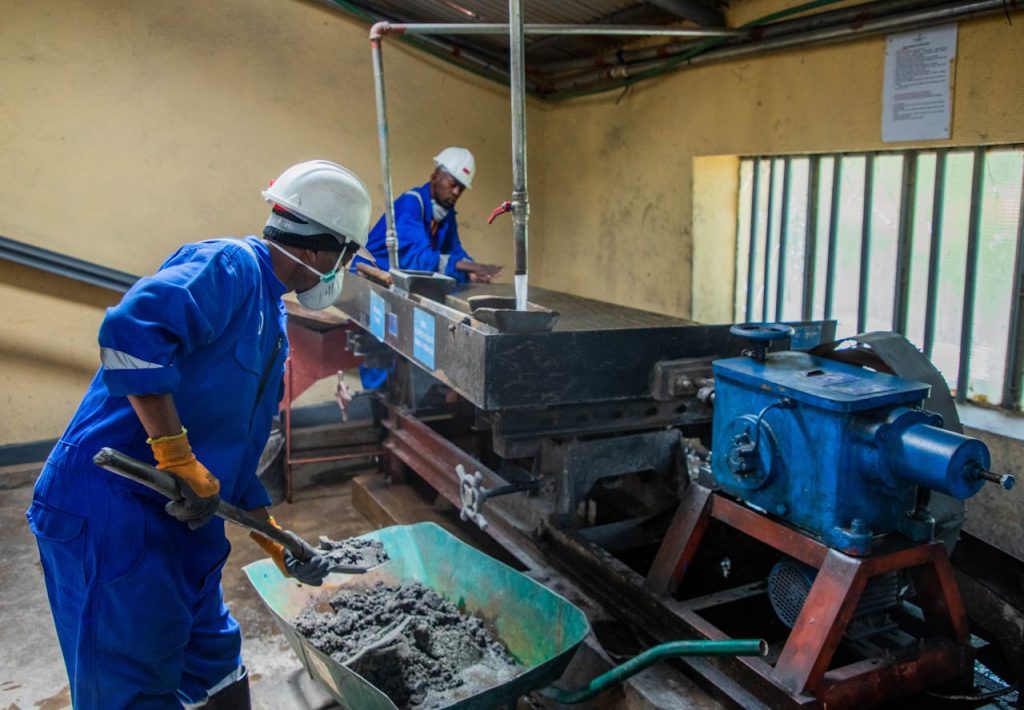
For decades, Guinea exported its mineral wealth the same way colonial-era economies always did: raw, unprocessed, and at the lowest point of the value chain. Bauxite left the ground in Boké, traveled by train to port, and sailed to refineries in China, Russia, and Europe. The ore was world-class. The economic return to Guinea was not. That era is ending. Guinea is now executing one of the most assertive downstream manufacturing strategies in Africa, and for investors who understand what this shift means, the commercial implications are enormous.
Downstream manufacturing in Guinea’s mining and natural resources sector is no longer a policy aspiration. It is a government mandate backed by enforcement, international capital, and a national industrialization program that targets transforming Guinea from a raw commodity exporter into a processing hub for West Africa.
Guinea’s Resource Base: The Foundation for Downstream Value Creation
A Monopoly-Grade Bauxite Endowment
Guinea holds approximately 25 percent of the world’s known bauxite reserves, and the quality of that ore is exceptional. Guinea’s bauxite is naturally low in reactive silica, which is not a marginal advantage. It is a fundamental processing cost differential that alumina refiners price directly into their procurement decisions. Lower silica content means lower energy consumption during the Bayer refining process, reduced caustic soda input per tonne of alumina produced, and higher alumina recovery rates from each unit of feedstock.
Guinea’s bauxite exports reached 183 million metric tons in 2025, accounting for 74 percent of all bauxite entering China, yet the country was capturing only a fraction of the mineral’s economic potential by exporting raw ore. Processing bauxite into alumina typically increases export value by 300 to 400 percent compared to raw ore sales, a margin gap that Guinea’s government has decided it will no longer tolerate.
The Simandou Iron Ore Project and Its Manufacturing Mandate
Beyond bauxite, Guinea’s Simandou project holds approximately 4 billion tonnes of high-grade iron ore, the largest undeveloped iron ore deposit in the world. Simandou began exporting iron ore in November 2025, and with it came downstream manufacturing obligations that make Guinea’s processing ambition concrete and binding. Rio Tinto and Winning Consortium Simandou must submit feasibility studies within two years of first exports for either a 500,000-tonne steel mill facility or a two-million-tonne pellet plant operation, embedding downstream manufacturing requirements directly into the mining license framework.
Government Enforcement: Processing Is Now Mandatory, Not Optional
The Value-Addition Mandate in Practice
Guinea’s government under President Mamadi Doumbouya has moved decisively beyond policy declarations. In August 2025, the mining license of Emirates Global Aluminium (EGA) and its subsidiary Guinea Alumina Corporation (GAC) was revoked after the company failed to adhere to its commitment to construct a one million tonne per year alumina refinery. The mining lease was subsequently transferred to a newly established state entity. This was not a negotiation tactic. It was a precedent.
The suspension of GAC’s exports and the revocation of its license led to significant supply chain disruptions and a noticeable surge in global aluminum prices, demonstrating in the starkest possible terms how central Guinean resources are to global industrial supply chains, and how seriously Guinea’s government is prepared to enforce its downstream manufacturing requirements.
For investors, this enforcement dynamic has a dual message. Companies that commit to downstream manufacturing in Guinea gain access to one of the world’s most valuable mineral endowments with government partnership and policy support. Companies that do not meet their processing commitments lose access entirely.
The Simandou 2040 Program
Guinea’s national industrialization strategy, known as the Simandou 2040 Program, sets a structural framework for downstream development across the mining sector. The program targets the construction of five alumina refineries by 2030, with three projects now reportedly underway. The program also incorporates skills development mandates and local content requirements into each processing agreement, creating a coherent framework for industrial workforce development alongside physical manufacturing infrastructure.
The Downstream Manufacturing Pipeline: Projects Already in Motion
SPIC-Boffa Alumina Refinery
The most advanced processing project in Guinea is the SPIC-Boffa alumina refinery, a collaboration with China’s State Power Investment Corporation. Construction commenced in March 2025 in Boffa, with an annual production capacity of 1.2 million tonnes, targeting completion by late 2027 and commercial production by December 2028. The project also integrates a 250-megawatt power plant, with 100 megawatts earmarked for Guinea’s national grid. This power integration addresses one of the most significant infrastructure constraints for downstream manufacturing in Guinea and directly benefits the broader industrial ecosystem.
Chalco Guinea Alumina Refinery
Guinea signed agreements for a major alumina refinery in Boffa with Chalco Guinea Company as part of the Sino-Guinean cooperation framework strengthened during the 2026 FOCAC discussions between President Doumbouya and Xi Jinping. Once operational, the facility will become Guinea’s third alumina refinery project, joining the pipeline that includes the SPIC refinery expected in 2027 and the Winning Consortium Alumina Guinea refinery planned for 2028.
The Friguia Refinery: Guinea’s Existing Processing Benchmark
RUSAL continues to operate Guinea’s sole existing alumina refinery, Friguia, with an annual capacity of 600,000 tonnes. Friguia has demonstrated for years that alumina refining in Guinea is technically viable and commercially profitable. The challenge has been scaling what Friguia proved possible to a national industrial base, which is precisely what the current pipeline of new refineries is designed to achieve.
Investment Opportunities in Downstream Manufacturing
Where the Real Opportunities Lie for Private Investors
The alumina refinery projects underway in Guinea are predominantly being built by large state-owned enterprises and multinational mining corporations. But the downstream manufacturing opportunity for private investors is far broader than the refineries themselves.
Every major processing facility creates a surrounding ecosystem of investment needs:
- Industrial services and maintenance: Alumina refineries require ongoing maintenance of complex equipment including pressure vessels, heat exchangers, caustic handling systems, and conveyor infrastructure. Local maintenance and engineering services firms are a direct beneficiary of every refinery that comes online.
- Logistics and transport: Processing facilities require dedicated road, rail, and port logistics for both input materials (caustic soda, fuel, consumables) and output products (alumina, by-products). Logistics infrastructure serving the Boké and Boffa industrial clusters represents a B2B investment with captive, growing demand.
- Energy supply: Energy costs represent 25 to 40 percent of alumina processing operational expenses. Independent power producers supplying solar, gas, or hybrid electricity to processing facilities have a structurally guaranteed customer base as Guinea’s refinery pipeline comes online.
- Workforce training and technical education: Each refinery requires hundreds of engineers, plant operators, safety officers, and process technicians. Technical institutes and training programs aligned to mining and processing occupations are in acute demand and represent a sustainable commercial model as Guinea’s industrial workforce scales.
- Construction materials and prefabrication: The physical construction of multiple large refineries through 2028 generates sustained demand for steel fabrication, concrete, piping, electrical systems, and civil works that cannot be fully met from Guinea’s current domestic supply base.
Iron Ore Pelletization and Steel: The Next Wave
Guinea’s Simandou iron ore processing mandate creates a medium-term investment pipeline in iron ore pelletization and, potentially, steel manufacturing. Iron ore pelletisation can increase value by 15 to 25 percent over unprocessed exports, and a domestic steel mill would represent one of the most transformative industrial investments in West African history. Investors who position themselves in Guinea’s iron ore downstream value chain now, through logistics, construction, engineering services, and energy supply, are building the relationships and operational presence that will advantage them when the steel manufacturing phase develops.
The African Continental Free Trade Area (AfCFTA) Multiplier
Guinea’s downstream manufacturing ambitions are not occurring in isolation. The African Continental Free Trade Area (AfCFTA), which aims to create a single continental market for goods and services across 54 African Union member states, creates a growing regional market for alumina, processed iron ore, and manufactured goods produced in Guinea. As AfCFTA’s trade protocols deepen, Guinea’s processed mineral products will access a 1.4-billion-person market with progressively reduced tariff barriers, strengthening the economic case for downstream investment across every sector.
Navigating Guinea’s Mining Investment Environment
Guinea’s downstream manufacturing push is creating opportunity at a pace that rewards early movers. But entering Guinea’s mining and industrial sector requires careful regulatory navigation, established government relationships, and a clear understanding of the processing mandate framework that applies to different types of investments.
The World Bank has identified Guinea’s processing transformation as potentially game-changing for the country’s economy, creating industrial employment while reducing exposure to commodity price volatility. International development finance institutions including the African Development Bank are actively engaged in supporting Guinea’s industrial transition, creating co-financing opportunities for qualifying downstream manufacturing investments.
YES! Invest in Guinea provides foreign investors with the regulatory knowledge, government relationships, and sector expertise needed to identify, structure, and execute downstream manufacturing investments in Guinea’s mining and natural resources sector. From mining convention review and Ministry of Mines engagement to industrial zone site selection and processing license facilitation, our team supports investors at every stage of the downstream investment journey.
FAQ: Downstream Manufacturing in Guinea’s Mining Sector
- What is Guinea’s current alumina production capacity and how will it change by 2030? Guinea currently operates one functional alumina refinery, Friguia (RUSAL), with a capacity of 600,000 tonnes per year. With the SPIC-Boffa, Chalco, and Winning Consortium refineries under development, Guinea is targeting total alumina processing capacity of approximately 7 million tonnes per year by 2030, representing a more than tenfold increase in domestic processing capacity within five years.
- Is the Guinean government’s processing mandate legally binding for mining companies? Yes. Guinea’s processing requirements are embedded directly into mining conventions and license conditions. The revocation of Emirates Global Aluminium’s mining license in August 2025 for failure to build a promised refinery confirmed that these requirements are enforceable and will be enforced. New mining agreements signed under the Simandou 2040 framework include explicit downstream manufacturing commitments with defined timelines and submission deadlines.
- What investment opportunities exist for smaller private investors beyond large refinery projects? Significant opportunities exist in the services and supply ecosystem surrounding Guinea’s refinery pipeline, including industrial maintenance services, logistics and transport infrastructure, independent power production, technical workforce training, construction materials supply, and waste management. These models offer lower capital requirements than refinery construction while accessing captive demand from the large industrial facilities coming online through 2028.
- How does Guinea’s AfCFTA membership benefit downstream manufacturing investors? AfCFTA provides Guinea’s processed mineral products with progressive tariff reductions across the African continental market of 1.4 billion people. As AfCFTA’s trade protocols deepen through 2030 and beyond, investors producing alumina, processed iron ore, or manufactured goods in Guinea gain expanding regional market access that significantly improves the commercial viability of downstream manufacturing investments.
- How can YES! Invest in Guinea assist investors entering the downstream manufacturing sector? YES! Invest in Guinea provides end-to-end facilitation for downstream manufacturing investors, covering mining convention and processing license review, Ministry of Mines and industrial zone engagement, site identification in the Boké and Boffa industrial clusters, regulatory compliance advisory for processing facilities, partnership development with existing mining operators, and connections with international development finance institutions active in Guinea’s industrial transition.
Position Your Investment in Guinea’s Industrial Future
Guinea is not waiting for the world to notice its downstream manufacturing transformation. It is building refineries, enforcing processing mandates, and reshaping its position in the global aluminum and iron ore value chains right now. The window for early-mover investors to enter this industrial transformation is open, but the most strategically valuable positions are being filled by those who act before the pipeline is complete.
YES! Invest in Guinea is your specialist gateway to Guinea’s downstream mining and manufacturing sector. With established government relationships, deep regulatory knowledge, and a comprehensive understanding of the industrial investment landscape, our team turns Guinea’s transformation into a structured commercial opportunity for serious investors.
Explore downstream manufacturing investment opportunities in Guinea →
Ready to assess your specific downstream investment strategy? Contact our advisors today for a confidential consultation and let us map the pathway from opportunity to operation together.