Guinea’s economic story has long been told through the lens of what it digs out of the ground. Bauxite. Iron ore. Gold. Diamonds. But a parallel story is now emerging about what Guinea is beginning to build, assemble, process, and package inside its borders. Light manufacturing is growing in Guinea, and the forces behind that growth are structural, policy-driven, and increasingly backed by real capital. Understanding why it is happening now, and what is sustaining it, is essential reading for any investor evaluating Guinea’s industrial opportunity.
In this guide, Yes! Invest Guinea breaks down the key drivers accelerating light manufacturing growth in Guinea from continental trade integration to infrastructure buildout, rising domestic demand, and a government actively engineering the conditions for industrial diversification.
The Structural Case: Guinea Is Moving Beyond Raw Commodity Export
The single most important force driving light manufacturing growth in Guinea is the government’s deliberate, sustained effort to move the economy up the value chain. For decades, Guinea exported raw bauxite and watched the industrial value of its resources accumulate in importing nations primarily China. The government under President Mamadi Doumbouya has moved aggressively to change that dynamic, introducing export volume caps on raw bauxite, mandating alumina refinery construction as a condition of concession retention, and framing industrialization broadly as a national priority.
This shift in the mining sector creates a spillover effect for light manufacturing. When a country begins insisting on domestic processing of its resources, the logic of building manufacturing capacity more broadly becomes more credible to private investors. The policy environment that has forced alumina refinery investment in Boké is the same environment that signals to a plastics manufacturer or a packaging producer that Guinea is serious about industrial development not just extractive exports.
According to modelling by the ISS African Futures project, Guinea’s GDP per capita increases in all economic scenarios tested, with the manufacturing scenario ranking among the highest-impact interventions in both the short and long term. By 2043, a combined manufacturing and infrastructure push could increase Guinea’s GDP per capita by 29.4% above the current path a clear institutional signal that manufacturing is viewed as one of Guinea’s highest-leverage development pathways.
AfCFTA: Turning Guinea Into a Regional Production Platform
The African Continental Free Trade Area, operational since January 2021, is the single most transformative trade policy development in Africa in a generation. By integrating 55 African Union member states into a unified market of more than 1.4 billion consumers, AfCFTA allows goods manufactured or substantially processed in Guinea to move across the continent with preferential tariff treatment effectively turning a small domestic market into a continental production platform.
For light manufacturers, this is the market access argument that changes the investment calculus entirely. A packaging plant in Guinea does not serve only Guinea’s 17.5 million consumers. Under AfCFTA, it can serve ECOWAS neighbors without tariff barriers, and ultimately, with full AfCFTA implementation, the entire African market. The Zawya analysis of AfCFTA and Special Economic Zones confirms that Africa’s SEZs are being actively repositioned to serve regional rather than purely export markets and Guinea’s own zones are part of this trend.
Intra-African trade growth is projected to reach $230 billion in 2026, with manufacturing and agri-food processing sectors expected to account for 48 to 50% of regional trade flows, according to analysis from Discovery Alert’s trade research. Guinea, producing finished goods inside a well-positioned Atlantic coast economy, benefits from both the continent-wide demand surge and its geographic proximity to West African markets.
Infrastructure: The Physical Enabler of Manufacturing Growth
No amount of market access transforms into real manufacturing activity without the physical infrastructure to support production, logistics, and export. Guinea’s infrastructure buildout accelerating at a pace not seen in the country’s modern history is systematically removing the constraints that previously made light manufacturing difficult to operate profitably.
Special Economic Zones With Industrial-Grade Utilities
Guinea’s newly developed Special Economic Zones are specifically designed for manufacturing investment. As documented in the OECD’s analysis of African SEZs under AfCFTA, leading African SEZs are embedding reliable power, connectivity, and logistics infrastructure into zone design — and Guinea’s zones follow this same template. Investors entering Guinea’s SEZs benefit from dedicated power supply, fiber connectivity, and simplified customs procedures that dramatically reduce the operational overhead typically associated with manufacturing in frontier markets.
Port and Railway Expansion
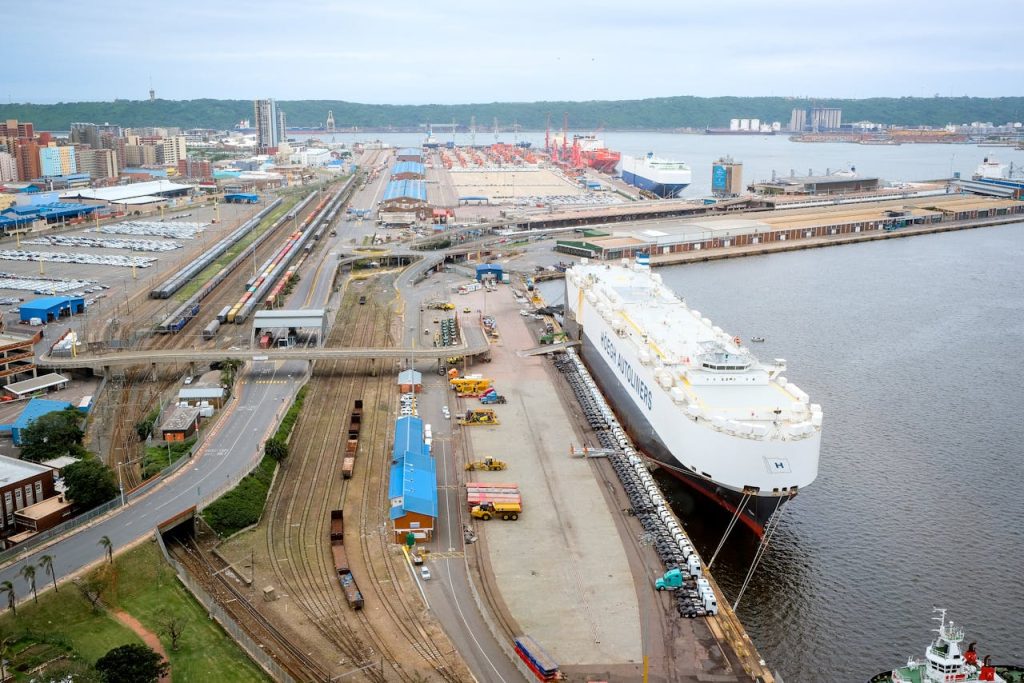
Guinea nearly doubled its port export capacity in 2025 from five to nine operational terminals as part of the country’s preparation for Simandou iron ore exports. This expansion creates logistics infrastructure that benefits light manufacturers shipping finished goods to regional and global markets, not only mining exporters. The 650-kilometer Trans-Guinean railway connecting the Simandou corridor to the Atlantic coast adds a multimodal freight dimension to Guinea’s logistics network that did not previously exist.
Energy Sector Modernization
In April 2026, Guinea awarded a €192 million energy contract to VINCI Energies, covering a 50 megawatt solar farm and 350 kilometers of new transmission lines. This kind of grid investment directly supports manufacturing viability, since reliable and affordable electricity is the fundamental prerequisite for operating any kind of processing or assembly operation at scale.
Rising Domestic Consumer Demand
Guinea’s population of approximately 17.5 million is urbanizing rapidly from just over 31% urban in 2000 to 41.5% in 2025, and rising. As more Guineans enter urban areas and formal employment, consumer demand for packaged goods, textiles, basic consumer products, and processed food is growing in lockstep. This demand was previously met almost entirely by imports. Local light manufacturers who can supply the same goods at competitive prices without international shipping costs, import duties, and supply chain lead times have a structural cost advantage over importers in Guinea’s domestic market.
Mining sector growth amplifies this dynamic. Simandou’s ramp-up toward 60 million tonnes per year of iron ore production is generating sustained demand for construction materials, packaging, industrial supplies, and consumer goods from a rapidly growing workforce across Guinea’s mining regions demand that local manufacturers are far better positioned to serve than distant importers.
Investment Incentives Designed for Manufacturers
Guinea’s Investment Code offers a structured set of advantages specifically designed to attract manufacturing and processing investment. Under the Privileged Regime, qualifying manufacturers benefit from corporate income tax holidays of five to eight years, customs duty exemptions on imported machinery and production equipment, VAT relief on qualifying inputs, and full profit repatriation rights. The minimum qualifying threshold an investment of 200 million GNF and five permanent Guinean jobs is accessible to small and mid-scale manufacturers, not just large industrial operators.
For manufacturers operating within Special Economic Zones, additional benefits include streamlined regulatory approvals, reduced administrative friction, and access to shared logistics infrastructure making the effective cost of doing business in Guinea’s SEZs meaningfully lower than in comparable frontier markets without equivalent zone infrastructure.
The Sectors Growing Fastest Within Guinea’s Light Manufacturing Space
Packaging and Plastics
As food processing, beverage production, and retail trade expand across Guinea and the broader West African region, demand for bottles, containers, industrial packaging, and consumer product packaging is rising sharply. Local packaging manufacturers reduce supply chain costs for downstream industries while capturing value that currently flows to import suppliers.
Textiles and Garment Assembly
Guinea’s textile sector remains underdeveloped relative to domestic demand and regional export potential, creating a clear entry opportunity for garment manufacturers and fabric processors willing to establish operations ahead of the sector’s maturation.
Consumer Goods and Personal Care Products
Soap, detergent, cleaning products, and personal care items are currently imported in substantial volumes from neighboring markets. Local production using raw material inputs many of which Guinea already produces domestically is increasingly viable as infrastructure and market access improve.
Food and Beverage Processing
Fruit juice production, grain milling, vegetable oil processing, and cashew processing are all sub-sectors with direct raw material supply in Guinea and clear domestic and regional market demand making them natural light manufacturing entry points for investors with food and agribusiness backgrounds.
How Yes! Invest Guinea Supports Light Manufacturing Investors
Yes! Invest Guinea connects manufacturers and industrial investors with structured, viable entry points across Guinea’s light manufacturing landscape. Our support includes:
- Identifying suitable sites within Guinea’s Special Economic Zones for assembly and processing operations
- Coordinating Investment Code applications for Privileged Regime tax and customs incentive approval
- Connecting manufacturers with local raw material suppliers across packaging, food, and consumer goods value chains
- Advising on AfCFTA market access strategy for goods produced or processed in Guinea
- Facilitating introductions to logistics operators, utility providers, and banking institutions active in Guinea’s industrial zones
Frequently Asked Questions
- Why is light manufacturing specifically growing in Guinea right now? Three forces are converging simultaneously: Guinea’s government is pushing industrial diversification beyond raw mineral exports, AfCFTA gives manufacturers continental market access from a Guinean base, and infrastructure investment in ports, energy, and Special Economic Zones is removing the operational barriers that previously made manufacturing difficult.
- What does AfCFTA mean specifically for light manufacturers in Guinea? It means goods manufactured or substantially processed in Guinea can move across a market of more than 1.4 billion consumers in 54 African nations with preferential tariff treatment — transforming Guinea’s domestic market from a constraint into a regional production platform.
- Which light manufacturing sectors are growing fastest in Guinea? Packaging and plastics, textiles and garment assembly, consumer goods and personal care products, and food and beverage processing are among the most active and accessible growth segments.
- What incentives are available to light manufacturers in Guinea? The Investment Code’s Privileged Regime offers CIT holidays of five to eight years, duty-free equipment imports, VAT relief, and full profit repatriation for qualifying manufacturers. Additional benefits apply within Special Economic Zones.
- How can Yes! Invest Guinea help a manufacturer enter Guinea’s market? Yes! Invest Guinea provides SEZ site selection, Investment Code application support, raw material supplier introductions, AfCFTA strategy advice, and connections to logistics and banking partners active in Guinea’s industrial zones.
Enter Guinea’s Light Manufacturing Market While the Growth Is Early
Guinea’s light manufacturing sector is growing because the conditions for growth trade access, infrastructure, incentives, and rising domestic demand are all aligning at the same moment. The investors who move in during this early phase will be the ones who establish the strongest market positions before competition intensifies.
Connect with Yes! Invest Guinea today to explore light manufacturing investment opportunities tailored to your sector, scale, and market strategy.