Guinea is in the middle of a infrastructure buildout that would be remarkable in any economy, let alone one its size. A $200 billion national transformation strategy, a newly awarded €192 million energy contract, and a 650-kilometer railway corridor are all moving forward simultaneously. For investors, the opportunity is enormous but so is the coordination challenge. Moving a project from concept to construction in Guinea requires infrastructure and logistics facilitation: the practical, on-the-ground work of connecting capital, contractors, financing, and government approvals into a single, executable plan.
In this guide, Yes! Invest Guinea explains what infrastructure and logistics facilitation actually involves, the major projects reshaping Guinea’s infrastructure landscape, and how investors can position themselves to participate.
What Infrastructure and Logistics Facilitation Really Means
Facilitation is distinct from financing or construction. It is the connective work that makes large infrastructure and logistics projects actually happen: identifying the right site, structuring the right partnership, sequencing the right approvals, and connecting investors with the contractors, utilities, and financiers needed to execute. In a market like Guinea where major projects routinely involve multiple ministries, international development banks, and private operators simultaneously this coordination function is often the difference between a project that breaks ground and one that stalls indefinitely.
Why Guinea’s Infrastructure Push Creates Facilitation Demand
Guinea’s National Transitional Council adopted a 2026 budget of roughly USD 7.3 billion, an 18.3% increase over the prior year, reflecting the scale of public investment underway. At the same time, flagship projects like the Simandou corridor are explicitly designed, according to industry analysis of Guinea’s Simandou 2040 transformation strategy, to extend Guinea’s economic influence regionally by enabling landlocked neighbors to access Atlantic shipping routes through Guinean port facilities positioning the country as a logistics and trade hub for the wider ECOWAS region. Realizing that ambition requires facilitating dozens of interconnected sub-projects, not just funding one headline railway.
Major Infrastructure Projects Driving Facilitation Demand
The Simandou Rail and Port Corridor
The centerpiece of Guinea’s infrastructure transformation is a 650-kilometer railway system connecting interior mining areas to deepwater port facilities capable of handling annual export volumes exceeding 100 million tons. According to the same industry analysis, the railway’s design incorporates passenger service capabilities alongside freight operations, meaning the corridor’s economic impact extends well beyond mining logistics into broader population mobility and commercial activity along its entire length. For investors in trucking, warehousing, equipment supply, or regional trade services, this corridor represents one of the largest logistics facilitation opportunities in West Africa.
Energy and Grid Infrastructure
Guinea’s power sector is undergoing a parallel transformation. In April 2026, the Guinean government awarded a €192 million contract to VINCI Energies covering a 50 MWp solar farm, 350 kilometers of 225 kV transmission lines, and two very-high-voltage substations, according to reporting from Highways Today. The project, commissioned jointly by the Ministry of Energy and the Ministry of Economy and Finance, combines renewable generation with grid expansion — strengthening the backbone of the national grid rather than simply adding isolated generation capacity.
This buildout matters directly to logistics and industrial investors: reliable grid power is a prerequisite for cold storage, manufacturing, port operations, and telecommunications infrastructure alike. Facilitating connections between new generation capacity and downstream industrial users is itself becoming a distinct investment opportunity.
International Partnerships Expanding the Energy and Logistics Pipeline
Guinea is also actively courting international partners to expand its energy and logistics base. Reporting from Anadolu Agency confirms that Guinea and Türkiye agreed during diplomatic meetings in August to enhance energy sector cooperation, promote private investment through public-private partnerships and independent power producer (IPP) arrangements, and develop joint projects spanning energy, mining, and logistics. Guinea’s Energy Minister has specifically highlighted public-private partnerships as central to powering the country’s future infrastructure needs a clear signal that the government is actively seeking facilitation partners, not just financiers.
Global Infrastructure Hub Recognition
Guinea’s infrastructure investment landscape is significant enough to be tracked by the Global Infrastructure Hub, a G20-established body designed to increase the quality and flow of infrastructure investment globally by connecting public and private sectors. Inclusion in this kind of international tracking framework signals that Guinea’s infrastructure pipeline is being monitored by the same institutions that connect major global investors with projects another channel through which facilitation expertise becomes valuable.
Where Logistics Facilitation Creates the Most Value
Port and Multimodal Connectivity
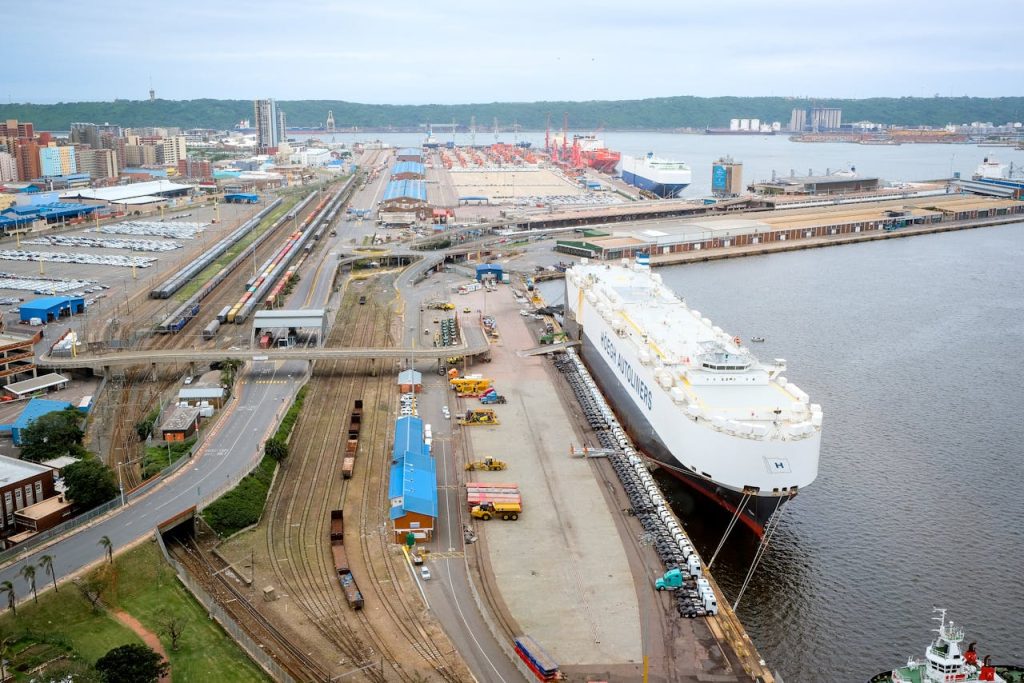
Beyond Simandou, Guinea’s broader port network anchored by the Port of Conakry and the Kamsar export corridor requires facilitation across customs processes, terminal access agreements, and multimodal connections between rail, road, and maritime transport. Investors entering logistics services, freight forwarding, or warehousing benefit significantly from facilitation partners who understand how these systems interconnect.
Road Network Expansion
Guinea’s road network has expanded substantially since the mid-1980s, though large sections outside major mining and urban corridors remain in poor condition. Continued road investment frequently financed through a mix of government budget and development bank support creates facilitation opportunities for contractors, equipment suppliers, and regional trade operators seeking to connect production areas with export infrastructure.
Telecommunications and Digital Infrastructure
As Guinea’s broader infrastructure base modernizes, telecommunications upgrades are following closely behind, with network operators expanding connectivity infrastructure to support both consumer demand and the digital backbone needed for modern logistics tracking, customs processing, and industrial operations.
How Yes! Invest Guinea Facilitates Infrastructure and Logistics Investment
Yes! Invest Guinea provides the on-the-ground coordination that turns infrastructure ambition into executable projects. Our support includes:
- Site identification and access coordination along key corridors, including Simandou, Kamsar, and Conakry
- Structuring public-private partnership and IPP arrangements with relevant ministries
- Connecting investors with contractors, utility providers, and equipment suppliers active in Guinea
- Coordinating customs, terminal access, and multimodal logistics planning
- Facilitating introductions to development finance institutions and international infrastructure partners
Best Practices for Infrastructure and Logistics Investors in Guinea
- Align with active PPP and IPP frameworks. Guinea’s government has explicitly signaled openness to private participation in energy and infrastructure — structure your entry accordingly.
- Anticipate multimodal needs early. Projects tied to rail corridors like Simandou often require parallel road, port, and warehousing facilitation.
- Track international partnership agreements. Diplomatic energy and infrastructure cooperation agreements, such as Guinea’s recent engagement with Türkiye, often open new co-investment channels.
- Plan around grid expansion timelines. New transmission capacity from projects like the VINCI Energies contract will create downstream opportunities for industrial and logistics users who plan ahead.
- Use facilitation partners for multi-agency coordination. Large infrastructure projects in Guinea routinely involve multiple ministries and development banks simultaneously.
Frequently Asked Questions
1. What does “infrastructure and logistics facilitation” actually involve? It refers to the coordination work site selection, partnership structuring, regulatory navigation, and contractor or financier introductions that turns an infrastructure or logistics investment concept into an executable project.
2. What is the largest infrastructure project currently shaping Guinea’s logistics landscape? The Simandou corridor, a 650-kilometer railway connecting interior mining areas to deepwater port facilities, is the centerpiece of Guinea’s broader infrastructure transformation strategy.
3. Is Guinea open to private investment in energy infrastructure? Yes. The government has actively promoted public-private partnerships and independent power producer arrangements, including through recent cooperation agreements with international partners like Türkiye.
4. How does grid expansion affect logistics investors specifically? Reliable power is a prerequisite for cold storage, port operations, manufacturing, and telecommunications all critical components of modern logistics infrastructure.
5. How can Yes! Invest Guinea help with infrastructure and logistics facilitation? Yes! Invest Guinea coordinates site selection, partnership structuring, multi-agency approvals, and introductions to contractors, utilities, and development finance institutions active in Guinea.
Move Your Infrastructure Project From Concept to Construction
Guinea’s infrastructure pipeline is large, active, and genuinely open to private participation — but realizing it requires coordinated facilitation across ministries, financiers, and contractors. Let Yes! Invest Guinea manage that coordination so your project moves forward without unnecessary delay.
Connect with Yes! Invest Guinea today to discuss your infrastructure or logistics investment and build a facilitation strategy tailored to your project.