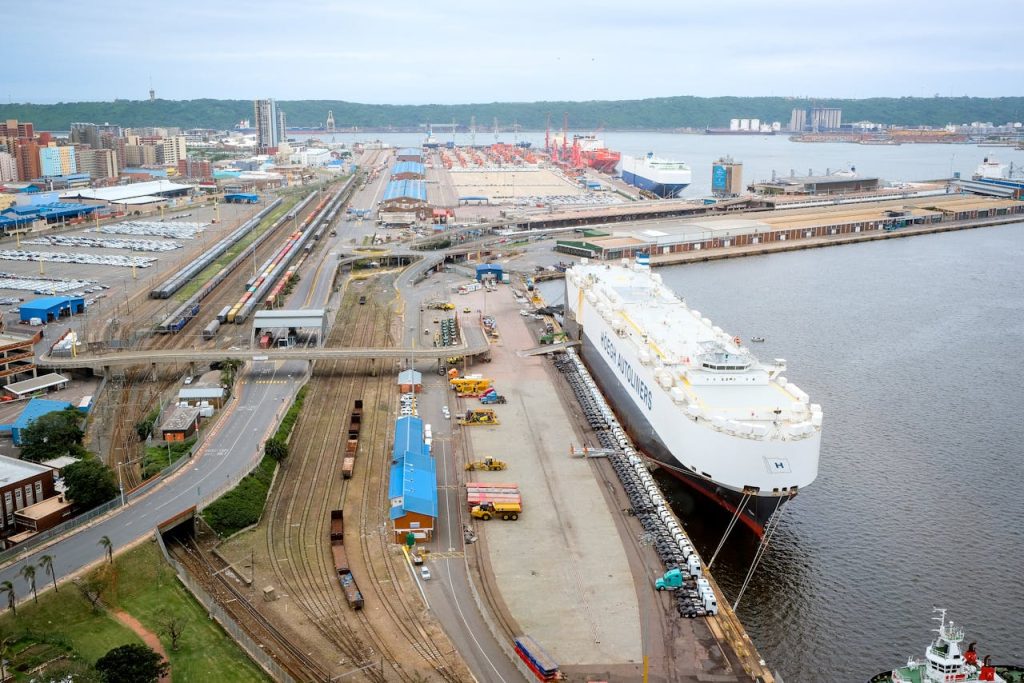
Conakry has more than 2,000 multinational companies, international NGOs, development finance institutions, and growing domestic enterprises operating across its commercial districts all competing for a total stock of approximately 45,000 square meters of international-standard office space. That is roughly the square footage of a mid-sized suburban office park in Europe or North America, serving the administrative needs of an economy now worth approximately $25 billion and growing at 7 to 9% annually.
The conclusion is not difficult to reach. Guinea is sitting on one of the most acute office space deficits in West Africa, and the demand forcing that conclusion is not speculative it is made up of the same mining multinationals, logistics companies, development banks, and diplomatic missions that are already in Conakry, signing leases at whatever rate the limited available stock commands.
In this guide, Yes! Invest Guinea breaks down the office parks and business hub opportunity in Guinea: why the demand is real, where it is coming from, what investors need to know about developing or acquiring commercial office assets, and how to enter a market where the supply-demand gap is measurable in years rather than units.
The Numbers Behind the Office Space Crisis
The data on Conakry’s commercial real estate shortage is stark. According to data published on the Yes! Invest Guinea commercial real estate opportunities page, Conakry currently has an office occupancy rate of 98% against a total formal office stock of only 45,000 square meters. For context, a single modern mid-sized business park in any comparable emerging market capital — Dakar, Abidjan, or Accra — would contain more rentable office space than Guinea’s entire formal market.
Prime office sites in Conakry are currently available at $150 to $300 per square meter of land cost, compared to $800 to $1,200 per square meter in neighboring capitals — a land cost advantage that, paired with strong rental yields driven by near-total occupancy, creates the fundamental economics of a compelling development opportunity. Investors who develop Grade-A office space in Conakry are not competing for tenants in an oversupplied market; they are providing space that tenants are already trying to find and frequently unable to locate at acceptable quality levels.
Who Is Driving Office Demand in Guinea
Mining Sector Corporate Offices and Project Offices
Guinea’s mining boom is the primary engine of commercial office demand. Companies including Rio Tinto, SMB-Winning, SPIC, Chalco/GAC, and dozens of mining services, equipment, and logistics companies all maintain Conakry offices for project management, government relations, regulatory liaison, and operational coordination. As Simandou reaches production and alumina refineries begin construction, the number of companies maintaining a permanent corporate footprint in Conakry is growing, not contracting.
According to the U.S. Trade Administration’s Guinea Construction and Commercial Guide, the return of international investors after Guinea’s 2010 elections sparked a boom in hotel, residential, and office building construction — and despite political transitions since then, construction projects in Conakry have remained robust because the underlying corporate demand has never diminished. The Simandou corridor buildout and alumina refinery investment wave are now adding a new layer of project office demand on top of an already undersupplied base.
Development Finance and International Organizations
Guinea hosts an active community of multilateral development institutions including the World Bank Group, African Development Bank, International Finance Corporation, and multiple bilateral development agencies all of which require professional office accommodation for permanent country teams. International NGOs, humanitarian organizations, and civil society bodies add further institutional office demand to this category.
These tenants are typically long-term leaseholders with stable, hard-currency-referenced rental obligations the most desirable tenant profile in any commercial real estate market. The quality of accommodation they require reliable power backup, high-speed internet connectivity, professional common areas, and adequate security is also the specification that defines Grade-A office product in the Conakry context.
Growing Private Sector and Professional Services
Guinea’s domestic private sector is expanding alongside its mining economy. Banking, legal, accounting, logistics, IT, and consulting businesses are all growing in response to corporate demand from mining operators and their supply chains. According to Avacasa’s Conakry property investment guide, high occupancy rates and corporate demand are already driving attractive rental yields in the commercial sector indicating that domestic private sector growth is contributing to absorption rather than just multinational demand.
The U.S. Commercial Guide notes that the Kipe neighborhood of Conakry is also the planned site for a new government quarter, a major construction project that will reshape one of the city’s key commercial districts and create new adjacent demand for private sector office accommodation around the government administrative hub.
What Grade-A Office Product Looks Like in the Guinea Context
Developing a competitive office park or business hub in Guinea does not require the same specification as a trophy tower in a mature market. The benchmark for Grade-A office space in Conakry is set by what current tenants cannot find: reliable backup power, consistent internet connectivity, professional lobby and reception areas, secure parking, and flexible floor plates that accommodate both single-tenant and multi-tenant configurations.
Backup Power as a Non-Negotiable Specification
Energy reliability is the single most important operational specification for commercial office tenants in Guinea. Any office park development that targets multinational and institutional tenants must incorporate dedicated backup power generation — typically diesel generators with automatic transfer switches — as base infrastructure rather than an optional upgrade. The €192 million energy grid expansion contract awarded to VINCI Energies in 2026 will improve the national grid over time, but building-level power resilience remains essential for the foreseeable future.
Connectivity and Digital Infrastructure
High-speed fiber internet connectivity is increasingly a base requirement for corporate office tenants, particularly in industries like mining, finance, and project management where data-intensive operations and real-time communications with headquarters are standard. Business hubs that can provide reliable, dedicated internet connectivity either through direct fiber feeds or enterprise-grade wireless solutions command significant rental premiums over comparable space without this specification.
Security and Access Management
International corporate and institutional tenants require professional access control, perimeter security, and CCTV coverage as standard features of any Grade-A office facility. Business parks that integrate these features into their base specification rather than leaving security to individual tenant arrangements are more competitive for the high-value tenants that drive occupancy and yield performance.
The New Government Quarter: An Emerging Adjacency Opportunity
The planned new government quarter in the Kipe neighborhood represents a significant urban development project that will reshape Conakry’s commercial geography. When completed, the new administrative hub will draw institutional traffic, diplomatic missions, and private sector service providers to its vicinity creating a new adjacency for commercial office development that does not currently exist in Conakry’s somewhat scattered commercial district pattern.
Investors who identify and secure development sites in the vicinity of the Kipe government quarter are positioning ahead of a demand shift that will revalue adjacent commercial land as construction progresses and the district establishes its new role in Conakry’s urban fabric.
Secondary City Business Hub Opportunities
The office parks and business hub opportunity is not limited to Conakry. Guinea’s secondary mining cities particularly Boké, Kamsar, and the towns along the Simandou corridor are generating sustained demand for professional office accommodation for project managers, engineering teams, environmental compliance staff, and government liaison personnel from the mining consortia operating in those regions.
In these markets, the specification bar is lower than in Conakry small, practical office buildings with reliable power and connectivity rather than large multi-tenant parks but the corporate tenant demand is direct and steady, sourced from companies whose office needs in secondary cities are currently met by camp-style accommodation rather than proper commercial facilities.
How Yes! Invest Guinea Supports Office Park and Business Hub Developers
Yes! Invest Guinea connects investors and developers with structured opportunities across Guinea’s commercial office market. Our support includes:
- Identifying prime development sites in Conakry’s key commercial districts, including Kaloum, Kipé, and Ratoma, as well as secondary city locations near mining operations
- Coordinating with the Ministry of Urbanism and relevant municipal authorities for development permits and land title verification
- Connecting developers with anchor tenants from Guinea’s mining, NGO, and development finance communities
- Advising on Investment Code incentives applicable to commercial real estate development, including tax holidays and equipment import exemptions
- Facilitating introductions to construction contractors, utilities providers, and property management operators active in Guinea
Frequently Asked Questions
- How large is Conakry’s formal Grade-A office market? Conakry currently has approximately 45,000 square meters of international-standard office space against demand from more than 2,000 multinationals, international organizations, and growing domestic enterprises resulting in an occupancy rate of approximately 98%.
- Who are the primary tenants for Grade-A office space in Conakry? Primary demand comes from mining multinationals and project offices, international development finance institutions and NGOs, diplomatic missions, and growing domestic professional services firms in banking, legal, and logistics sectors.
- What is the land cost advantage in Conakry compared to neighboring markets? Prime development sites in Conakry are available at $150 to $300 per square meter, compared to $800 to $1,200 per square meter in comparable neighboring capitals such as Dakar and Abidjan.
- What specification features define Grade-A office space in the Guinea context? Reliable backup power generation, high-speed fiber internet connectivity, professional lobby and common areas, secure parking, access control, and flexible floor plates that accommodate both single and multi-tenant configurations are the defining specifications.
- How can Yes! Invest Guinea help developers enter Guinea’s office market? Yes! Invest Guinea provides site identification, development permit coordination, anchor tenant introductions from the mining and NGO communities, Investment Code incentive guidance, and connections to local contractors and property management operators.
Develop the Office Space Conakry’s Economy Is Waiting For
Conakry’s commercial office market has 98% occupancy and 45,000 square meters of Grade-A space to serve one of West Africa’s fastest-growing economies. That is not a market with vacancy risk it is a market with a structural development gap that growing corporate demand is widening every year.
Connect with Yes! Invest Guinea today to explore office park and business hub development opportunities in Conakry and Guinea’s expanding commercial markets.