Conakry is a city of contradictions. It is the capital of one of the world’s most mineral-rich nations, home to over 3 million people, the headquarters of 2,000-plus multinational and regional businesses, and a growing economic hub drawing executives, engineers, diplomats, and entrepreneurs from across the globe. Yet it has no modern shopping mall, only 45,000 square meters of international-standard office space, fewer than 800 hotel rooms that meet international standards, and less than 100,000 square meters of formal warehouse space to serve a USD 20 billion economy.
These are not the statistics of a market in decline. They are the defining characteristics of the most dramatically undersupplied commercial real estate market in West Africa, and for investors who understand what supply scarcity means in a growing economy, they represent one of the most compelling entry points on the continent.
Guinea’s Commercial Real Estate Market: The Numbers That Tell the Story
Office Space: 98% Occupancy in a Market Running on Empty
Guinea’s formal office market is defined by a single overwhelming reality: demand vastly outstrips everything that exists. With office occupancy rates at 98 percent and only 45,000 square meters of international-standard office space for more than 2,000 multinationals and growing businesses, Conakry’s office market has no meaningful vacancy to absorb new tenants. Companies seeking Grade A space either join waiting lists, pay extraordinary premiums for the limited stock available, or operate from residential properties repurposed as offices out of necessity.
According to market analysis from trade.gov’s Guinea Market Opportunities guide, the best growth prospects across Guinea’s economy revolve around mining operations, and the companies executing those operations require professional office infrastructure that the market simply does not have. Prime office sites in Conakry are currently valued at USD 150 to 300 per square meter, compared to USD 800 to 1,200 per square meter in neighboring capitals such as Dakar and Abidjan. This pricing differential reflects not a weaker market but a more nascent one, with significant appreciation potential as the commercial real estate sector formalizes.
Retail: A Capital City with Zero Modern Shopping Infrastructure
Conakry is a city of 3 million people with a formal retail penetration rate of just 15 percent, compared to the 40 percent regional average for comparable West African capitals. There are no modern shopping malls in Guinea’s capital. Formal retail occurs in small standalone shops, informal markets, and a small number of supermarket-format stores serving the expatriate and upper-income domestic market. As Guinea’s urban population grows and household incomes rise alongside mining sector expansion, the gap between what Conakry’s retail market offers and what its population demands is widening every year.
First-quality retail assets in Conakry command premiums of 40 to 60 percent above the general market average due to the near-total absence of alternatives, and tenant retention rates are among the highest in the region for the same reason. The developer who delivers Guinea’s first international-standard retail center will not face a competition problem. They will face a tenant selection problem.
Hospitality: 800 Rooms for a Market That Needs 5,000
Guinea’s hospitality sector compounds the commercial real estate deficit with perhaps its most striking data point. Conakry has just 800 international-standard hotel rooms, against a market that needs more than 5,000. Only two properties in the entire country meet international 4-star standards. The consequences are measurable: annual losses of USD 150 million or more in refused corporate bookings and diverted tourism, an inability to host international conferences, and mining executives and government delegations routinely being turned away due to capacity constraints.
Average daily rates of USD 180 to 250 for substandard rooms reflect what happens when a market’s demand is completely unconstrained by supply competition. Year-round occupancy rates of 98 percent at these price points mean that a new international-standard hotel in Conakry does not need to compete for business. It needs only to open.
The Construction Sector: Mining Money Flows into Bricks and Mortar
Mining-Driven Construction Demand Is Accelerating
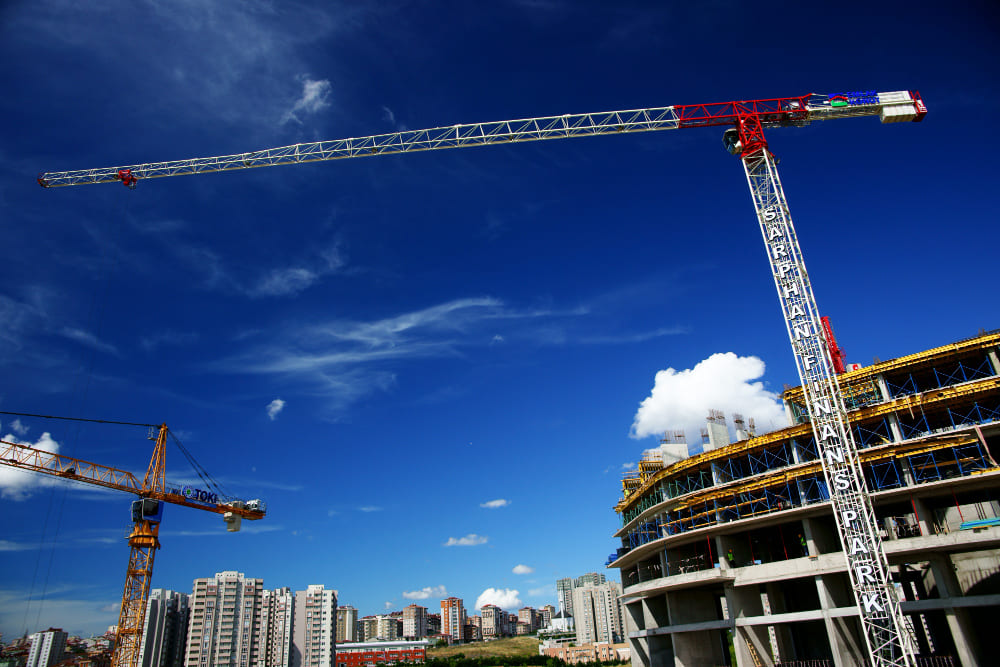
Guinea’s construction sector does not operate independently of the mining sector. It is powered by it. According to the U.S. Department of Commerce’s Guinea Construction and Semi-Finished Materials guide, the best prospects for Guinea’s construction industry revolve around mining operations, and major bauxite companies expanding or establishing operations in Guinea will require vast infrastructure development to access their concessions.
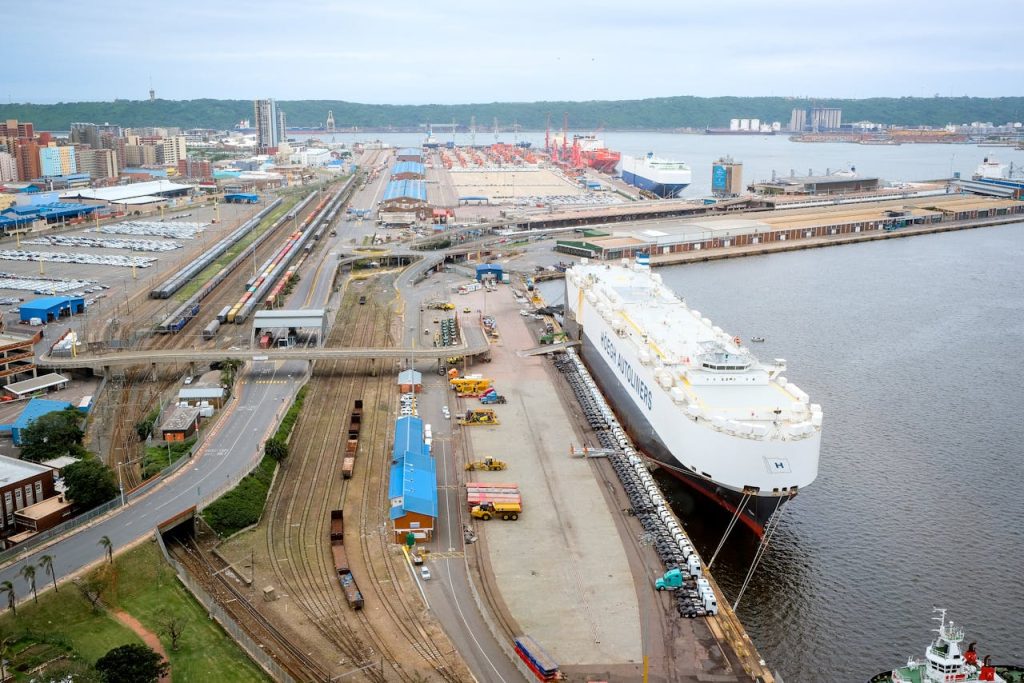
The Simandou iron ore project alone involves 650 kilometers of Trans-Guinean Railway, ongoing port expansion in Conakry, and substantial construction of worker accommodation, maintenance facilities, and administrative infrastructure. The five alumina refineries under development in the Boké and Boffa regions each represent large-scale construction projects with associated housing, logistics, and commercial facility requirements. Every major mining project creates a ripple of construction demand that extends from direct facility construction to roads, power infrastructure, worker housing, and commercial services for growing worker populations in previously underdeveloped regions.
Government Infrastructure Programs
Guinea’s government is executing significant infrastructure programs that create both direct construction opportunities and demand for commercial real estate adjacent to new infrastructure. Major construction is planned in the Kipé neighborhood of Conakry for a new government quarter, and port expansion projects, new highway corridors, and power infrastructure upgrades are all generating construction procurement activity that international and local construction firms are actively competing for.
The African Development Bank identifies infrastructure investment as the primary driver of economic transformation across sub-Saharan Africa, with every dollar invested in infrastructure generating up to USD 1.50 in economic output. Guinea’s infrastructure pipeline is creating precisely this multiplier effect across the construction sector.
Investment Models in Guinea’s Commercial Real Estate and Construction Sector
Grade A Office Development
The highest-demand, highest-premium investment in Guinea’s commercial real estate market is Grade A office space development in Conakry’s central business district and the established commercial corridors of Kaloum, Kipé, and Taouyah. An investor developing 5,000 to 15,000 square meters of international-standard office space in a prime location can expect pre-leasing from anchor tenants before construction is complete, given the depth of unmet demand. Gross rental yields in Guinea’s commercial sector range from 8 to 15 percent annually, well above regional and global averages for comparable asset classes.
Mixed-Use Development
Mixed-use developments combining retail, office, hospitality, and residential components on a single site are particularly compelling in Guinea’s market because they address multiple supply deficits simultaneously, maximizing land use efficiency and diversifying revenue streams across a single development footprint. Conakry’s limited land supply on the Kaloum peninsula makes land-efficient, vertically integrated development models commercially advantageous relative to single-use projects.
Hospitality Development
The case for hotel investment in Guinea is among the most straightforward in the African hotel development market. With two properties in the entire country meeting 4-star standards, 98 percent year-round occupancy, and average daily rates that reflect completely unconstrained pricing, a new international-brand hotel in Conakry will achieve strong stabilized performance from its first operational year. The corporate travel market from mining, government, diplomatic, and NGO segments provides a captive, reliable base of demand that does not depend on leisure tourism to sustain occupancy.
Construction Services and Materials Supply
For investors entering through construction services rather than property ownership, Guinea’s market offers strong demand for international-standard construction contractors, project management firms, engineering consultancies, and building materials suppliers. As most construction materials must be imported, investors establishing local supply of cement, steel, glass, electrical systems, and finishing materials occupy a structurally advantaged position relative to project-by-project importers. A 2025 cement shortage that partially paralyzed Guinea’s construction sector underscored how dependent the industry remains on a narrow base of imported inputs, and how much value local supply chain investment can generate.
Residential Development for the Expatriate and Professional Market
Guinea faces a housing deficit estimated at several hundred thousand units based on World Bank data, with Conakry’s 3.4 million inhabitants concentrated on a narrow peninsula that intensifies land pressure. Quality residential development targeting the growing community of mining executives, diplomatic staff, NGO personnel, and emerging Guinean professionals generates rental yields of 8 to 15 percent for well-located, well-equipped properties. Furnished villas and high-end apartments in Kipé and Taouyah rent for USD 1,000 to 3,000 per month, with very low vacancy in appropriately priced and maintained stock.
Navigating Land, Permits, and Legal Frameworks
Guinea’s property rights framework is governed by the Code Foncier et Domanial, adopted in 1992, which sets the legal basis for land ownership, lease rights, and state property management. Foreign investors may own property in Guinea through a locally registered company or in their personal name under leasehold or long-term usage agreements, subject to applicable conditions.
Key practical considerations for commercial real estate investors include conducting thorough due diligence on land titles before acquisition, given that multiple overlapping deeds for the same land are not uncommon in Guinea’s informal property market. Building permits and construction approvals are administered at municipal and ministry level, and timelines benefit significantly from experienced local facilitation support.
YES! Invest in Guinea provides investors with end-to-end support for commercial real estate and construction investments, covering land due diligence and title verification, building permit facilitation, construction contractor vetting, tenant identification across office, retail, and hospitality categories, and ongoing property management advisory to protect investment performance throughout the asset’s operational life.
FAQ: Commercial Real Estate and Construction Investment in Guinea
- What are the current rental yields for commercial real estate in Guinea? Gross rental yields in Guinea’s commercial real estate market range from 8 to 15 percent annually, significantly above developed market averages of 4 to 6 percent. The highest yields are found in Grade A office space, premium hospitality, and quality residential properties targeting expatriate and corporate tenants. These yields reflect both the genuine undersupply of quality assets and the robust demand from Guinea’s growing mining, diplomatic, and business communities.
- Can foreign investors own commercial property in Guinea? Yes. Foreign investors can own commercial real estate in Guinea through a locally registered company or, in some cases, in their personal name, under leasehold or long-term usage agreements governed by Guinea’s Code Foncier et Domanial. The government actively encourages foreign investment in real estate, particularly in commercial development, hospitality, and socially beneficial housing projects. Working with a local legal partner and investment facilitator is strongly recommended to navigate land title verification and permit processes effectively.
- What is the minimum viable investment size for commercial real estate development in Guinea? Entry points vary significantly by asset class. Small-scale office or retail refurbishment projects can begin at USD 200,000 to 500,000. New-build Grade A office developments of meaningful scale typically require USD 2 million to 10 million depending on size and specification. International-standard hotel development starts at USD 5 million for a limited-service property and can exceed USD 30 million for a full-service branded hotel in a prime Conakry location.
- What are the main risks to watch for in Guinea’s commercial real estate market? The primary risks are land title inconsistencies, which require thorough due diligence before any acquisition; infrastructure limitations including unreliable power supply, which necessitates backup generation investment; construction supply chain fragility, evidenced by the 2025 cement shortage that disrupted projects across the sector; and political risk, which is best managed through appropriate legal structuring, international arbitration clauses in all major contracts, and active engagement with an experienced local advisory partner.
- How does YES! Invest in Guinea support commercial real estate investors? YES! Invest in Guinea provides comprehensive facilitation for commercial real estate and construction investors, covering land identification and title due diligence, investment code applications for qualifying development projects, building permit and municipal approval facilitation, construction contractor vetting and project management support, tenant identification and pre-leasing advisory for office and retail assets, and hospitality brand partnership facilitation for hotel development projects.
Develop Guinea’s Commercial Skyline Before the Competition Arrives
Conakry’s commercial real estate deficit is not a temporary imbalance. It is the result of decades of underinvestment in a market that was always commercially viable but lacked the investor confidence and facilitation infrastructure to attract professional development capital. Both of those conditions have changed. Guinea’s economy is growing at 5.7 percent annually, its mining sector is generating unprecedented business activity, and a network of experienced investment facilitators is now in place to make entry smooth and structured.
YES! Invest in Guinea is your specialist gateway to Guinea’s commercial real estate and construction sector. From Grade A office development and retail centers to international hotels and industrial facilities, our team has the local expertise, government relationships, and market intelligence to turn Guinea’s built environment deficit into your most profitable real estate portfolio addition.
Explore commercial real estate and construction investment opportunities in Guinea →
Ready to discuss your development vision? Contact our real estate investment advisors today for a confidential consultation and let us build your Guinea real estate strategy together.