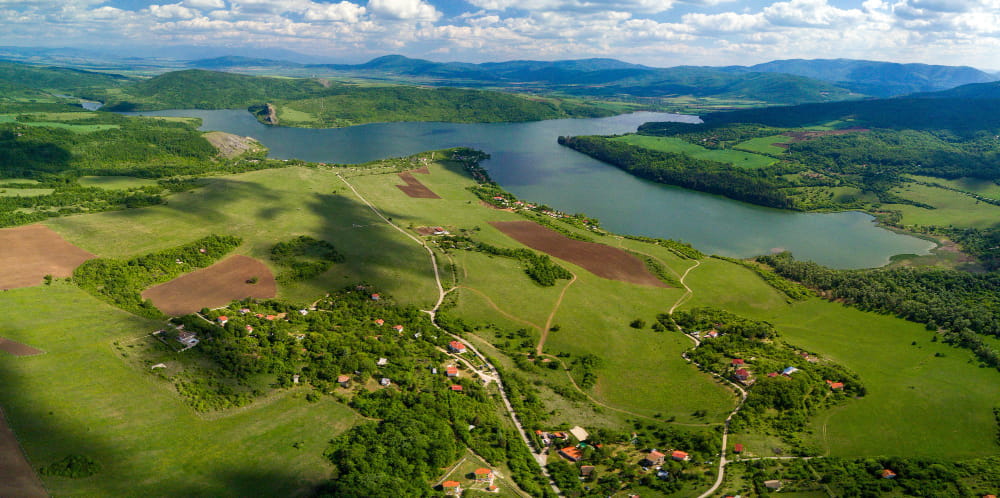
Food security crops in Guinea represent one of the most structurally compelling investment opportunities in West Africa today. Guinea imports approximately 700,000 tonnes of cereals every year mostly rice and wheat accounting for around 20 percent of the country’s total domestic cereal consumption requirements, according to the FAO’s Global Information and Early Warning System. This is not the profile of a country that lacks agricultural potential. Guinea receives among the highest annual rainfall in West Africa, holds 6.2 million hectares of arable land, and is one of the original centers of origin of African rice (Oryza glaberrima). It is the profile of a country that has chronically underinvested in its domestic food production capacity and that is precisely what makes the current investment moment so commercially significant.
On April 30, 2026, the Government of Guinea and the World Bank Group jointly launched the Guinea AgriConnect Compact, an integrated strategic framework designed to accelerate transformation of Guinea’s agrifood systems, strengthen food and nutrition security, create jobs, and position agriculture as a key driver of inclusive economic growth. The priority value chains identified are unambiguous: rice and poultry for food security and import reduction, complemented by maize and soybeans as strategic agricultural inputs. For investors, this government-World Bank alignment is the strongest institutional signal the sector has ever produced.
Why Guinea’s Food Import Dependency Is an Investment Thesis, Not a Development Problem
The Numbers That Define the Opportunity
Guinea’s food security gap is measurable, growing, and generating demand that the domestic agricultural sector has never organized to satisfy. Rice is the country’s most important food crop grown in all four of Guinea’s natural regions and consumed at the center of the daily diet across every income level. Yet despite this cultural and nutritional centrality, domestic production consistently falls short of consumption requirements. The rice market in Guinea is estimated at approximately USD 44.54 million in 2025 and is growing at 8.82 percent annually, according to Statista’s Guinea agricultural market analysis.
Guinea’s transitional government recognized this structural deficit and responded with a USD 220 million investment in agricultural production to boost rice yields, which contributed to a 11.9 percent increase in rough rice production in marketing year 2023/24 compared to the prior year, according to the USDA’s West Africa Grain and Feed Annual report. But government investment alone cannot close the gap. Private sector involvement in production, processing, and market development is the explicit requirement of the AgriConnect Compact and it is where the commercial investment opportunity sits.
The Mining Economy Creates a Captive Food Market
One of the most underappreciated demand drivers for Guinea’s food security crops is the country’s rapidly expanding industrial workforce. The Simandou iron ore project, five alumina refineries under construction, and the growing bauxite cluster in Boké collectively employ tens of thousands of workers at mining sites, construction camps, port facilities, and associated service operations. These workers represent a structured, high-volume, predictable demand base for rice, maize, cassava products, and vegetable crops that catering contractors supply through organized procurement channels.
Mining companies operating at Simandou-era scale do not buy food from informal markets. They contract institutional food supply through structured agreements with suppliers who can guarantee volume, quality, and delivery consistency. A commercial rice or maize producer with certified output, cold chain access, and packaging capability enters this market as a preferred supplier to some of the most creditworthy corporate buyers in Guinea’s economy.
Priority Food Security Crops: The Investment Case Crop by Crop
Rice: The Primary Opportunity in Guinea’s Food System
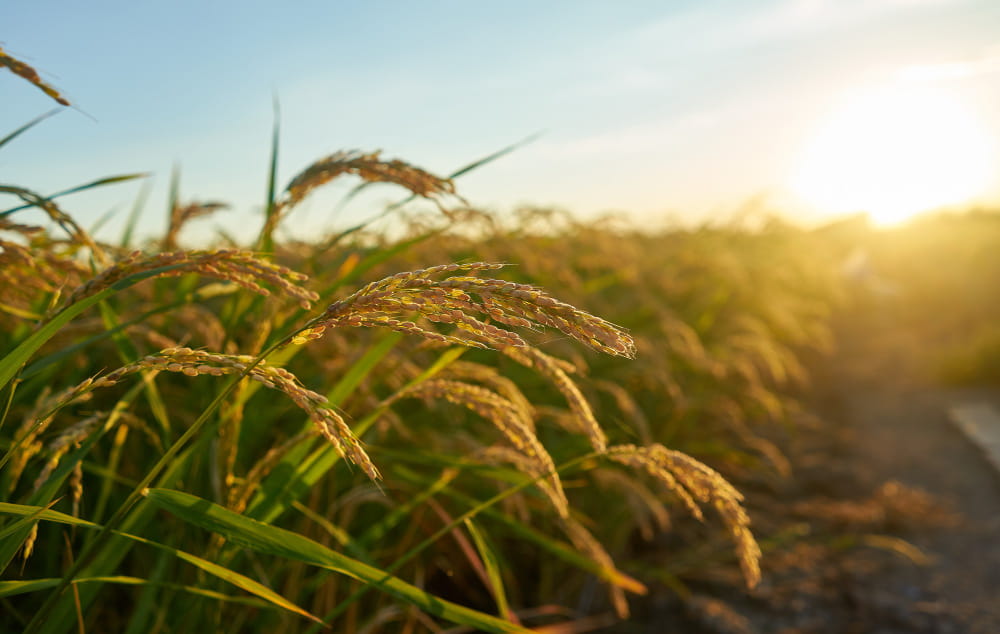
Rice is Guinea’s defining food security crop. It occupies the largest cultivated area, mobilizes the most agricultural labor, and is the primary source of rural household income across all four of Guinea’s natural agricultural regions. It is also the crop where Guinea’s production-consumption gap is most acute and most commercially consequential.
Guinea has been cultivating rice for centuries. The CARD initiative’s January 2026 Guinea country brief identifies rice as “the main national food crop” and confirms that political will, national initiatives, and international cooperation are combining to create the most ambitious rice production scale-up in Guinea’s agricultural history. The brief explicitly calls for increased private sector involvement in production and marketing as the essential element that government investment alone cannot provide.
Key investment models for rice in Guinea include irrigated paddy production in Guinea’s lowland and mangrove zones, rice milling and processing to supply urban retail markets and institutional buyers, seed production enterprises supplying certified, high-yield varieties to Guinea’s growing smallholder base, and contract farming operations linking commercial input supply with guaranteed off-take at harvest. The Guinea-Côte d’Ivoire technical cooperation agreement signed at the 2025 SARA agricultural exhibition in Abidjan specifically identified hydro-agricultural infrastructure development, processing equipment, and market promotion as the priority investment areas for the rice value chain confirming that these are the commercial categories international agricultural institutions are actively co-funding.
Maize and Soybeans: The AgriConnect Strategic Inputs
The AgriConnect Compact specifically identifies maize and soybeans as “strategic inputs” for Guinea’s food security priority value chains. This designation reflects a critical structural reality: Guinea’s poultry sector the government’s flagship USD 563 million food security strategy requires large, consistent, domestic supplies of maize and soybean meal as feed inputs. Currently, the absence of domestic feed crop production forces poultry producers to import feed at premium prices, undermining the economics of the entire chicken value chain.
An investor who establishes commercial maize or soybean production in Guinea’s agricultural zones does not face a market development challenge. They face a market absorption challenge — Guinea’s poultry industry, its aquaculture sector, and its growing livestock operations represent a captive, growing demand base for domestically produced feed crops that is structurally guaranteed to grow alongside the protein production targets the government has committed to.
Cassava: The Versatile Crop With Multiple Commercial Pathways
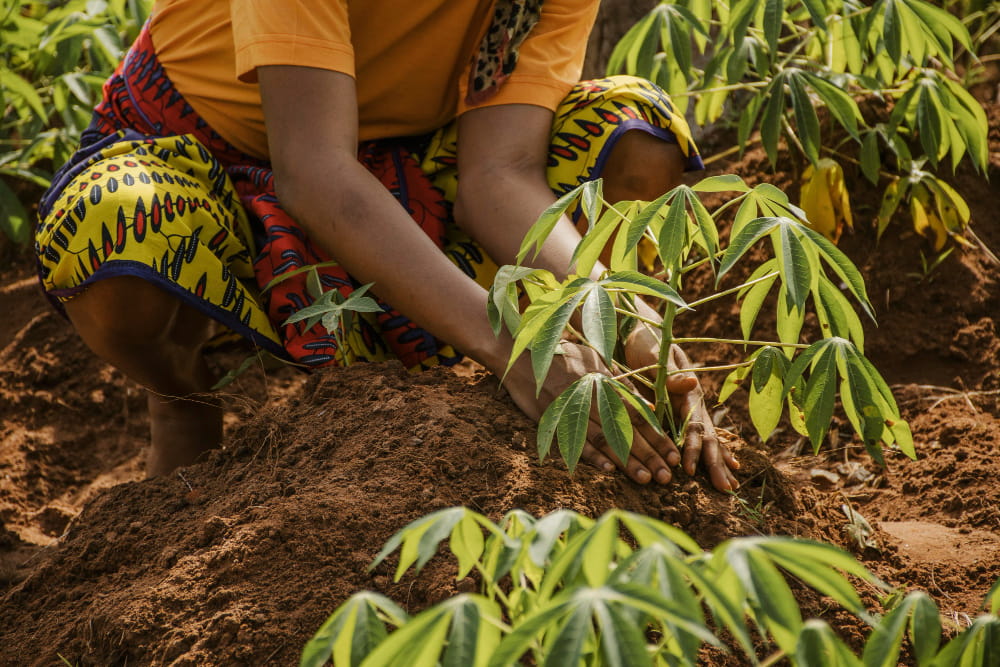
Cassava is Guinea’s most versatile food security crop, functioning simultaneously as a subsistence food, a processed staple (gari, fufu, cassava flour), an industrial starch feedstock, and a livestock feed ingredient. Guinea’s cassava production is predominantly subsistence-oriented, with minimal formal processing, no significant certified variety adoption, and no commercial starch extraction operation in the country.
Each of these gaps is a commercial entry point. Cassava flour production for bread substitution replacing 20 to 30 percent of wheat flour in baked goods creates import substitution at the bakery level while generating demand for certified, high-starch cassava varieties from commercial producers. Gari and fermented cassava products for urban markets represent packaged food manufacturing opportunities with minimal capital requirements. Industrial cassava starch for food processing, textile, and pharmaceutical applications represents a longer-term processing investment with regional export potential.
Groundnuts and Vegetables: High-Value Complement Crops
Guinea’s groundnut production provides raw material for cooking oil processing, peanut paste manufacturing, and animal feed. Groundnut oil is a staple cooking ingredient across West Africa and is currently predominantly imported or produced in small-scale informal operations. A commercial groundnut crushing and oil refining operation serving Guinea’s urban cooking oil market captures import substitution margins with domestic raw material supply.
Fresh vegetable production — tomatoes, onions, peppers, leafy greens — for Conakry’s urban market and for the mining sector catering market represents an entry-level agricultural investment with short production cycles of 60 to 90 days, high price premiums for quality-graded produce, and immediate absorption through supermarkets, hotel catering, and mining camp supply contracts.
The Investment Framework: How to Enter Guinea’s Food Security Crops Sector
The AgriConnect Compact: Development Finance as Your Co-Investor
The AgriConnect Compact launched on April 30, 2026 brings together the Government of Guinea, the World Bank’s IDA, the International Finance Corporation, and MIGA under a coordinated framework that explicitly targets private sector co-investment in priority food security value chains. For investors, this framework means that development finance co-investment, technical assistance, and market development support are available for projects aligned with rice, maize, soybean, and complementary crop value chains.
IFC’s agribusiness financing arm provides equity and debt for commercial agricultural operations. MIGA provides political risk insurance that protects investments against government action, currency restrictions, and civil disturbance. The World Bank’s IDA components finance public infrastructure irrigation, rural roads, market facilities that directly reduces the operating cost and logistics burden for private producers operating in the same zones.
Land Access, Incentives, and Regulatory Framework
Guinea’s Investment Code provides tax holidays of up to 8 years and customs duty exemptions on imported agricultural equipment and inputs for qualifying agribusiness investments. Long-term agricultural land concessions are available through the Ministry of Agriculture and Land Use, with concession terms typically ranging from 25 to 50 years and land lease rates that reflect Guinea’s status as a frontier agricultural market. The World Bank’s Guinea Agricultural Development overview confirms that Guinea’s agricultural reform program is creating a progressively more structured land rights and investment facilitation environment.
For investors navigating land concession processes, APIP registration, and AgriConnect alignment for co-financing access, YES! Invest in Guinea’s Agriculture and Agribusiness advisory services provide specialist facilitation from initial feasibility through to operational production.
FAQ: Food Security Crops Investment in Guinea
- What is the Guinea AgriConnect Compact and why does it matter for agricultural investors? The Guinea AgriConnect Compact, launched April 30, 2026 by the Government of Guinea and the World Bank Group, is an integrated strategic framework that mobilizes IDA, IFC, MIGA, and private sector capital around priority agricultural value chains: rice, poultry, maize, and soybeans. For private investors, the Compact provides access to IFC agribusiness financing, MIGA political risk insurance, World Bank-funded public infrastructure, and technical assistance that materially reduces both the capital requirement and the risk profile of commercial food security crop investments in Guinea.
- Why does Guinea import so much food despite having abundant agricultural land? Guinea’s import dependency reflects a combination of historical underinvestment in irrigation infrastructure, limited access to quality seeds and agricultural inputs, inadequate rural road connectivity between production zones and urban markets, and the absence of commercial-scale processing and storage facilities. Less than 25 percent of Guinea’s 6.2 million hectares of arable land is currently cultivated, and less than 10 percent is cropped annually. These are not resource limitations — they are infrastructure and investment gaps that commercial capital can profitably close.
- What is the best entry point for investors in Guinea’s food security crops sector? Rice milling and processing offers the fastest path to commercial viability, combining immediate off-take from Guinea’s large urban market with structured supply from smallholder producers under contract farming arrangements. Maize and soybean production for the domestic poultry feed market has the clearest B2B demand anchor, with Guinea’s USD 563 million national poultry strategy creating guaranteed institutional buyers. Commercial vegetable production for Conakry’s urban and mining sector catering market offers the shortest production cycles and most immediate revenue generation.
- What government support is available for food security crop investors in Guinea? Guinea’s Investment Code provides tax holidays of up to 8 years, customs duty exemptions on imported agricultural equipment, and access to the APIP one-stop registration system. The AgriConnect Compact additionally provides IFC co-financing, technical assistance, and market development support for investors in priority value chains. Long-term land concessions at competitive rates are available through the Ministry of Agriculture, and government procurement programs for school feeding and public institution catering provide institutional off-take for qualified domestic food producers.
- How does YES! Invest in Guinea support food security crop investors? YES! Invest in Guinea provides end-to-end facilitation for food security crop investors, covering agricultural land concession identification and negotiation with the Ministry of Agriculture, Investment Code applications for tax holidays and equipment duty exemptions, AgriConnect Compact co-financing alignment with IFC and World Bank programs, APIP registration and inter-ministerial coordination, contract farming network development with smallholder producer cooperatives, mining sector catering procurement introductions, rice mill and processing facility site identification, and ongoing government liaison throughout the investment and operational lifecycle.
The Import Bill Guinea Pays Every Year Is Capital Waiting to Be Captured
Guinea spends billions of Guinean francs every year importing food that its own soil, rainfall, and agricultural workforce could produce. The AgriConnect Compact is the government’s formal declaration that this will change and that private investment is the mechanism through which it changes. The rice market is growing at 8.82 percent annually. The maize and soybean market is guaranteed by a USD 563 million national poultry strategy. The mining sector catering market grows with every new worker hired at Simandou, Boké, and the alumina refineries.
YES! Invest in Guinea is your specialist gateway to Guinea’s food security crops investment opportunity. From rice production and milling to maize, soybean, cassava, and vegetable value chains, our team provides the regulatory expertise, government relationships, AgriConnect co-financing access, and land facilitation that converts Guinea’s import dependency into your most commercially productive agricultural investment.
Explore food security crops investment opportunities in Guinea →
Ready to assess your specific agricultural investment opportunity in Guinea? Contact our agribusiness advisory team today for a confidential consultation and let us build your Guinea food security crops strategy together.