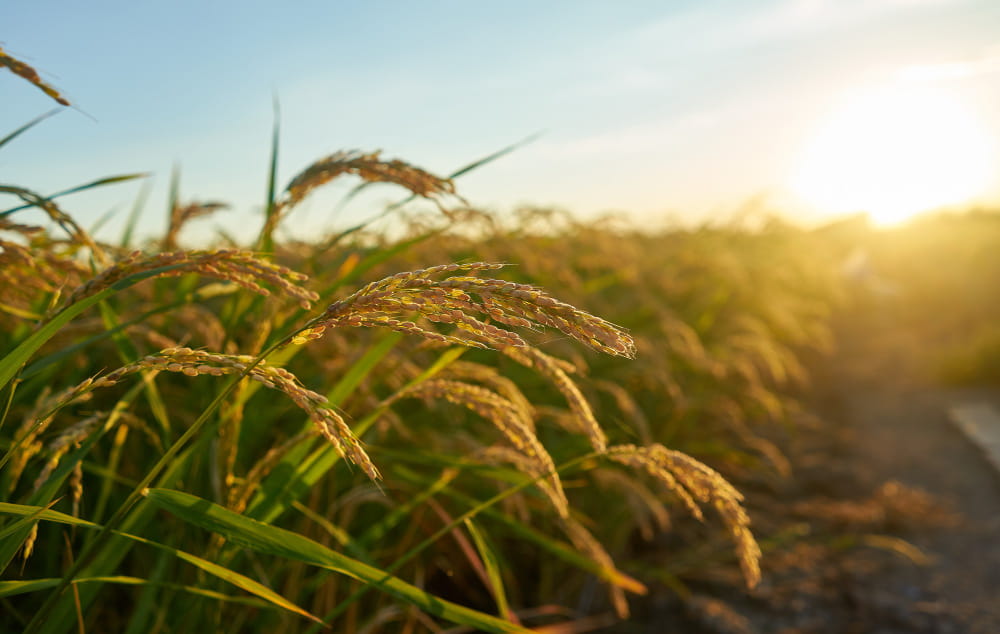
Guinea’s agro-processing sector is at an inflection point that veteran frontier market investors recognize immediately: a country with abundant raw agricultural commodities, a history of exporting them unprocessed at the lowest point of the value chain, and a government that has formally committed to changing that model. Cashews leave Guinea as raw nuts and return as finished kernels from Vietnam. Palm fruit leaves as crude oil and re-enters as packaged cooking oil from Malaysia. Fonio is exported in grain form and sold back as premium packaged superfood at five times the farm gate price. Every raw export that Guinea sends without processing is value that the country is permanently surrendering to foreign manufacturers. The investors who build Guinea’s agro-processing infrastructure are not just capturing returns; they are redirecting an economic flow that has run the wrong direction for decades.
The commercial case is direct. Processing agricultural commodities before export typically multiplies their value by a factor of three to ten, depending on the crop and the processing level. A cashew nut worth USD 0.80 per kilogram raw becomes a cashew kernel worth USD 4.50 to 6.00 per kilogram processed and packaged. A mango worth USD 0.15 fresh becomes a mango puree worth USD 0.90 and a dried mango slice worth USD 6.00. Guinea produces these raw materials at scale. What it does not yet have is the processing infrastructure to capture the value that already exists in its agricultural output.
Why Guinea’s Agro-Processing Moment Has Arrived
The AfCFTA Multiplier and Regional Market Access
Guinea is a member of the African Continental Free Trade Area (AfCFTA), which is progressively reducing tariff barriers across 54 African Union member states representing 1.4 billion consumers. For agro-processors, AfCFTA membership creates a regional export market for processed food and agricultural products that makes processing investments viable at scales that Guinea’s domestic market alone could not sustain.
The practical significance is this: a cashew processing plant in Guinea producing cashew kernels, cashew butter, and cashew oil does not need to sell only to Guineans. It sells to buyers across ECOWAS’s 380 million consumers, to Gulf importers seeking halal-certified African cashew products, and to European specialty food retailers where West African provenance and sustainability credentials command premium pricing. AfCFTA’s tariff reduction schedule progressively improves the economics of this regional distribution model every year.
The AgriConnect Compact: Institutional Backing for Processing Investment
On April 30, 2026, Guinea’s government and the World Bank Group launched the Guinea AgriConnect Compact, a strategic framework that explicitly targets agro-processing as a priority investment category. Beyond rice, poultry, maize, and soybeans for food security, the Compact identifies high-value export crops including fonio and mangoes as diversification and processing priority chains. IFC co-financing, MIGA political risk coverage, and technical assistance are all available for qualifying private agro-processing investments aligned with the Compact’s value chain priorities.
This institutional alignment matters commercially because it de-risks the investment environment in ways that are measurable: development finance co-investment reduces the equity requirement, government policy commitment reduces regulatory uncertainty, and international institution involvement reduces the likelihood of arbitrary enforcement against compliant investors.
The Mining Economy Creates Industrial Food Processing Demand
Guinea’s rapidly expanding mining workforce, across bauxite operations in Boké, iron ore production at Simandou, and the growing alumina refinery cluster in Boffa, creates a structured institutional demand for processed food products that informal markets cannot reliably supply. Mining companies feeding tens of thousands of workers through catering contracts require packaged, quality-certified, consistently available food products. A rice milling operation, a packaged edible oil producer, or a fruit processing facility serving these contracts enters Guinea’s highest-margin institutional food market with the most creditworthy B2B clients in the country’s economy.
Priority Agro-Processing Sectors: Where the Value Creation Is Largest
Cashew Processing: The Most Immediate Opportunity
Guinea is one of West Africa’s significant cashew producers, yet exports the overwhelming majority of its raw cashew nuts without processing, shipping them primarily to Vietnam and India where the kernel extraction, grading, and packaging margin is captured by foreign manufacturers. The commercial logic for reversing this is straightforward: cashew processing plants can be sized at 2,000 to 5,000 tonnes of raw nut capacity per year at investment levels of USD 500,000 to 2 million, generating kernel output at three to five times the raw nut value.
The global market context strengthens the case further. The World Bank’s cashew agro-processing results analysis documented how Côte d’Ivoire grew domestic cashew processing capacity from 68,515 tonnes in 2015 to 350,000 tonnes in 2024, creating over 18,000 jobs and generating export revenue multiples of raw nut values. Guinea is at the starting point of this same curve, with none of the processing infrastructure and all of the raw material base.
Fonio Processing: Guinea’s Premium Export Opportunity
Guinea is the world’s largest producer of fonio, an ancient West African cereal grain that has attracted sustained international attention as a gluten-free, high-protein superfood. In raw grain form, fonio trades at commodity agricultural prices. Cleaned, hulled, packaged, and certified for organic or fair-trade export markets, fonio commands retail prices in European and North American specialty food markets that are multiples of the farm gate value. A fonio cleaning and processing facility in Guinea, supplying export-grade packaged product to European health food retailers and specialty grocery chains, captures the premium margin that currently benefits processors in Senegal and Mali who import Guinean fonio for processing.
The AfCFTA and EU-Africa trade frameworks both support fonio export from Guinea, and the crop’s natural gluten-free, low-glycemic profile aligns with consumer trend categories, including vegan, health-conscious, and allergen-free diets, that are growing fastest in Guinea’s target export markets.
Palm Oil Refining and Edible Oil Processing
Guinea has significant palm cultivation across its Forest Region and coastal zones, producing crude palm oil that is either consumed domestically in traditional form or exported minimally without refining. The domestic edible cooking oil market in Guinea is predominantly served by imported refined oil from Malaysia, Indonesia, and Côte d’Ivoire. This import dependence creates a direct import substitution opportunity for investors who establish palm oil refining and edible oil packaging operations using Guinea’s domestic crude palm production as feedstock.
A palm oil refinery processing 10,000 to 30,000 tonnes of crude palm oil annually, producing refined, bleached, and deodorized cooking oil for packaging under a domestic brand, captures the refining margin while displacing imported oil from the market. Guinean consumers and institutional buyers in the mining catering sector prefer locally produced oil when it is available at competitive prices, which a refinery operating on domestic feedstock at lower logistics costs than imported product consistently achieves.
Tropical Fruit Processing: Mango, Pineapple, and Citrus
Guinea’s diverse tropical agricultural zones produce mangoes, pineapples, bananas, and citrus in quantities that significantly exceed domestic fresh consumption capacity. Most surplus fruit is either left to spoil or sold at distressed prices during peak harvest periods when supply overwhelms informal market absorption. Fruit processing converts this perishable surplus into shelf-stable, exportable, value-added products: mango puree and concentrate for food manufacturing, dried mango slices for snack retail, pineapple juice for urban consumer markets, and citrus essential oils for the food flavoring and cosmetics industries.
A fruit processing facility of modest scale, 2,000 to 5,000 tonnes of fresh fruit input per season, generates processed output with twelve-month shelf life that can be marketed through regional distributor networks, exported to European food manufacturers, and supplied to Guinea’s growing hospitality and food service sector. The cold chain infrastructure required for fruit processing also serves adjacent agro-processing operations in the same facility, improving the economics of multi-crop processing models.
Coffee and Cocoa: High-Value Specialty Processing
Guinea’s Forest Region has historical production of both coffee and cocoa, though output declined during decades of underinvestment and conflict. Renewed investment in rehabilitated plantations is producing exportable quantities of both crops, predominantly in raw form. Processing cocoa into cocoa powder, cocoa butter, and chocolate intermediates, and processing coffee into washed, specialty-grade roasted beans for export, multiplies the export value of each kilogram harvested while accessing the premium pricing that international specialty buyers offer for traceable, certified, single-origin West African product.
Investment Framework: Incentives, Land, and Operational Setup
Guinea’s Investment Code provides tax holidays of up to 8 years and customs duty exemptions on imported processing machinery and equipment for qualifying agribusiness and manufacturing investments. Agro-processing facilities that employ Guinean workers, use domestic agricultural raw materials, and demonstrate export potential align directly with the government’s local value-addition policy goals, making them natural candidates for maximum Investment Code incentive access.
Processing facility land access is available through the Ministry of Agriculture and Land Use and AGESPI’s designated industrial zones, with sites suitable for food processing operations available near Conakry’s port infrastructure for export-oriented operations and in agricultural production zones for farm-gate processing facilities that reduce logistics costs.
For investors assessing specific agro-processing entry points, facility site identification, and AgriConnect co-financing alignment, YES! Invest in Guinea’s Agro-Processing advisory services provide specialist facilitation from feasibility through to operational launch.
FAQ: Agro-Processing Investment in Guinea
- Why does agro-processing offer better returns than raw agricultural production in Guinea? Processing agricultural commodities before export typically multiplies their value by three to ten times compared to raw output. A cashew kernel commands three to five times the raw nut price. Packaged fonio sells for multiples of unprocessed grain at European specialty retail. Refined palm oil generates a margin over crude that raw fruit sales cannot. In Guinea specifically, the near-total absence of formal agro-processing infrastructure means the first investors to establish certified facilities face no domestic competition while serving markets that currently source processed product from imports or foreign processors.
- What is the minimum investment required to establish an agro-processing facility in Guinea? Entry-level agro-processing investments start at USD 300,000 to 500,000 for small-scale cashew shelling or fonio cleaning and packaging facilities. Mid-scale operations including fruit processing, palm oil refining, or grain milling range from USD 1 million to 5 million depending on throughput capacity and technology specification. Larger integrated facilities combining multiple processing lines or serving export markets at significant volume require USD 5 million to 15 million. Development finance co-investment through IFC and the AgriConnect Compact framework reduces the private equity requirement for all qualifying investment sizes.
- How does AfCFTA membership benefit agro-processing investors in Guinea? AfCFTA gives Guinea-origin processed agricultural products preferential or tariff-free access to markets across 54 African Union member states representing 1.4 billion consumers. For agro-processors, this means cashew kernels, processed fonio, refined palm oil, and packaged fruit products produced in Guinea can be distributed across West Africa’s regional market under progressively improving tariff terms. ECOWAS membership separately provides Guinea with duty-free access to the community’s 380 million consumer market for qualifying agricultural processed goods.
- Which agro-processing crops offer the fastest path to commercial viability in Guinea? Cashew processing offers the fastest commercial viability because raw material supply is established, processing technology is proven and widely available, global demand for cashew kernels is growing consistently, and the processing margin is immediate and predictable. Fonio processing offers the highest export price premium per kilogram for investors with European specialty food market access. Palm oil refining offers the most direct import substitution opportunity with an anchor domestic market that is currently served entirely by imported products.
- How does YES! Invest in Guinea support agro-processing investors? YES! Invest in Guinea provides end-to-end facilitation for agro-processing investors, covering Investment Code applications for tax holidays and equipment duty exemptions, agricultural land and industrial zone site identification, Ministry of Agriculture and Industry regulatory approvals, AgriConnect Compact co-financing alignment with IFC and World Bank programs, raw material supply chain development with agricultural cooperative networks, export certification and food safety compliance advisory, and ongoing government liaison throughout the investment and operational lifecycle.
The Value Is Already in Guinea’s Fields — The Only Missing Piece Is Processing
Guinea’s agricultural output is substantial, growing, and structurally capable of generating export revenues that dwarf what raw commodity sales currently produce. The fonio is growing. The cashews are hanging on the trees. The palm fruit is being harvested. The mangoes are ripening. What converts all of this into premium-priced, export-market-ready product with three to ten times the farm gate value is processing infrastructure: a machine, a facility, a supply chain, and a market connection. These are precisely the investments that Guinea currently lacks and that commercial investors can profitably build.
YES! Invest in Guinea is your specialist gateway to Guinea’s agro-processing investment opportunity. From cashew shelling plants and fonio processing facilities to palm oil refineries and tropical fruit processing lines, our team provides the regulatory expertise, government relationships, and market intelligence that converts Guinea’s raw agricultural surplus into your most commercially productive manufacturing investment.
Explore agro-processing investment opportunities in Guinea →