The revocation of Emirates Global Aluminium’s bauxite concession in August 2025 sent a clear signal through the UAE investor community: Guinea plays by its own rules, and those rules now carry real consequences for non-compliance. EGA’s Guinea Alumina Corporation subsidiary had been operating since 2019, produced up to 14 million metric tonnes of bauxite annually, and had invested in a $1.4 billion project footprint, only to see its 690 square kilometer concession transferred to a newly created state entity called Nimba Mining, without compensation, after a prolonged dispute over the company’s failure to present credible plans for building an alumina refinery, as required by Guinea’s mining code.
EGA has denounced the move as expropriation and initiated legal proceedings. The government has not backed down.
For other UAE investors, the question is not whether to take this seriously. It is: what does it actually mean for Emirati capital that approaches Guinea correctly?
Reading the EGA Case the Right Way
The EGA concession revocation is widely being read as a warning about Guinea’s investment risk. It is more accurately read as a warning about one specific risk: failing to deliver on commitments made in a mining convention.
Guinea’s government has been consistent and explicit. It expects mining companies to process more of their resources domestically, not simply export raw ore indefinitely. The mining code has mandated refinery construction plans since before EGA began operations. EGA knew this requirement, agreed to it, and by the government’s account, failed to progress meaningfully toward fulfilling it. That dispute was not about Guinea changing the rules. It was about Guinea enforcing rules that were already in place.
The same government that revoked EGA’s concession has simultaneously approved a $1.2 billion alumina refinery for the Winning Consortium, endorsed Chalco’s $1 billion joint venture targeting 2 million tonnes of annual alumina production, and welcomed SPIC’s refinery with a dedicated 250 MW power plant. These projects are moving forward. Guinea is not closed to UAE capital. It is closed to UAE capital that does not deliver on its commitments.
Why UAE Capital Is Still a Logical Fit for Guinea
Emirati institutional capital has several structural characteristics that align well with Guinea’s investment environment when the entry structure is right.
Gulf sovereign and quasi-sovereign investors bring long-horizon capital that does not panic at commodity price dips, as documented in research by the Natural Resource Governance Institute. They bring tolerance for frontier market complexity that shorter-duration Western funds often lack. They bring geopolitical positioning as non-colonial, non-Western investors that African host governments frequently prefer over alternatives with more complicated historical relationships. And they bring genuine industrial expertise, particularly in aluminum, that is directly applicable to Guinea’s stated priority of building domestic processing capacity.
Mubadala’s $5 billion bauxite and alumina agreement with Guinea remains one of the largest foreign investments committed to the country, structured specifically around the domestic processing model that the government demands. That deal was not swept up in the EGA controversy. It was structured to comply with exactly the requirements EGA failed to meet.
The Emirati Opportunities That Remain Wide Open
Alumina Refining Under Compliant Structures
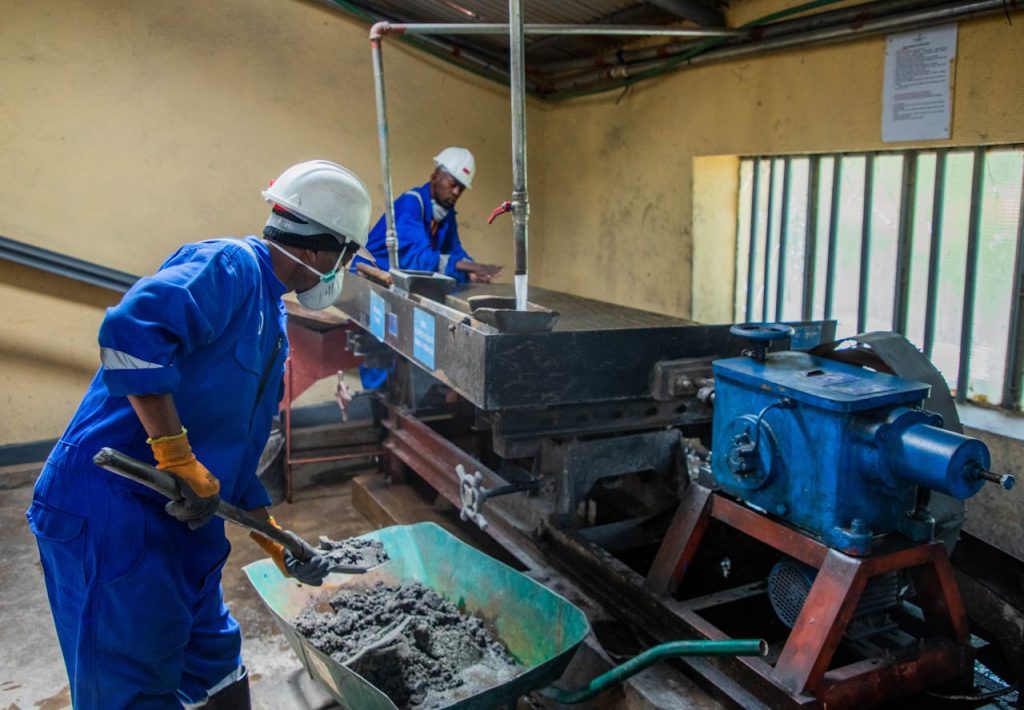
The single clearest opportunity for UAE capital in Guinea right now is participation in alumina refinery development under structures that are explicitly built around Guinea’s processing mandate rather than against it. The government’s target of five to six operational refineries by 2030 with combined capacity of approximately 7 million tonnes annually has not yet been fully subscribed, even with the three refineries currently under construction.
A UAE industrial group or infrastructure fund that enters Guinea with a refinery-first, mining-second structure, committing processing capacity as the primary investment and securing bauxite supply as a derived input, is presenting exactly the investment proposition Guinea is seeking. This is the mirror image of EGA’s approach, and the government’s own statements make clear that compliant refinery investors will be welcomed rather than constrained.
Port, Logistics, and Trade Infrastructure
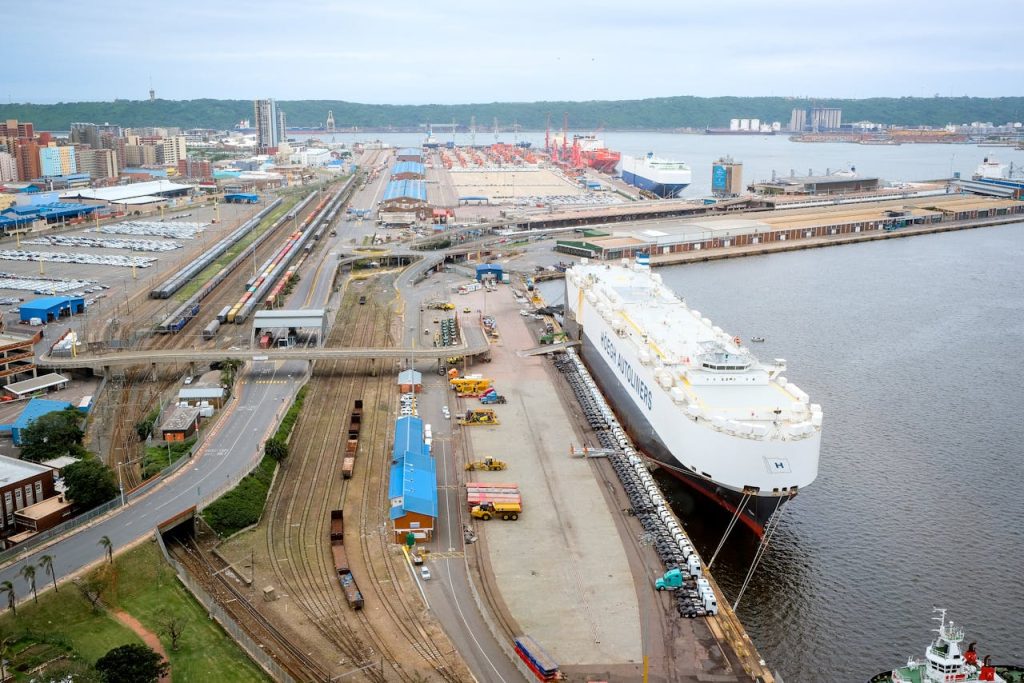
Gulf state investors have a well-established pattern of pairing mineral investment with control over export infrastructure across African markets. Guinea’s port network nearly doubled its export terminal capacity in 2025, and the Simandou corridor’s new Morebaya deep-water port represents a major logistics infrastructure asset. UAE logistics investors, including those with experience operating African terminals through DP World-affiliated structures or independent logistics platforms, can bring operational expertise and capital to Guinea’s expanding port and trade infrastructure market without the compliance exposure of a mining concession.
Logistics and port investment does not require a mining code commitment. It requires a concession from the port authority and a tenant base that Guinea’s export economy is now generating at scale. For UAE capital with African logistics experience, this is an accessible and commercially robust entry point.
Sovereign Wealth Fund Co-Investment
Guinea’s Fonds de Richesse Simandou, being capitalized at $1 billion with Simandou mining revenues and structured with governance advice from Saudi Arabia and Singapore, is explicitly designed to co-invest with international institutional partners. UAE sovereign wealth fund allocators who engage with the Fonds de Richesse Simandou at its formation stage are building an institutional relationship with a new counterpart that will scale significantly as Simandou revenues flow.
This is precisely the type of early institutional relationship that Gulf investors have used to establish durable positions in emerging African economies, and Guinea’s fund is actively seeking internationally recognized co-investment partners rather than operating as a closed account.
Agriculture and Agro-Processing
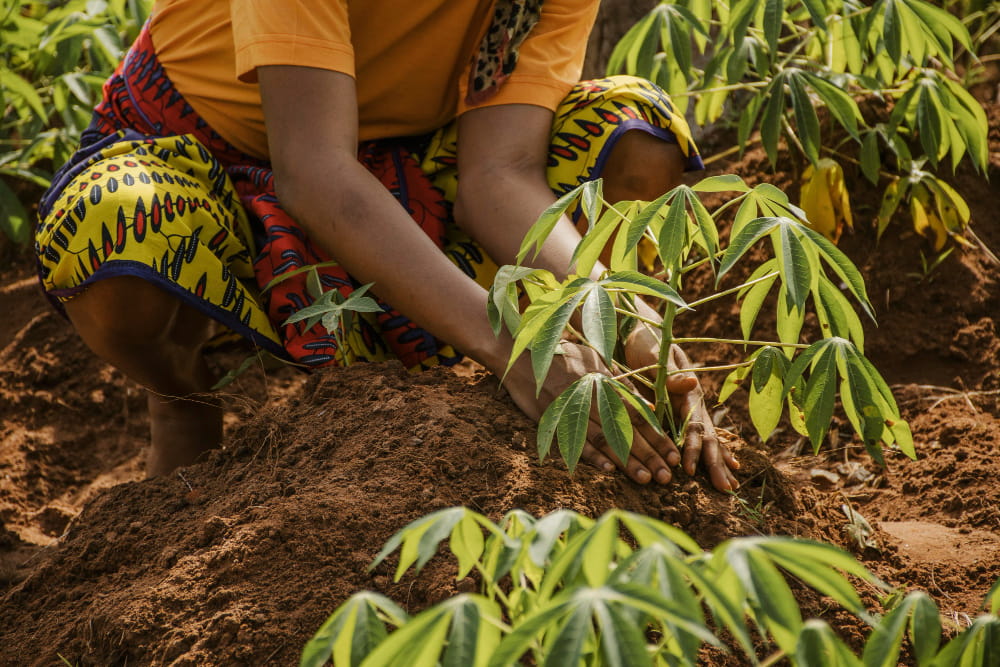
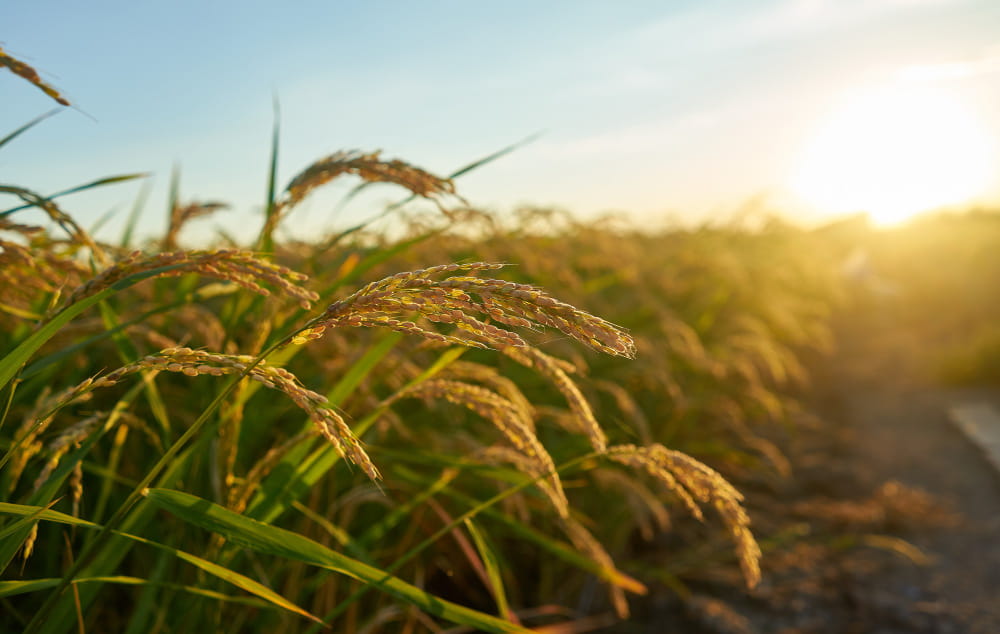
UAE investment in African food security and agriculture has been growing consistently, with Gulf state sovereign funds including Abu Dhabi’s holding companies active across East and North African agricultural investment. Guinea’s agricultural potential, spanning cashew, cocoa, coffee, and rice across diverse ecological zones, represents a food security and export crop investment opportunity entirely separate from the mineral sector that generated EGA’s difficulties.
Agricultural investment in Guinea carries no mining code obligations, no refinery construction requirements, and no precedent of the kind of concession disputes that defined EGA’s experience. It does carry political risk and operational complexity, as all Guinea investments do, but through a completely different regulatory pathway and without the concentration of regulatory risk that defined EGA’s exposure.
Green Energy and Renewable Infrastructure
The UAE’s expertise in large-scale solar and renewable energy development, exemplified by projects like Abu Dhabi’s Noor solar complex and Masdar’s continental Africa portfolio, is directly applicable to Guinea’s energy investment gaps. Guinea’s new €192 million energy contract awarded to VINCI Energies in 2026 for a 50 MW solar farm and 350 km of transmission lines confirms that the government is actively investing in grid modernization through international partnerships.
Masdar has already built a track record of African renewable energy investment across multiple countries. Guinea’s growing alumina refinery base will generate sustained demand for reliable, affordable power, creating an anchor client ecosystem for renewable energy infrastructure that justifies large-scale investment in generation and transmission capacity.
What Emirati Investors Must Do Differently
The lesson from EGA is not that Guinea is an unsuitable investment destination for UAE capital. It is that Guinea’s investment requirements must be treated as binding commitments rather than aspirational targets. Any UAE investor entering Guinea’s mineral sector must structure their investment around the processing mandate from day one, deliver on refinery and infrastructure commitments on schedule, and maintain transparent regulatory engagement with the Ministry of Mines throughout the project lifecycle.
Investors who approach Guinea with this discipline, bringing the compliant structures and long-term industrial commitment that Guinea’s government is explicitly requesting, are entering a market that has demonstrated it will protect and reward investments made in good faith.
How Yes! Invest Guinea Supports UAE Investors
Yes! Invest Guinea connects Emirati investors with compliant, commercially viable Guinea opportunities across refinery development, port and logistics infrastructure, sovereign fund co-investment, agriculture, and renewable energy. Our support includes:
- Structuring refinery-first investment proposals aligned with Guinea’s mining code processing mandate
- Facilitating direct engagement with Guinea’s Ministry of Mines, APIP, and the Fonds de Richesse Simandou
- Identifying port, logistics, and agricultural investment opportunities separate from the mineral sector’s compliance exposure
- Connecting UAE renewable energy developers with Guinea’s energy ministry and major industrial power demand anchors
- Advising on Investment Code incentive structures and political risk insurance for Emirati capital deployment
Frequently Asked Questions
- Why was EGA’s Guinea concession revoked? Guinea revoked EGA’s bauxite concession in August 2025 after a prolonged dispute over the company’s failure to present credible plans for building an alumina refinery within Guinea, as required by the country’s mining code. The 690 square kilometer concession was transferred without compensation to a state-backed entity called Nimba Mining.
- Does EGA’s concession loss mean Guinea is hostile to UAE investment? No. The revocation was specifically tied to non-compliance with Guinea’s refinery construction mandate, not to UAE nationality. Multiple other foreign investors, including Mubadala through its $5 billion bauxite and alumina agreement, remain active and welcome in Guinea’s mining sector.
- What investment opportunities remain open for UAE investors in Guinea? Wide-open opportunities include compliant alumina refinery development, port and logistics infrastructure, co-investment with the Fonds de Richesse Simandou, agricultural and agro-processing investment, and renewable energy infrastructure development.
- How should UAE investors structure mineral sector investment in Guinea to avoid EGA’s outcome? UAE investors should structure refinery capacity as the primary investment commitment, with bauxite supply as a derived input, rather than seeking mining access with processing as a deferred obligation. Delivering on convention commitments on schedule and maintaining transparent regulatory engagement are essential.
- How can Yes! Invest Guinea help UAE investors access Guinea? Yes! Invest Guinea structures compliant investment proposals, facilitates government introductions, identifies sector opportunities outside the mineral compliance exposure, and connects Emirati investors with the Fonds de Richesse Simandou and renewable energy demand anchors.
Emirati Capital Belongs in Guinea, On the Right Terms
EGA’s setback is a lesson about structure, not a verdict on Guinea. The UAE investors who approach Guinea with compliant refinery commitments, logistics expertise, or agricultural and energy capital are entering a market that is actively seeking exactly what they can bring. The opportunity is real. The structure just has to match what Guinea is asking for.
Connect with Yes! Invest Guinea today to build a UAE investment strategy for Guinea that is structured to succeed from day one.