Every investor researching Guinea eventually lands on the same three letters: ore, gold, bauxite. The mineral story is legitimate and well-documented. But it has created a blind spot. Guinea’s agricultural potential is, in several crop categories, equally extraordinary and far less competed for. Cashew, cocoa, and coffee are three crops with proven global demand, growing international commodity prices, and established agricultural conditions in Guinea that most of the world has simply not paid attention to yet.
That is the opportunity. In this guide, Yes! Invest Guinea makes the investment case for large-scale plantation development in Guinea across these three cash crops, grounding it in market fundamentals, Guinea’s specific agronomic advantages, and the policy environment that is now actively supporting agricultural capital alongside mining.
Why Guinea’s Agricultural Story Has Been Overlooked
Guinea historically produced significant quantities of cashew and coffee before political instability and underfunded agricultural infrastructure eroded output over several decades. The country’s agricultural sector remains predominantly smallholder-driven and subsistence-oriented, with formal, commercially organized plantation investment representing a tiny fraction of the country’s cultivable land.
That history is the opportunity, not the obstacle. As noted in Yes! Invest Guinea’s agriculture investment overview, Guinea historically produced significant quantities of cashew and coffee, and with renewed focus on improved farming practices, processing facilities, and market linkages, these cash crops can regain their prominence, offering export-oriented returns. The government actively promotes foreign investment in agriculture through tax holidays, customs duty exemptions on imported agricultural equipment, and simplified administrative procedures, alongside dedicated agricultural zones and land banks that streamline large-scale project entry.
Cashew: Africa’s White Gold at a Moment of Maximum Strategic Value
Africa produces over 60% of the world’s raw cashew nuts, and the global cashew market is valued at approximately $7 billion, according to CropSense Africa’s 2026 agricultural export commodity analysis. Historically, most African cashews were exported to India and Vietnam for processing before re-export to Europe and North America. That model is shifting, with a clear and growing trend toward exporting processed kernels directly from Africa to the United States and European Union, capturing the value-add margin that has previously left the continent entirely.
Cashew trees are among the most investment-friendly plantation crops available. They are drought-tolerant and can grow in poor soils where other crops fail, which significantly reduces the land quality risk that complicates plantation investment in more demanding crops. They produce commercially within three to five years of planting and generate harvests for 30 to 40 years, giving an early-stage plantation investor a long-duration revenue asset rather than a short-cycle commodity play.
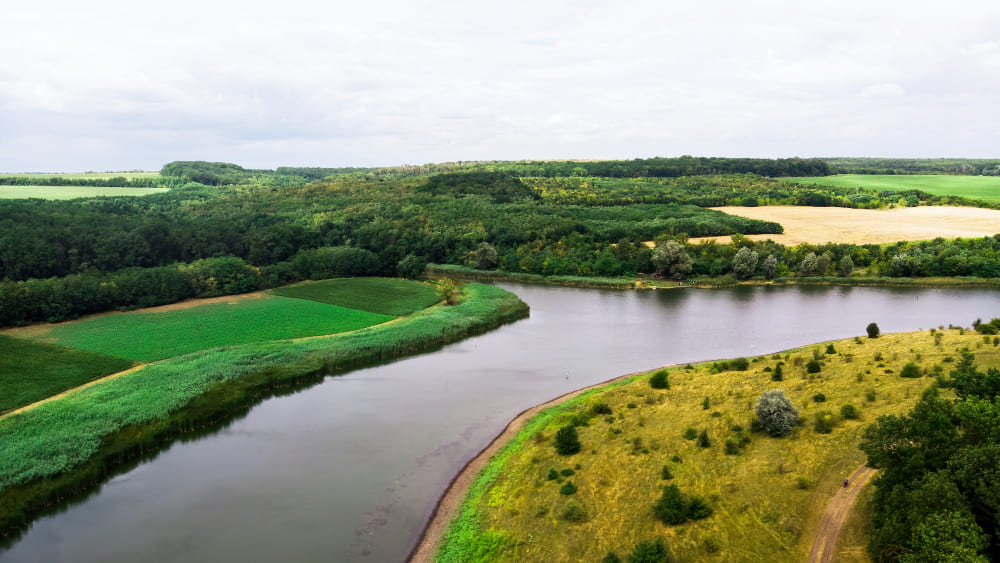
Guinea’s Forest Region provides optimal conditions for cashew cultivation, with the right combination of laterite soils, tropical rainfall, and dry season conditions that support high-quality nut development. A large-scale cashew plantation in Guinea, vertically integrated with a processing facility, captures both the raw production margin and the kernel processing premium simultaneously.
Vertically integrated agro-processing operations in cashew, cocoa, and palm oil are generating returns well above those available in raw commodity trading, according to Yes! Invest Guinea’s 2026 agribusiness diversification analysis. The same analysis notes that investment funding into vertically integrated agribusinesses, combining production, processing, and distribution, surged from $12.1 million in 2019 to $82.4 million in 2022, and that agro-processing remains the single highest-return entry point in African agribusiness.
Cocoa: Guinea’s Entry Into a $50 Billion Market Where Supply Is Shrinking Elsewhere
The global cocoa and derivatives market is nearing $50 billion in 2026, according to CropSense Africa’s commodity analysis. West Africa dominates global cocoa production, with Côte d’Ivoire and Ghana accounting for the majority of world supply. But that dominance is under threat: aging plantations, the spread of crop diseases, deforestation pressure, and the impact of EU deforestation regulation compliance requirements are constraining supply from the two dominant producers simultaneously.
This supply squeeze is creating an opening that Guinea is uniquely positioned to fill. Guinea’s Forest Region, which borders Côte d’Ivoire’s producing zones, sits within the same tropical belt and provides ideal conditions for cocoa cultivation. As documented in CGIAR’s sustainable cocoa production analysis for Guinea, Guinea’s focus on developing its agricultural sector, particularly cocoa, is part of its broader economic diversification strategy, and the country has a unique opportunity to enter the expanding global cocoa market by leveraging its untapped agricultural potential and focusing on sustainable production.
The EU Deforestation Regulation (EUDR), which imposes traceability and deforestation-free requirements on cocoa imports, is actually an advantage for new Guinea-based plantation investors rather than a burden. A newly developed cocoa plantation in Guinea, established on land that has been accurately mapped and deforestation-free from inception, is already compliant with the EUDR framework that older, informally managed West African cocoa farms are struggling to meet. Getting ahead of the regulatory curve by building compliant supply from day one is a competitive advantage in selling into European premium chocolate and ingredients markets.
Coffee: A Highland Crop With Premium Specialty Market Potential
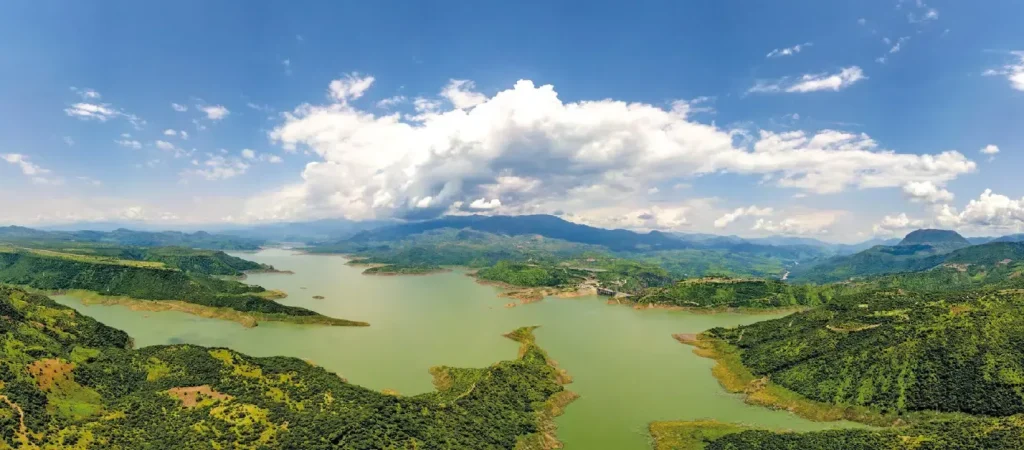
Guinea’s Fouta Djallon highlands produce the agronomic conditions that define specialty coffee origin profiles worldwide: high altitude, volcanic soil, and consistent rainfall. The same geographic and climatic characteristics that have made Ethiopia, Rwanda, and Burundi household names in specialty coffee circles exist in Guinea’s highlands, yet Guinea’s coffee sector remains almost entirely underdeveloped at the commercial scale.
Coffee cultivated at altitude with low-intervention farming methods commands specialty market premiums that bear little relationship to commodity coffee price cycles. Specialty and certified coffees are consistently the fastest-growing segment of the global coffee market, driven by European and North American consumer demand for traceable, single-origin, ethically sourced beans. A well-structured Guinea highland coffee plantation, producing at the quality standards required for specialty market entry and certified under Fair Trade or Rainforest Alliance frameworks, can access buyers at price points that dwarf commodity Arabica.
The global coffee market is projected to continue expanding, with specialty coffee accounting for a growing share of value even as volume growth moderates. Guinea’s historical coffee production heritage means the agronomic knowledge base exists locally, and the crop varieties suited to the Fouta Djallon’s climate are established. What has been missing is organized plantation investment that brings processing infrastructure, quality control, and international buyer relationships into a single vertically integrated operation.
The Investment Structure That Maximizes Returns Across All Three Crops
The strongest investment case in Guinea’s plantation sector is not a single-crop play. It is a geographically diversified portfolio that positions cashew in the Forest Region lowlands, cocoa in the mid-elevation forest belt near the Côte d’Ivoire border, and coffee in the Fouta Djallon highlands, supported by a shared processing and logistics infrastructure that amortizes fixed costs across multiple revenue streams.
This structure provides natural resilience against individual commodity price cycles, since cashew, cocoa, and coffee do not move in lockstep with each other or with the mineral commodity indices that dominate most Guinea investment portfolios. It also provides diversified access to three different international buyer communities, each with its own quality and certification standards.
Outgrower Models Reduce Capital Intensity
For investors who want plantation exposure without the full capital cost of clearing, planting, and managing large land parcels from inception, outgrower models offer a compelling alternative. A processing facility investor secures supply from smallholder farmers through structured outgrower contracts, providing inputs, technical support, and guaranteed purchase prices in exchange for exclusive supply. This model dramatically reduces upfront capital requirements while building the volume needed to operate processing infrastructure at commercial scale.
Guinea has a large and underutilized smallholder farming population across all three crop zones, and international development programs from organizations including the International Fund for Agricultural Development are actively supporting outgrower scheme development as a mechanism for improving smallholder incomes alongside commercial processing investment.
Investment Incentives for Plantation Development
Guinea’s Investment Code provides privileged regime benefits specifically applicable to agricultural investment: corporate income tax holidays of five to eight years, customs duty exemptions on imported plantation machinery and processing equipment, and full profit repatriation for foreign investors. ECOWAS membership gives Guinea-produced goods tariff-free access to a market of over 380 million consumers across West Africa, and AfCFTA extends that access across 54 African nations.
How Yes! Invest Guinea Supports Plantation Investors
Yes! Invest Guinea connects plantation and agribusiness investors with structured entry opportunities across Guinea’s cashew, cocoa, and coffee value chains. Our support includes:
- Identifying suitable land for large-scale plantation development across Guinea’s Forest Region, mid-elevation belt, and Fouta Djallon highlands
- Facilitating access to Guinea’s agricultural land bank and coordinating land tenure due diligence
- Connecting plantation investors with IFAD and other development finance outgrower scheme programs
- Advising on Investment Code Privileged Regime applications for qualifying plantation and processing projects
- Introducing investors to international commodity buyers with an established interest in Guinea-origin cashew, cocoa, and coffee
Frequently Asked Questions
- Why are cashew, cocoa, and coffee considered overlooked investment opportunities in Guinea? Guinea’s agricultural potential has been overshadowed by its mineral sector narrative. Most investor attention targets bauxite, iron ore, and gold, leaving plantation crops as an undercompeted opportunity in a market where the agronomic conditions for all three crops are proven.
- What makes Guinea’s Forest Region suitable for cashew and cocoa production? Guinea’s Forest Region provides the laterite soils, tropical rainfall, and dry season conditions optimal for cashew cultivation, and sits within the same tropical cocoa belt as Côte d’Ivoire’s producing zones, providing ideal conditions for sustainable cocoa development.
- How does the EU Deforestation Regulation create an advantage for new Guinea cocoa plantations? Newly established plantations in Guinea, mapped and certified as deforestation-free from inception, are already compliant with EUDR requirements that existing informal West African cocoa farms are struggling to meet, providing immediate access to regulated European premium markets.
- What is an outgrower model and why is it relevant for Guinea plantation investment? An outgrower model connects a processing facility investor with smallholder farmers through structured supply contracts, reducing upfront land and planting capital while building the raw material volumes needed to operate processing infrastructure commercially.
- What incentives support plantation investment in Guinea? The Investment Code Privileged Regime provides five to eight year corporate income tax holidays, customs duty exemptions on agricultural equipment, full profit repatriation, and ECOWAS and AfCFTA market access for Guinea-produced goods.
Enter Guinea’s Plantation Sector Before the Mineral Boom Attracts the Agricultural Investors Too
Guinea’s cashew, cocoa, and coffee opportunity is visible to those who look past the mining headlines. The agronomic conditions exist. The global market demand is growing. The policy environment supports entry. The only thing this market is missing is organized plantation capital. That is precisely when the returns are best.
Connect with Yes! Invest Guinea today to explore cashew, cocoa, and coffee plantation investment opportunities across Guinea’s most productive agricultural regions.