Palm oil plantation investment in Guinea starts with one fact that stops most investors in their tracks: long-term agricultural land concessions in Guinea are available at rates that no other major palm oil producing region in the world can match. While investors in Malaysia, Indonesia, and even Côte d’Ivoire are paying land costs that compress plantation economics, Guinea’s agricultural concession framework offers long-term leases on highly suitable land in the Forest Region at conditions designed explicitly to attract serious private investment.
Global palm oil demand is not slowing. The commodity is used in approximately half of all packaged food products, in personal care and cosmetics, in biofuels, and increasingly in industrial oleochemicals. Despite price cycles, the structural demand curve for palm oil trends upward with population growth and industrial consumption. The question for plantation investors is not whether to grow oil palm but where to grow it profitably with room for margin, scale, and long-term land security. Guinea’s answer to that question is increasingly compelling.
Why Guinea Is One of West Africa’s Most Overlooked Palm Oil Zones
The Climate and Soil Profile That Oil Palm Requires
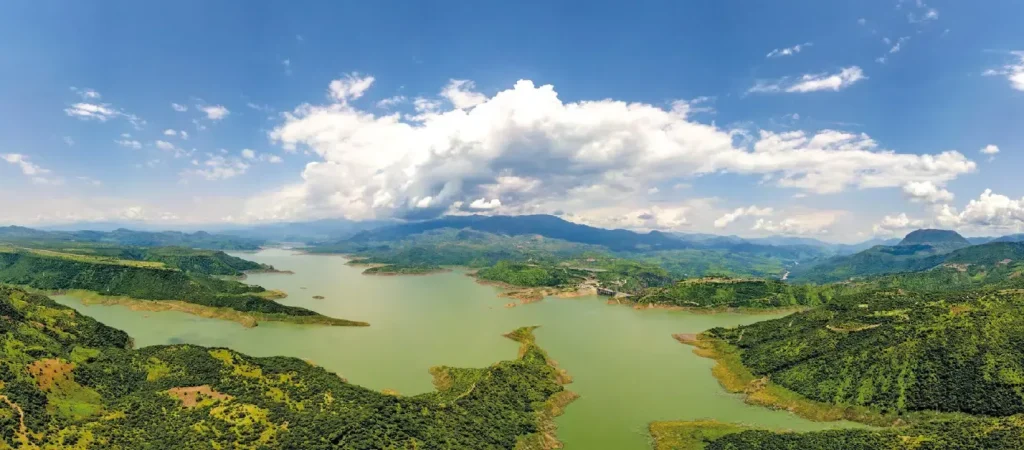
Oil palm thrives under specific conditions: consistent year-round rainfall of 1,500 to 2,500 millimeters, temperatures between 24 and 28 degrees Celsius, high humidity, and well-drained but moisture-retentive soils. Guinea’s Forest Region, known locally as Guinée forestière, matches this profile with precision. The region’s rainfall averages exceed 1,800 millimeters annually across most of the zone, distributed more evenly through the year than in parts of West Africa with pronounced dry seasons that stress plantation productivity. The deep, lateritic soils of the Forest Region support strong root development and the water retention that oil palm requires during early establishment.
Nzérékoré, the Forest Region’s principal city and commercial hub, sits at the intersection of trade routes connecting Guinea to Liberia, Côte d’Ivoire, and Sierra Leone. The region’s agricultural history includes established palm oil and kernel production, coffee, cocoa, rubber, and rice cultivation, confirming that the agroclimatic conditions support commercial tree crop production at scale. Existing smallholder and village-level oil palm production in the Forest Region represents a baseline of agronomic knowledge and demonstrated productivity that a commercial plantation operation can build on through improved varieties, professional crop management, and organized processing.
The Land Access Advantage: Long-Term Concessions at Competitive Rates
Under Guinea’s legal framework, all land is owned by the state, and agricultural development rights are granted through long-term concession agreements between the government and qualifying investors. The Ministry of Agriculture and Land Use administers agricultural concession processes, with APIP facilitating inter-ministerial coordination for qualifying investment applications.
For investors, the concession model provides several structural advantages over freehold land purchase in markets like Southeast Asia. Concession terms for large-scale agricultural projects in Guinea are negotiated on a project-by-project basis with the government, with durations that can extend to 50 years with renewal options, providing the long-term land security that plantation crops require. Oil palm has a productive life of 20 to 25 years per planting cycle, making 50-year concession terms ideal for two full production cycles with infrastructure fully amortized. Land costs under concession arrangements reflect Guinea’s status as an early-stage agricultural investment destination rather than a mature market, creating entry economics that allow investors to allocate capital toward productive infrastructure rather than land premium.
The practical implication is that investors in Guinea’s palm oil sector compete with Indonesian and Malaysian plantations on yield and processing efficiency, not on land cost, giving them a structural economic advantage that compounds across the investment’s productive life.
The Palm Oil Investment Opportunity: What the Numbers Look Like
Yield Potential in Guinea’s Forest Region
Mature oil palm plantations with commercial varieties achieve fresh fruit bunch yields of 20 to 25 tonnes per hectare per year in optimal West African conditions. At a crude palm oil extraction rate of 22 percent, a 1,000-hectare plantation at full maturity produces 4,400 to 5,500 tonnes of crude palm oil annually, plus approximately 500 to 700 tonnes of palm kernel oil as a secondary product.
Guinea’s palm oil market currently imports refined cooking oil to meet domestic urban demand, while crude palm oil from smallholder production is largely consumed domestically without formal processing. A commercial plantation with integrated small-scale mill processing crude palm oil for both domestic sales and regional export captures the full producer-to-first-buyer margin, which in West African regional markets trades at significant premiums to global commodity benchmarks due to reduced logistics costs relative to Asian imports.
Domestic and Regional Market Dynamics
The domestic cooking oil market in Guinea is predominantly served by imports, and demand is growing with urbanization and population growth. A refinery attached to plantation crude palm oil production can displace imported refined oil from the Conakry retail market with a logistics cost advantage over Asian-origin product. The ECOWAS regional market of 380 million consumers provides additional off-take for certified palm oil products, with preferential tariff arrangements under the ECOWAS trade protocol reducing cross-border sales friction.
The African Development Bank’s agriculture investment framework for West Africa identifies oil palm as a priority value chain for regional food system development, with processing and downstream manufacturing as the key investment categories that generate the highest economic multipliers per hectare of plantation area. An investor who integrates plantation, mill, and refinery operations in Guinea’s Forest Region captures three value chain stages that are currently addressed separately, and imperfectly, by different actors in the informal supply chain.
The Sustainable Palm Oil Premium
International food manufacturers, cosmetics companies, and institutional buyers are under increasing pressure to source Roundtable on Sustainable Palm Oil (RSPO) certified product. Guinea’s Forest Region plantation opportunity presents a distinctive advantage in this context: establishing new oil palm plantations on previously cleared or degraded agricultural land rather than converting primary forest makes RSPO certification achievable from plantation inception, avoiding the deforestation controversy that has attached to Southeast Asian palm oil and increasingly affects West African producers who expand into forested land.
Investors who design Guinea palm oil projects from the outset with RSPO certification in mind, conducting proper land-use assessment before plantation establishment, access the premium pricing tier that certified sustainable palm oil commands in European retail and food manufacturing markets. This certification pathway is a commercial differentiator that Guinea’s early-stage plantation sector can build in from the ground up rather than retrofitting to existing practices.
Investment Models in Guinea’s Palm Oil Sector
Commercial Plantation with Integrated Mill
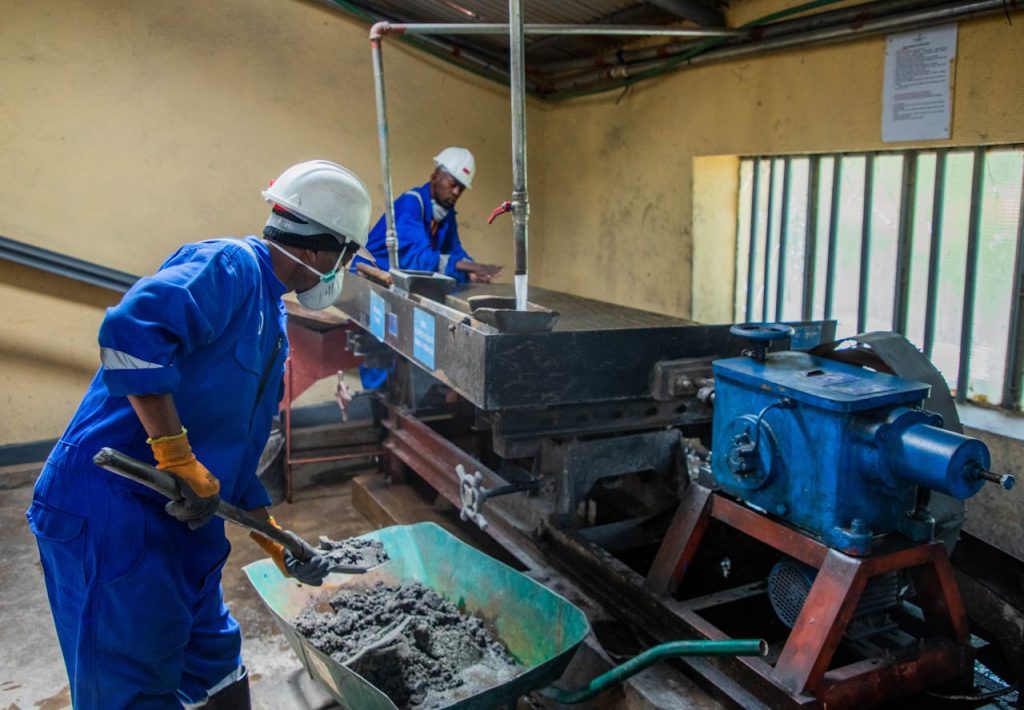
The primary investment model involves establishing a commercial oil palm plantation of 1,000 to 5,000 hectares with an integrated palm oil mill of 10 to 30 tonnes fresh fruit bunch per hour processing capacity. This model requires capital investment of approximately USD 2,500 to 3,500 per hectare for plantation establishment including land clearing, planting material, agronomy, and three to four years of pre-productive management before first harvest, plus mill capital of USD 1 to 3 million depending on throughput capacity.
The investment timeline is structured around oil palm’s growth cycle: seedling establishment in year one, first commercial harvest in year four to five, peak production from year eight onward, and sustained high-yield production through year twenty or beyond with appropriate crop management. Returns are back-loaded but highly predictable once the plantation reaches productive maturity.
Smallholder Nucleus Estate Model
A nucleus estate model combines a commercial core plantation with an organized smallholder development program, typically structured as a contract farming scheme where surrounding smallholder farmers supply fresh fruit bunches to the central mill under defined quality and pricing arrangements. This model accelerates raw material supply to the mill, builds community support for the investment, and aligns with Guinea’s local content and community benefit requirements under the Investment Code framework. Nucleus estate models have been successfully deployed across West Africa and Asia as the standard structure for new oil palm investments in communities with existing subsistence palm cultivation.
Rehabilitation of Existing Plantations
Guinea has existing smallholder and village-level oil palm cultivation in the Forest Region that uses unimproved traditional varieties with significantly lower fresh fruit bunch yields than commercial tenera varieties. Rehabilitating these existing areas through replanting programs with certified high-yielding planting material, organizing smallholder groups into supply networks, and providing processing access through a central mill represents a capital-efficient entry that leverages existing agricultural knowledge and land use patterns rather than requiring greenfield establishment across the entire project area.
For investors assessing plantation site selection, concession application processes, and Investment Code incentive qualification in Guinea’s Forest Region, YES! Invest in Guinea’s Large-Scale Plantations advisory provides end-to-end facilitation from feasibility through to first harvest.
FAQ: Palm Oil Plantation Investment in Guinea
- How long are agricultural land concessions for palm oil plantations in Guinea? Agricultural concessions for large-scale plantation projects in Guinea are negotiated directly with the Ministry of Agriculture and Land Use, with durations that can extend to 50 years with renewal options. This provides the long-term land security appropriate for oil palm’s productive lifecycle of 20 to 25 years per planting cycle. Concession terms, including land lease rates, boundary definitions, environmental compliance obligations, and community benefit commitments, are structured through a formal concession agreement between the investor and the government, facilitated through APIP’s inter-ministerial coordination process.
- What are the ideal locations in Guinea for palm oil plantation development? Guinea’s Forest Region, centered on Nzérékoré in the southeast, is the primary zone for oil palm cultivation, with rainfall profiles, temperature ranges, humidity levels, and soil types that match oil palm’s agronomic requirements. Coastal Lower Guinea also has suitable conditions for oil palm in areas with adequate rainfall distribution. Site-specific assessment of soil depth, drainage, slope, proximity to existing infrastructure, and current land use is essential before concession application to ensure the selected area is agronomically optimal and environmentally appropriate for plantation development.
- What investment incentives are available for palm oil plantation investors in Guinea? Guinea’s Investment Code provides tax holidays of up to 8 years, customs duty exemptions on imported agricultural equipment and planting material, and VAT exemptions on qualifying inputs for large-scale agricultural investments. Plantation investors who demonstrate local employment generation, community benefit programs, and processing facility development typically qualify for maximum incentive access under the Investment Code. APIP facilitates inter-ministerial review of investment applications and issues the formal agrément that activates tax and customs incentive provisions.
- How does RSPO certification work for new plantations in Guinea? RSPO certification for new plantations requires compliance with the RSPO Principles and Criteria, including land-use assessment to confirm no conversion of high conservation value forest or peatland, free prior and informed consent from affected communities, environmental and social impact assessment, and ongoing compliance monitoring. Guinea’s Forest Region has areas of cleared and degraded agricultural land where plantation establishment on non-forested land is achievable, making RSPO certification accessible for investors who conduct proper pre-investment land-use assessments and design their projects accordingly from inception.
- How does YES! Invest in Guinea support palm oil plantation investors? YES! Invest in Guinea provides comprehensive facilitation for palm oil plantation investors, covering agricultural land concession identification and site assessment coordination, Ministry of Agriculture concession negotiation support, Investment Code application and incentive structuring, environmental impact assessment facilitation, community engagement program design, RSPO certification pathway advisory, planting material sourcing and mill equipment procurement guidance, and ongoing government liaison throughout plantation establishment and operations.
Guinea’s Forest Region Is Oil Palm Country — and the Concessions Are Available
The agronomic profile is right. The land access terms are competitive. The domestic market needs the product. The regional export channels are open through ECOWAS and AfCFTA. And the sustainable certification pathway that international buyers require is achievable from day one for investors who design their projects correctly. Guinea’s palm oil plantation sector is not a speculative frontier bet. It is a commercially structured opportunity in a commodity with sustained global demand, available on land tenure terms that Southeast Asian and Ivorian competitors cannot match.
YES! Invest in Guinea is your specialist gateway to Guinea’s palm oil plantation investment opportunity. From site identification and concession applications to mill setup, processing certification, and market access, our team provides the regulatory expertise, government relationships, and agricultural sector knowledge that converts Guinea’s Forest Region into your most productive long-term plantation investment.