Investors fears when investing in Guinea are real, well-documented, and completely understandable. Any investor conducting proper due diligence on Guinea will encounter the same concerns: a military-led government that came to power through a coup, a history of contract instability in the mining sector, infrastructure deficits, corruption rankings that make reading uncomfortable, and a currency environment that requires active management. These are not invented objections. They are the legitimate questions that any serious investor must ask before committing capital to a frontier market.
But here is what separates the investors who are succeeding in Guinea right now from those who are not: the former group understands that acknowledging a risk is the first step to managing it, not a reason to walk away. Guinea received its first-ever sovereign credit rating of B+ with a stable outlook from S&P Global in September 2025. GDP growth is projected to accelerate to an average of 10.3 percent between 2026 and 2028, led by mining expansion averaging 23.3 percent annually as Simandou iron ore exports ramp up, according to the World Bank’s Guinea Economic Overview. The investors who manage Guinea’s risks intelligently are positioned for some of the highest returns available in any emerging market globally.
This article addresses each major investor fear directly, honestly, and with the tools available to manage it.
Fear 1: Political Instability and Governance Uncertainty
The Fear
Guinea has been governed under a Transition Charter since the September 2021 coup led by General Mamadi Doumbouya, who replaced the elected government of Alpha Condé. The initial transition period, negotiated with ECOWAS, ended in December 2024 without a full return to civilian rule on the original schedule. ECOWAS imposed economic sanctions that were only lifted on January 28, 2026 following elections. The Fraser Institute’s 2025 survey on mining investment climate cited Guinea’s governance as a growing obstacle, noting significant uncertainty for operators and placing Guinea in the bottom ten of global mining jurisdictions.
The Reality in 2026
Guinea has made meaningful institutional progress. A new constitution was adopted by referendum in September 2025. President Mamadi Doumbouya was confirmed as president-elect with 86.7 percent of votes following the December 28, 2025 elections. Guinea was reinstated to the African Union in January 2026. Legislative elections were scheduled for May 2026. These are not symbolic gestures. They represent a formal return to constitutional governance that directly addresses the transition uncertainty that concerned investors since 2021.
The U.S. State Department’s 2025 Investment Climate Statement for Guinea describes the Guinean government as relatively pro-West, maintaining diversified economic partnerships and conducting several large business deals with American companies in energy, mining, and IT sectors.
How to Manage It
- Structure investment agreements with ICSID arbitration clauses for investor-state dispute resolution independent of domestic courts
- Access MIGA political risk insurance from the World Bank Group, covering expropriation, currency inconvertibility, and breach of contract by the government
- Engage professional government liaison support that maintains active ministry relationships and provides early warning when regulatory conditions shift
- Enter sectors with strong domestic demand drivers that reduce dependency on a single government contract or concession
Fear 2: Contract Instability and Resource Nationalism
The Fear
Guinea has a documented history of contract renegotiation, project suspension, and license revocation in its mining sector. In 2022, operations at the Simandou iron ore project were suspended by Cabinet decision to pressure Rio Tinto and partners into sharing infrastructure. In 2025, the government revoked Emirates Global Aluminium’s bauxite mining license after the company failed to honor its commitment to build an alumina refinery, transferring the concession to a state-backed firm. Contract terms and export-access rights can and do shift in response to political and strategic priorities, as analysis from Strategic Stabilization Advisors confirmed in January 2026.
The Reality
This fear is valid, and every investor in Guinea must take it seriously. However, the pattern of government enforcement actions in 2025 reveals something important: the government has consistently targeted investors who failed to meet their stated commitments rather than acting arbitrarily against compliant operators. The EGA license revocation occurred specifically because EGA did not build the alumina refinery it committed to building. Investors who met their development obligations and maintained active government relationships navigated the 2025 enforcement cycle without major disruption.
How to Manage It
- Include stabilization clauses in investment agreements that lock in applicable tax and regulatory conditions for defined periods
- Build local content and processing commitments that are genuinely achievable and actively report progress to ministries
- Establish proactive government relations rather than reactive crisis management — maintain regular ministerial meetings and submit voluntary performance reports
- Structure investments with OHADA arbitration clauses for commercial disputes, giving access to the Common Court of Justice and Arbitration in Abidjan, whose awards are enforceable across 17 member states
Fear 3: Corruption and Bureaucratic Friction
The Fear
Transparency International’s Corruption Perception Index consistently ranks Guinea in the lower portion of its global rankings. The U.S. Department of Commerce’s Guinea Market Challenges guide states that government bureaucracy and pervasive corruption severely hamper economic development, with investors reporting harassment from tax authorities and demands for informal contributions from security and government personnel.
The Reality
Corruption is a genuine operational challenge in Guinea that every investor will encounter to some degree. However, Guinea’s government has established institutional anti-corruption mechanisms including the 2017 Anti-Corruption Law and the Court to Repress Economic and Financial Crimes (CRIEF), which has opened multiple proceedings since 2021. The direction of travel, while uneven, is toward greater institutional accountability. Importantly, American investors operating under the Foreign Corrupt Practices Act (FCPA) can succeed in Guinea the key is having structured compliance programs and experienced local partners who understand how to navigate bureaucratic friction without exposing the investor to legal liability.
How to Manage It
- Implement a robust FCPA compliance program from day one, with documented procedures, staff training, and third-party due diligence on all local partners
- Engage experienced local legal counsel who understands both Guinean regulatory practice and international compliance standards
- Process all formal government transactions through official channels with documented paper trails, avoiding informal payment arrangements
- Work with established investment facilitation partners who maintain relationships with government officials through proper institutional channels
Fear 4: Infrastructure Deficits and Operational Challenges
The Fear
Guinea’s infrastructure remains significantly underdeveloped across electricity, roads, water, and telecommunications. Grid power is unreliable in Conakry and largely absent in interior regions. Road quality outside primary corridors is variable. Cold chain logistics are almost entirely absent. Telecommunications operating costs remain high. These operational constraints increase costs, reduce efficiency, and create risks that do not exist in more developed markets.
The Reality
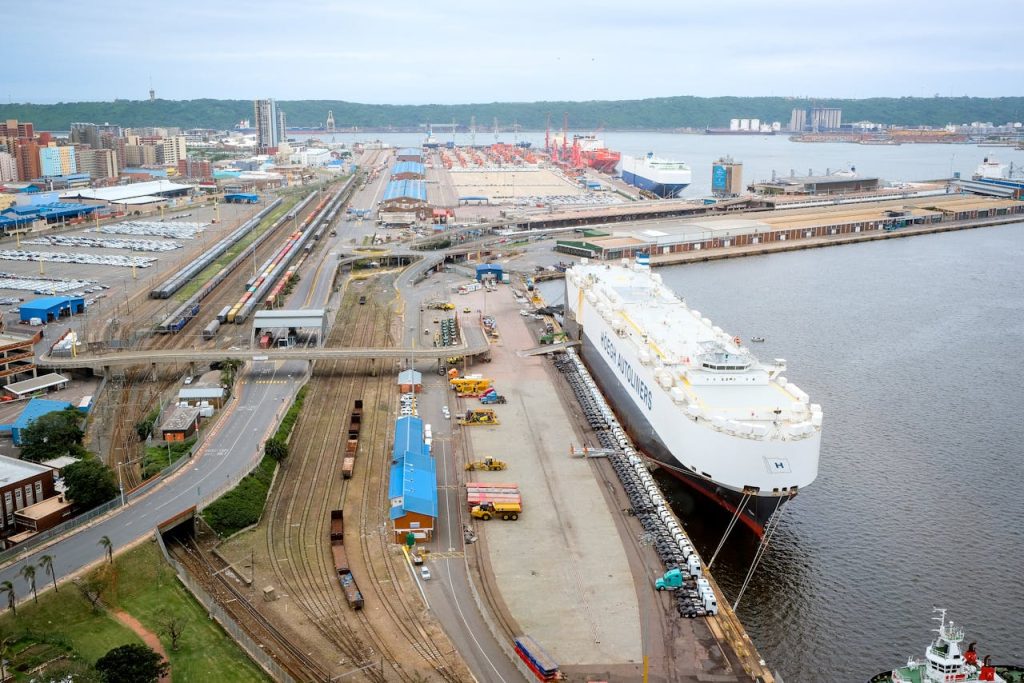
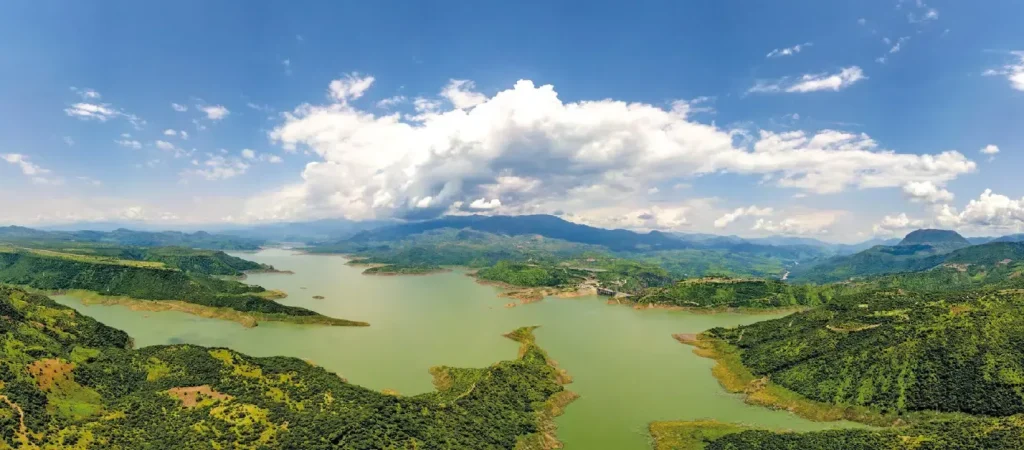
Infrastructure deficits are a real operational cost in Guinea, but they are also a defined and manageable one. The Souapiti dam began producing electricity in 2021. The Amaria dam was expected to commission in 2025 with 300 megawatts of additional capacity. The 650-kilometer Trans-Guinean Railway became operational in late 2025, fundamentally transforming logistics connectivity across Guinea’s interior corridor. Guinea’s Simandou 2040 program has committed USD 65 billion in infrastructure investment by 2030, covering roads, energy, ports, and industrial zones. Infrastructure in Guinea is not static. It is improving at a pace that rewards investors who enter before the improvements are fully priced into the market.
How to Manage It
- Budget for dedicated power generation capacity from project inception rather than relying on grid supply
- Base operations on primary logistics corridors and the Trans-Guinean railway zone where infrastructure is most reliable and improving fastest
- Build infrastructure investment into project economics as a known cost rather than an unexpected risk, as comparable markets in Asia and Latin America required similar upfront infrastructure investment during their development phases
Fear 5: Currency and Capital Transfer Risk
The Fear
The Guinean Franc (GNF) can depreciate against major currencies, and foreign exchange reserves are limited, standing at approximately 1.7 months of imports as of March 2026 according to Coface’s Guinea Risk Analysis. The BCRG manages the exchange rate through market interventions that can create currency conversion delays for large transactions. Repatriating profits can involve processing timelines that differ from developed market norms.
The Reality
The GNF has been relatively stable at approximately 8,600 GNF per USD since April 2023. Guinea’s Investment Code legally guarantees free transfer of capital and repatriation of profits and dividends for foreign investors. The primary risk is not prohibition but processing friction and timing, both of which are manageable through appropriate banking relationships and financial structuring. Guinea’s first sovereign credit rating of B+ from S&P Global in September 2025, with a stable outlook, reflects the country’s improving macroeconomic trajectory and positions it favorably for international capital markets access that will progressively improve the foreign exchange environment.
How to Manage It
- Denominate contracts in USD or EUR where commercially viable to reduce GNF exposure at the contract level
- Maintain international banking accounts outside Guinea for receivables management and profit staging before repatriation
- Work with banks that have strong international correspondent banking networks, such as VistaGui (formerly BICIGUI) or Ecobank Guinea
- Structure project-level currency hedging mechanisms where investment scale justifies the cost
FAQ: Investors Fears When Investing in Guinea
- Is Guinea too politically unstable to invest in safely? Guinea’s political environment carries documented risks that every investor must assess and structure around. However, 2025 and 2026 have marked meaningful progress: a new constitution adopted by referendum, presidential elections completed with 86.7 percent approval, AU reinstatement, and ECOWAS sanctions lifted in January 2026. The investors who are currently operating successfully in Guinea — across mining, energy, agribusiness, and commercial services — are those who entered with clear-eyed risk assessment, proper legal structuring including ICSID arbitration and MIGA political risk insurance, and active government liaison support.
- How real is the risk of contract cancellation or license revocation in Guinea? The risk is real and documented, most notably in the 2025 mining enforcement cycle that included the EGA license revocation. However, the pattern is consistent: enforcement has targeted investors who failed to meet their stated development commitments, particularly local processing requirements. Investors who meet their obligations, maintain active government relationships, and structure contracts with stabilization clauses and international arbitration provisions operate with materially lower contract risk than those who do not.
- How should American investors handle FCPA compliance in Guinea? American investors must implement structured FCPA compliance programs covering documented policies, staff training, and rigorous third-party due diligence on all local partners and agents. All formal government transactions should be processed through official channels with full paper trails. American companies have conducted multiple significant deals in Guinea’s energy, mining, and IT sectors under FCPA compliance, confirming that the market is accessible with the right compliance infrastructure in place.
- What is the most practical way to manage Guinea’s infrastructure deficits? Budget for dedicated power generation, prioritize locations on primary road and rail corridors, and model infrastructure investment as a defined project cost rather than an unexpected risk. The Trans-Guinean Railway operational since late 2025 and the Simandou 2040 program’s USD 65 billion infrastructure investment by 2030 are progressively improving Guinea’s infrastructure landscape. Investors who enter before these improvements are fully reflected in market pricing benefit from the highest appreciation in asset values and operational efficiency as infrastructure scales.
- How does YES! Invest in Guinea help investors navigate these fears? YES! Invest in Guinea provides specialist risk management and advisory services covering pre-investment political, regulatory, and operational risk assessment; MIGA political risk insurance coordination; ICSID and OHADA contract structuring advisory; FCPA-compliant local partner due diligence; government liaison and ministry relationship management; tax authority engagement to prevent and address informal demands; ongoing regulatory monitoring throughout the investment lifecycle; and crisis response advisory when enforcement actions or regulatory disputes arise. Our Risk Management and Advisory service is designed specifically for investors who want to enter Guinea with confidence rather than caution.
The Investors Who Succeed in Guinea Are Those Who Manage Risk, Not Those Who Avoid It
Every significant investment in history has carried risk. The investors who have built the most valuable frontier market positions, across Asia in the 1990s, Latin America in the 2000s, and Sub-Saharan Africa in the 2010s, were those who conducted proper due diligence, structured their investments intelligently, engaged professional support, and entered markets before the opportunity was fully priced. Guinea in 2026 fits this profile precisely. The risks are real, manageable, and well-compensated by the returns available to investors who approach the market with discipline.
YES! Invest in Guinea is your specialist partner for entering Guinea’s investment landscape with your eyes open, your risks managed, and your returns protected. From MIGA insurance coordination and ICSID contract structuring to FCPA-compliant partner vetting and active government liaison, our team provides the risk management infrastructure that transforms investor fears into managed variables.
Explore our Risk Management and Advisory services for Guinea investors →