Guinea is a country defined by youth. With a rapidly growing population where the majority are under the age of 25, the demand for quality higher education and practical skills training is accelerating faster than the public system can keep pace. Private universities and technical institutes in Guinea are filling that gap, and for investors with a long-term vision, the education sector represents one of the most strategically sound and socially impactful opportunities in West Africa today.
This article explores the current landscape of private higher education and vocational training in Guinea, the structural drivers creating demand, where investment opportunities lie, and how to enter this sector with a clear, viable strategy.
The State of Education in Guinea: An Honest Assessment
A System Under Pressure
Guinea’s Ministry of Higher Education oversees a network of 48 institutions producing more than 15,000 graduates each year. Yet the system is failing to connect those graduates with the labor market. Only 30.96 percent of graduates find employment within 12 months of completing their studies, a figure the Minister of Higher Education described publicly as “unacceptable.” A 2025 report from Guinea’s National Labor Observatory estimates that unemployment among young graduates exceeds 40 percent.
This crisis is not unique to Guinea. Across sub-Saharan Africa, young people aged 15 to 24 represent over 40 percent of those who are unemployed, according to IIEP-UNESCO’s TVET analysis for Africa. The core problem is a severe mismatch between what educational institutions teach and what employers actually need. Graduates emerge with theoretical credentials and limited practical skills, entering a labor market that demands technical competence, sector-specific expertise, and workplace-ready capability.
The Public Sector Cannot Solve This Alone
Guinea’s two flagship public universities, l’Université Gamal Abdel Nasser in Conakry and Julius Nyerere University in Kankan, were established decades ago and remain chronically underfunded. Infrastructure is aging, faculty are overstretched, and curricula have not kept pace with the economy’s evolving needs. The informal sector accounts for 96 percent of employment in Guinea according to the African Development Bank, a figure that reflects the absence of a skilled formal workforce capable of driving industrial growth.
This is the structural gap that private universities and technical institutes are uniquely positioned to fill, and that makes investor entry into this space both commercially rational and developmentally significant.
Why the Education Sector Is Attracting Serious Investment Attention
Government Reform Is Creating Momentum
Guinea’s government is not passive in the face of this challenge. In 2025, two major reform projects, MPS30 and MPS32, were launched as part of the Simandou 2040 development program, with the explicit objective of aligning higher education with labor market needs. These initiatives signal a government that is actively seeking private sector partnership to transform the education landscape rather than attempting to rebuild it through public funds alone.
In parallel, the World Bank’s SIRA program, active in Guinea alongside Côte d’Ivoire, aims to modernize secondary education, scale technical and vocational training in priority sectors including agribusiness, energy, and digital, and expand entrepreneurship and job placement support. The program is expected to benefit around 2.7 million young Guineans, creating a pipeline of students seeking quality post-secondary education.
International Partners Are Already Investing
The scale of international commitment to Guinea’s education sector signals genuine confidence in its trajectory. In November 2023, the European Union, Germany, Belgium, and France signed a combined agreement worth approximately $28 million with the Guinean government to improve vocational training and strengthen job placement systems. According to the European Commission’s partnership framework for Guinea, this includes improving the quality of TVET, increasing private sector involvement in technical training, and supporting youth entrepreneurship across key value chains.
When international development institutions commit at this scale, private investors benefit from de-risked market conditions, improved regulatory engagement, and a ready pipeline of reform-aligned demand.
Guinea’s Mining Boom Is Creating a Technical Skills Vacuum
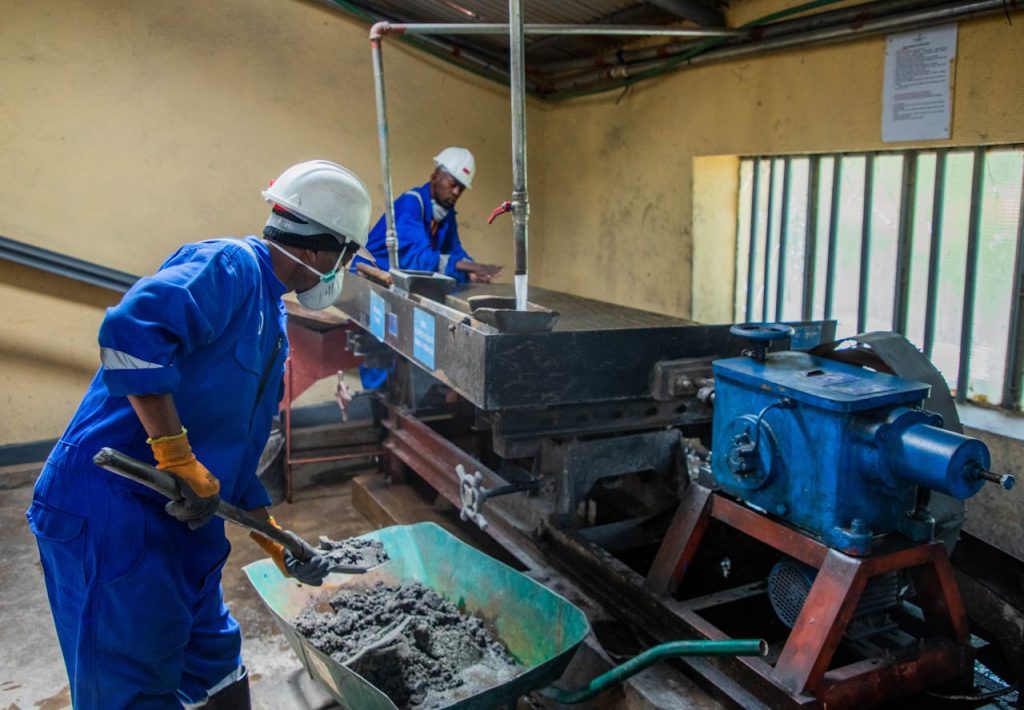
The Simandou iron ore project, the Boké bauxite cluster, and the growing portfolio of energy and infrastructure projects across Guinea are generating demand for a technical workforce that does not yet exist in sufficient numbers. Mining companies, construction firms, logistics operators, and energy developers need engineers, technicians, machine operators, safety officers, environmental compliance specialists, and project managers. None of these roles can be filled adequately by Guinea’s current educational output.
For investors in private technical institutes, this is a captive B2B market. Establishing a training institute with curricula aligned to the mining, energy, and construction sectors positions the institution as an essential supplier to the largest companies operating in Guinea, with corporate training contracts, apprenticeship partnerships, and government co-funding all viable revenue streams.
Investment Models in Private Higher Education and TVET
Private Universities with Market-Aligned Curricula
Guinea already has a foundation of private university activity. Kofi Annan University of Guinea (UNIKAG), established in 1996, is recognized as the country’s top-ranked private institution, offering bachelor’s, master’s, and doctoral programs across multiple disciplines. Université Nongo Conakry and Université Mahatma Gandhi are among other established players offering programs in business, technology, and social sciences.
The investment opportunity lies in building on this foundation with new institutions or expanding existing ones in disciplines where demand outstrips supply: engineering, data science, public health, agribusiness management, environmental sciences, and digital technology. Programs offered in both French and English expand the institution’s reach across the anglophone West African student market.
Technical and Vocational Education and Training (TVET) Institutes
TVET investment represents the fastest path to measurable employment impact and the clearest alignment with Guinea’s current economic priorities. The International Labour Organization (ILO) identifies expanding access to technical and vocational education as a critical lever for reducing youth unemployment across Africa, and Guinea’s government has validated this through its National Professional Apprenticeship Strategy for 2026 to 2030.
Viable TVET institute models in Guinea include:
- Mining and construction trades: Heavy equipment operation, civil works, electrical installation, and structural engineering technician programs directly aligned to Simandou-era demand.
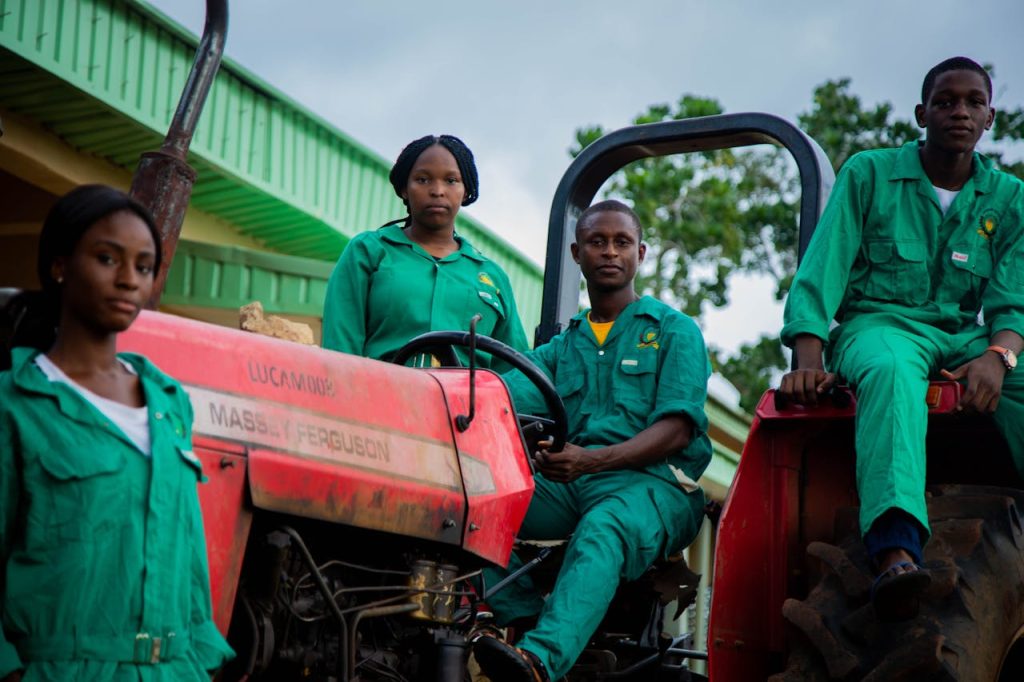
- Agribusiness and food processing: Practical training in food safety, agricultural machinery, cold chain logistics, and aquaculture operations supporting Guinea’s growing commercial agriculture sector.
- Digital and ICT skills: Coding, network administration, digital marketing, and e-commerce programs targeting Guinea’s urbanizing youth population with access to affordable mobile internet.
- Healthcare technician programs: Laboratory technician, pharmacy assistant, and community health worker training aligned to Guinea’s healthcare infrastructure development priorities.
Blended Learning and Online Education Platforms
Connectivity is improving across Guinea, and the demand for flexible, affordable education is growing rapidly among working adults and rural learners who cannot relocate to Conakry for full-time study. Investing in blended or hybrid learning platforms, combining physical campuses in key cities with digital course delivery, allows an institution to scale enrollment without proportional infrastructure investment.
This model also positions the institution to serve the Guinean diaspora, an educated and motivated student population spread across Europe, North America, and the Gulf states who seek credentials connected to their home country.
Regulatory Framework for Private Education Investment
Private education institutions in Guinea are licensed and regulated by the Ministère de l’Enseignement Supérieur et de la Recherche Scientifique. Key requirements include:
- Institutional accreditation: Private universities must obtain accreditation from the Ministry, confirming minimum standards for faculty qualifications, curriculum quality, and physical infrastructure.
- Program approval: Individual degree and certificate programs require Ministry approval prior to enrollment. Approval timelines vary and are best navigated with an experienced local facilitation partner.
- Land and facility requirements: Institutions must demonstrate adequate physical premises including classrooms, libraries, laboratory facilities, and administrative offices.
- Foreign ownership: Foreign investors may establish and operate private educational institutions in Guinea, with majority foreign ownership permitted under Guinea’s FDI framework.
Guinea’s Investment Code includes provisions for tax incentives applicable to qualifying investments in priority sectors, and education is consistently identified in Guinea’s development frameworks as a national priority, which strengthens the case for favorable regulatory treatment of well-structured private education investments.
YES! Invest in Guinea provides investors with direct access to Ministry relationships, regulatory navigation support, and on-the-ground facilitation to move from planning to licensed operation efficiently.
FAQ: Private Universities and Technical Institutes Investment in Guinea
- What is the current demand for private higher education in Guinea? Demand is substantial and growing. Guinea’s 48 institutions produce over 15,000 graduates annually, yet a graduate unemployment rate exceeding 40 percent signals that the existing supply does not match labor market needs. Market-aligned private institutions offering practical, employment-focused programs face strong enrollment demand, particularly in technical and vocational fields.
- What sectors offer the strongest demand for TVET graduates in Guinea? Mining and extractive industries, construction, agribusiness, digital technology, and healthcare are the highest-demand sectors. The Simandou iron ore project and Guinea’s growing bauxite industry in particular create urgent demand for certified technical workers in engineering, equipment operation, and project management disciplines.
- Can foreign investors fully own a private university or technical institute in Guinea? Yes. Guinea’s Foreign Direct Investment framework allows foreign majority or full ownership of private educational institutions. Joint ventures with local educational partners or community organizations are also common and can accelerate accreditation and build community trust.
- Are there government or international funding sources that can co-fund TVET investment in Guinea? Yes. International bodies including the World Bank through the SIRA program, the European Union, the ILO, and the African Development Bank are all active funders of TVET development in Guinea. Private education investors can access co-funding, technical assistance, and curriculum support by aligning their programs with these institutional frameworks.
- How long does it take to obtain accreditation for a private educational institution in Guinea? Accreditation timelines depend on institution type and program scope but typically range from 6 to 18 months for initial licensing. Working with an investment facilitation partner who maintains active relationships with the Ministry of Higher Education significantly reduces delays and improves the likelihood of smooth approval.
Invest in Guinea’s Education Future Today
Guinea’s education gap is not a problem waiting for a government solution. It is a market opportunity ready for private investment. The demand is documented, the policy environment is supportive, the international development ecosystem is engaged, and the labor market need is urgent.
YES! Invest in Guinea is your specialist gateway to entering Guinea’s private education and vocational training sector. From Ministry liaison and accreditation support to site selection and partnership development, our team provides the local expertise and institutional access that transforms education investment from ambition into operation.
Explore education and vocational training investment opportunities in Guinea →
Ready to discuss your specific vision? Contact our investment advisors for a confidential consultation and let us design your market entry strategy together.